Ask anyone who's trained new tractor operators. They'll tell you the same list of screw-ups. Every time.
First screw-up: jumping on without looking around. The machine is there, so they sit down and fire it up. Meanwhile, someone's standing behind the tire. Or there's a rock under the wheel. Or they're parked on a slope they have no business starting on.
Second screw-up: ignoring the roll bar. It's folded down because the last guy needed to get into a low garage. Nobody put it back up. And when the tractor goes over, that folded bar isn't protecting anyone.
Third screw-up: skipping the seatbelt. "I'm just moving it a few feet." Famous last words. A tractor doesn't need to flip to throw you out of the seat. One wheel in a hole, and you're on the floor.
Fourth screw-up: messing with levers they don't understand. Pull the wrong one, and the brush hog behind you starts spinning. Or the front loader drops. Or the three-point hitch slams down.
Fifth screw-up: getting moving but having no clue how to stop. Panic sets in. Brake? Clutch? Both? By the time they figure it out, they've already hit something.
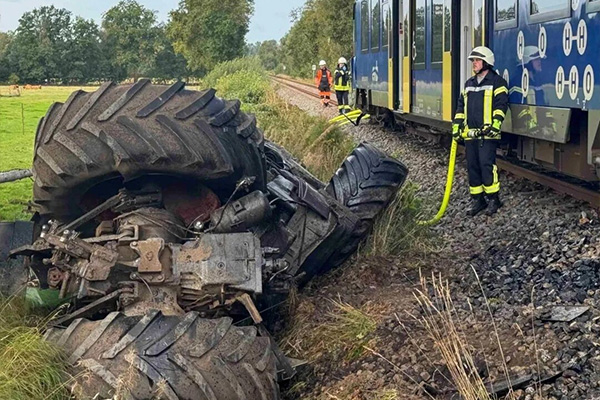
These aren't rare accidents. They happen every day. And every single one is preventable.

What Actually Happens:
Beginner sees the tractor. Excitement takes over. Sits down. Starts it up. Drives off. Never once looked behind the machine or under it. And that's how you run over a kid's bike, a stack of lumber, or—worst case—a person.
How to Fix It:
Before your butt hits the seat, do a full walk-around. Not a glance. An actual walk. Look in front. Look behind. Get down and look underneath. Check for people, tools, rocks, kids, dogs, anything that shouldn't be there. Also, look at the ground. Is it level? If you're on a slope, don't start there. Move to flat ground first. This takes less than a minute. Skip it, and you're gambling.
What Actually Happens:
The tractor has a foldable roll bar. Great for fitting into a low garage. But someone folded it down and never put it back up. Beginner doesn't know to check it. Gets on, drives out, hits a soft spot, and the tractor starts to tip. A roll bar that's folded down does exactly nothing. The tractor rolls, and the operator ends up underneath.
How to Fix It:
Check the roll bar before you start. Every single time. If it's folded, lock it back up. You'll hear it click. That click is the sound of you not dying. If you're working in an area where you genuinely need it folded down to fit, go slow. Like, painfully slow. And know that you're taking a risk. The roll bar is not optional. It's the only thing between you and being crushed.
What Actually Happens:
"I'm just going to the barn." "It's only a few hundred feet." "I'll be careful." These are the things people say right before they get thrown. A tractor doesn't need to flip to hurt you. Hit a hole. Catch a rock. Take a turn a little too fast on uneven ground. You bounce. You slide. You fall off. And then the tractor keeps going—over whatever you landed on.
How to Fix It:
The seatbelt is there for a reason. Use it. Every time. Before the key turns, the belt goes on. Make it a habit. Same as your pickup truck. You wouldn't drive down the highway without a belt. Why would you drive across a bumpy field without one? The tractor doesn't know the difference between a "quick trip" and a long day. Neither should you.
What Actually Happens:
All those levers look similar. Beginner pulls one to see what happens. Suddenly the power take-off engages, and whatever's hooked to the back starts spinning. Or the hydraulic lever gets moved, and the loader drops toward someone standing nearby. Or the three-point hitch goes up, and the implement behind lifts off the ground without warning.
How to Fix It:
Before you touch anything, know where the dangerous ones are.
Transmission: Know how yours works. Some are manual with a clutch. Some are hydrostatic—push a pedal to go, push the other to stop. Figure out which one you have.
Power Take-Off: This is what makes attachments spin. Before you turn it on, check behind you. Make sure nobody is near the implement. Tuck in loose clothing. Tie back long hair. The PTO doesn't care what it grabs. It will pull you in before you can react.
Hydraulics: These control the loader, the backhoe, the attachments. The levers usually show which way they move. Before you use them, make sure nothing and no one is in the path of whatever you're moving.
Three-Point Hitch: This is where you hook up things like plows and mowers. When you raise or lower it, stay clear. And when you're hooking something up, don't stand between the tractor and the implement. That gap closes fast.
Your operator's manual covers all of this. Read it. Seriously. It's not just paperwork. It's the difference between knowing what you're doing and guessing.
What Actually Happens:
Beginner gets the tractor moving. Feels good. Picks up speed. Then panic hits. Needs to stop, but which pedal is the brake? Which one is the clutch? What if they hit the wrong one? By the time they figure it out, they're already heading toward something they don't want to hit.
How to Fix It:
Before you move an inch, know how to stop.
If you have a manual transmission: Clutch and brake. Push the clutch first, then the brake. If you're in a hurry, push both. That stops the engine from stalling while you stop the wheels.
If you have a hydrostatic transmission: Take your foot off the forward pedal. Push the reverse pedal or the brake, depending on your model. Some tractors stop when you just let off.
Either way, find the emergency kill switch. It's usually a big red button or a pull cord. Know where it is. Because if the throttle sticks, or something else goes wrong, that switch is your last resort. Don't go looking for it when you need it.

Now you know what not to do. So what should you do?
First, find a big, open, flat space. No obstacles. No people. Just you, the tractor, and a lot of room. If you have a field that's already harvested, perfect. If not, an empty parking lot works.
Start simple. Just make laps. Forward, turn, stop. That's it. Don't worry about attaching anything yet. Don't worry about the power take-off. Just get a feel for how the tractor moves. How fast it responds. How wide it turns. Do this until it starts feeling natural.
Once you can start, stop, and turn without thinking about it, add something. Maybe a light load in the bucket. Or a small implement on the back. Practice moving with weight. Notice how it changes the way the tractor handles. Take it slow.
When you're ready to try real work, start small. Mow a flat field before you tackle the hills. Move light stuff before you try the heavy loads. Build up. The hundreds of hours it takes to become an expert happen one hour at a time. Don't rush them.

The thing is, tractors are not scary. Tractors are just machines. Machines that can hurt you if you do not treat them right. The good news is, treating them right is not hard.
Look around the tractor before you get on. Make sure the roll bar is up. Wear your seatbelt. Find out what those levers do before you start using them. And find out how to stop before you start going.
Do those five things, and you're already ahead of most beginners. The rest is just seat time. Practice, get comfortable, and the confidence will come. But start with the basics. The basics are what keep you alive.