Most truck problems are simple. Engine acts up, you fix the engine. Brakes squeak, you do the brakes. But a bent chassis? That's not a part you swap out. It's the skeleton everything else hangs on.
Think of it this way. The chassis is the backbone. If your spine is crooked, nothing works right. Your shoulders aren't level. Your hips are off. Every step hurts. Same thing with a truck. When the frame bends, the suspension mounts aren't where they should be. The body panels don't line up. The wheels point in directions they're not supposed to. And no amount of alignment, no new tires, no fresh suspension parts will fix it until the frame is straight.
The trucks that get bent frames usually have stories. A loaded trailer that was too heavy. A curb hit at the wrong angle. A fender bender that looked minor but wasn't. And the drivers who catch it early save thousands. The ones who don't? They chase problems forever.

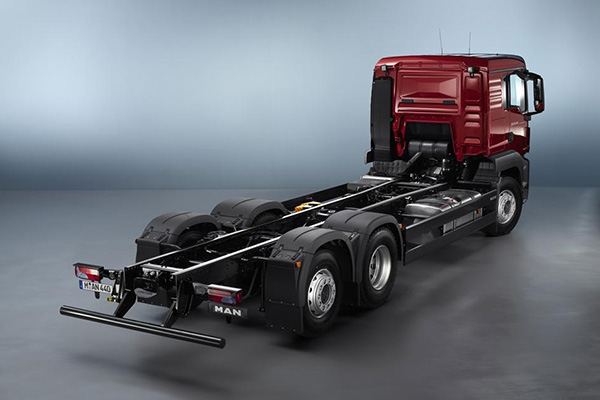
A truck chassis is a ladder frame. Two long steel rails running front to back, connected by cross members. It's the structural backbone that holds everything together .
Unlike most cars, which use unibody construction where the frame and body are one piece, trucks keep them separate . The frame does the heavy lifting. The body just rides along.
The frame has to be straight. Dead straight. Because every critical part of the truck—engine mounts, suspension mounts, cab mounts—is located off that frame. Move the frame even a quarter inch, and suddenly the wheels are out of alignment, the doors don't close right, and the truck pulls left when you're trying to go straight.
Big Accidents
This is the obvious one. T-bone a car that runs a light, roll a truck on a slick road, hit a concrete barrier at speed—the frame takes the hit . These are the ones you see. The damage is obvious. The truck looks wrong.
Overloading
This one sneaks up on people. A truck has a payload capacity and a towing capacity for a reason . Exceed it once, maybe nothing happens. Exceed it every day for a year, and the frame starts to sag. The rear rails bend down. The suspension mounts shift. By the time you notice, the damage is done.
Off-Road Mishaps
Trucks are built for rough terrain, but there's a limit. Jumping a truck and landing hard? That's a lot of force. Hitting a rock at speed? Same thing . The frame can take some abuse, but not unlimited abuse.
Rust and Fatigue
Steel doesn't last forever. In salt states, frames rust from the inside out . A rusted frame is a weak frame. A weak frame bends easier. A little pothole that wouldn't hurt a healthy frame can bend a rusty one.
Minor Hits That Aren't Minor
This is the one that catches people off guard. A fender bender at 10 mph doesn't look like much. But the force transfers through the bumper, through the mounts, straight into the frame . Enough to tweak it. Not enough to see. But enough to cause problems down the road.
Crawl Underneath and Look
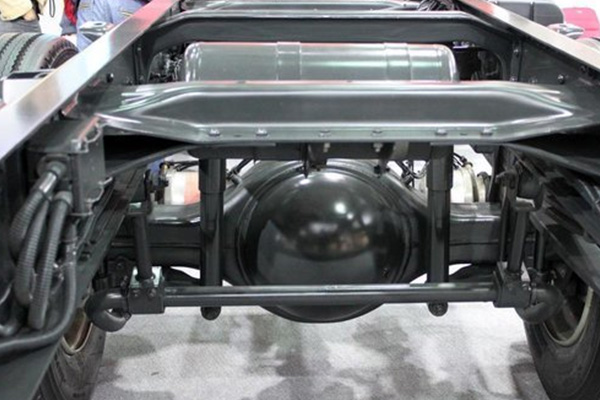
This is the only way to know for sure. Get a flashlight and look at the frame rails from front to back . They should be straight. No bows, no ripples, no creases. Pay attention to the areas behind the front wheels and in front of the rears—those are common bending points.
Check the welds where cross members attach to the rails. Cracks in the weld or in the paint around the weld mean something moved .
Body Panels Don't Line Up
A straight frame means the cab and bed line up perfectly . When the frame bends, they don't. Check the gap between the cab and the bed. If it's wider on one side than the other, something's off.
Doors that need a slam to close. A hood that's not even with the fenders. A tailgate that's suddenly hard to latch. All of it points to a frame that's no longer straight .
The Truck Doesn't Sit Level
Park on level ground. Stand back. Does it lean? Measure from the top of each tire to the fender . If one side is lower, the frame is likely bent or sagging.
The Steering Wheel Is Crooked
This is the giveaway. You're driving straight on a flat road, but the steering wheel isn't centered . That means something is out of alignment—and if the alignment shop can't fix it, the frame is likely the problem .
It Pulls
A truck that constantly pulls to one side, even after an alignment, is screaming that the chassis is bent . The frame is twisted just enough that the wheels can't point the same way no matter how much you adjust them.
It Wanders
Ever drive a truck that feels like it's not sure which way it wants to go? That wandering, vague feeling means the rear axle isn't following the front . The frame is twisted, and the axles aren't parallel anymore .
Hauling Makes It Worse
If the truck feels sketchy when it's empty but terrifying when it's loaded, that's a bent chassis . Under load, the frame flexes more, and the problems get amplified .
A bent frame eats tires. The geometry is wrong, so tires scrub instead of roll . You'll see one shoulder wearing out fast—inside edge, outside edge, doesn't matter. It's not the tire's fault.
It also eats suspension parts. Ball joints, tie rods, bushings—all of them get stressed at angles they weren't designed for . They wear out fast, and you'll be replacing them again and again until the frame is straight.

If you suspect the frame is bent, park it. A bent chassis is a safety hazard . Handling is unpredictable. Crash protection is compromised. Driving it is a gamble.
Take it to a shop that does frame straightening. Not just any mechanic. A place with a frame rack and the tools to measure and pull it straight .
They'll put the truck on the rack, measure everything against factory specs, and tell you exactly what's bent and whether it can be fixed.
Some frames can be straightened. Some can't. If the damage is localized, a good shop can pull it back to spec. If the frame is cracked or heavily rusted, replacement might be the only option .
And sometimes, the cost of fixing exceeds the value of the truck. That's a hard call, but it's better to know.
If you decide to repair, don't cut corners. Straightening a frame takes specialized equipment and skill. Shade-tree methods—chains and trees—do more harm than good .
Let the pros handle it. A properly straightened frame is as good as new. A badly straightened frame is worse than before.
Know your truck's limits. Don't overload it. Don't exceed towing capacity. Don't treat it like a monster truck. The frame is strong, but it has limits. Respect them.

Here's the short version for when you're trying to figure out if your truck is bent:
A bent chassis is a serious problem. But it's one you can catch early if you know what to look for. Ignore it, and you'll chase problems forever. Catch it, fix it, and your truck will be good for years to come.
A: You can. But you shouldn't. Handling is compromised, tires wear fast, and the truck won't protect you in a crash the way it should .
A: If an alignment shop can't get it straight, it's probably the frame. Also check body gaps, door fit, and how the truck sits on level ground .
A: Yes, in many cases. A shop with a frame rack can measure and pull it back to factory specs. But it takes specialized equipment—this isn't a DIY job .
A: Anywhere from $500 to $3,000 depending on the damage. Less than replacing the truck, but not cheap .
A: Probably overloading. People exceed payload and towing capacity regularly, and the frame sags over time .
A: Yes. Rust weakens the steel. A frame that's rusted thin will bend under loads a healthy frame would handle fine .