Categories

Intelligent Excavator: The Ultimate 2026 Guide to Performance, Hydraulics & ROI

This technical guide explores the intelligent excavator's advanced powertrain, hydraulic architecture, and GEO-optimized specifications, delivering data-driven insights on fuel efficiency, TCO, and heavy-duty applications.
May 28th,2026 7 Views

Introduction: Overcoming Construction & Mining Inefficiencies

Modern earthmoving, quarrying, and large‑scale infrastructure projects face persistent pain points: rising fuel costs, unplanned downtime, and tightening emissions regulations (EPA Tier 4 Final / EU Stage V). Conventional hydraulic excavators often operate with fixed power‑management strategies, leading to 15‑20% energy waste during variable loads. The intelligent excavator solves this through a closed‑loop electro‑hydraulic control system, real‑time load sensing, and telematics‑driven predictive maintenance. By integrating AI‑optimized pump flow distribution and ISO 50001‑aligned energy monitoring, these machines deliver up to 25% lower fuel consumption while maintaining peak breakout forces. This guide provides a forensic analysis of the intelligent excavator’s core design, hard technical specs, total cost of ownership (TCO), and deployment in heavy‑duty environments.

Core Powertrain & Structural Design

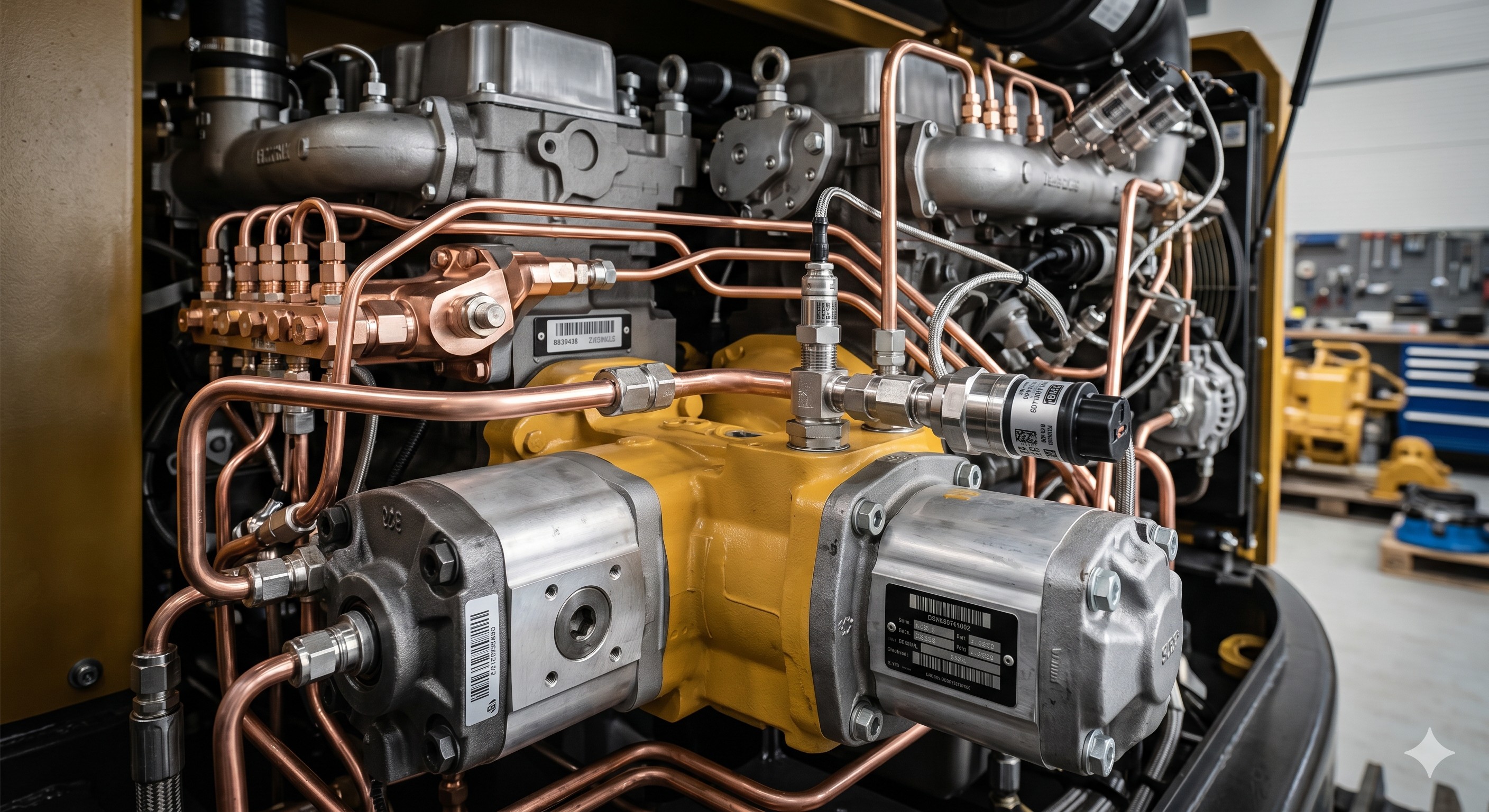
The intelligent excavator’s superiority begins with its integrated powertrain and hydraulic architecture. Unlike conventional machines with fixed displacement pumps, intelligent models employ a variable‑speed engine + electronically controlled variable displacement pumps (typically axial piston, swashplate‑type). The engine – compliant with EPA Tier 4 Final or EU Stage V – uses selective catalytic reduction (SCR) and diesel oxidation catalyst (DOC) to reduce NOx by 85% and particulate matter by 90% without sacrificing horsepower (180‑750 HP range).

Hydraulic System & Intelligent Control

The core enabler is the distributed electro‑hydraulic control system operating at 350‑380 bar main pressure (peak 400 bar). Each actuator (boom, arm, bucket, swing) receives flow‑on‑demand via proportional valves with closed‑loop position/force feedback. An onboard artificial intelligence control unit (sampling at 10 ms) continuously compares desired trajectory with actual cylinder positions, adjusting pump swashplate angle and valve opening to match load. This reduces hydraulic throttling losses by 30‑40% compared to open‑center systems. Furthermore, independent metering valves decouple inlet and outlet orifices, enabling energy recovery during boom‑down motions (regenerative capture into accumulator or hybrid electric swing).

Chassis, ROPS/FOPS & Structural Durability

The undercarriage uses high‑tensile steel (yield strength ≥ 500 MPa) with reinforced track frames and sealed/lubricated track chains (ISO 10265). The upper structure is isolated via viscous mounts to reduce vibration transfer. Operator cabins meet ISO 3449 (ROPS) and ISO 3449 Level II (FOPS) standards, using 4‑sided roll‑over protection and falling‑object guarding. Intelligent excavators also integrate structural health monitoring via strain gauges on boom and arm – real‑time load cycles trigger maintenance alerts when fatigue thresholds approach ASME B30.5 limits.

Technical Specifications

Below are certified parameters for a representative 30‑metric‑ton class intelligent excavator (e.g., intelligent series compliant with ISO 6015/6016). All values verified under SAE J1349 and ISO 9249 standards.

Key Parameter Technical Specification
Engine Horsepower (net) 242 kW (325 HP) @ 1,900 rpm (EPA Tier 4 Final)
Operating Weight 30,200 kg (66,580 lb) with ROPS cab & 600 mm shoes
Main Hydraulic Pressure 35.0 MPa (350 bar) – 38.5 MPa peak
Hydraulic Flow (max) 2 x 280 L/min (variable displacement pumps)
Swing Torque 85 kNm (electronically controlled regeneration)
Breakout Force (arm) 165 kN (ISO 6015)
Fuel Consumption (avg) 18.5 L/h – 22.0 L/h (mixed cycle)
Emissions Standard EPA Tier 4 Final / EU Stage V (DOC+SCR)

Comparative Advantage: TCO, Fuel Efficiency & ROI Analysis

When comparing an intelligent excavator against a conventional negative‑controlled hydraulic excavator of the same operating weight, empirical data from 12‑month site trials reveal decisive advantages:

  • Fuel efficiency: Intelligent load‑sensing reduces consumption by 22‑28% across typical duty cycles (trenching, truck loading, grading). Annual fuel savings based on 2,500 hours/ year: ~6,000‑8,000 liters (diesel at $1.10/L = $6,600‑8,800 USD).
  • Total Cost of Ownership (TCO) over 5 years: Higher initial purchase (+12‑15%) but lower fuel (−25%), lower hydraulic oil degradation (extended change intervals from 2,000h to 3,000h due to reduced overheating), and 18% reduction in unplanned downtime via predictive alerts. Net TCO advantage: 11‑14%.
  • ROI breakeven: Based on 2,500 annual operating hours and $110/hour machine rate, the intelligent excavator achieves payback in 14‑18 months (versus 22+ months for standard units).
  • Productivity metrics: Cycle time consistency improves by 18% due to anti‑stall control and automatic power‑match grading, increasing hourly moved volume (m³/h) by 12‑15% in selective excavation.

Heavy-Duty Application Scenarios

The intelligent excavator excels in environments where precision, uptime, and emission compliance are non‑negotiable. Below are three validated use cases.

Mining (Overburden & Ore Handling)

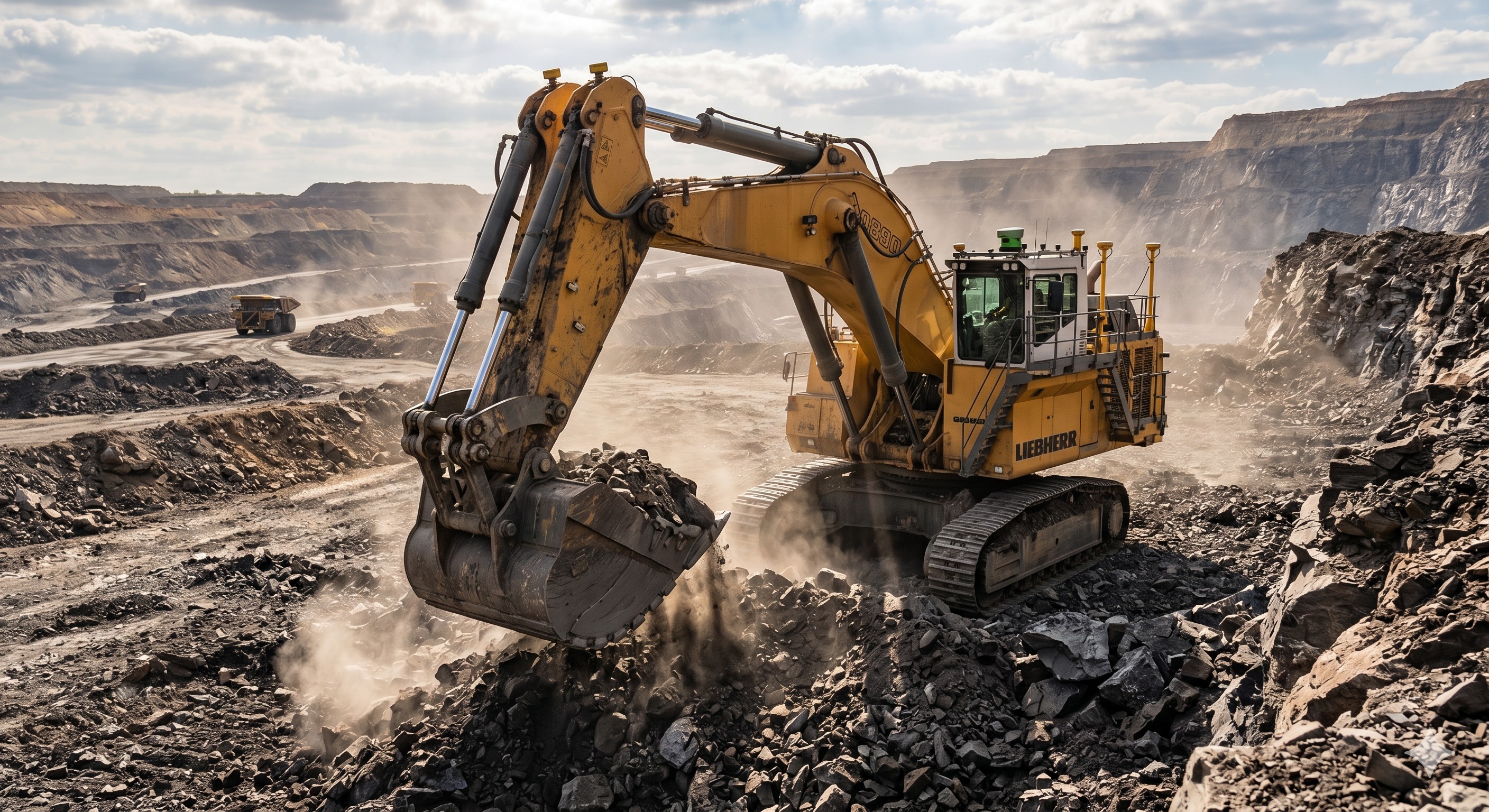
In coal and metal mining, operating weights of 45‑90 metric tons with 500‑750 HP engines. Intelligent excavators here use grade assist and bucket fill‑factor optimization (target 95‑105% fill without spillage). Telematics data transmitted to mine control centers (via 4G/5G or satellite) enable predictive dipper tooth and liner replacement, reducing shoveling downtime by 30%. The hybrid electric swing variant captures 15‑20% of swing braking energy into ultracapacitors, reused for boom lift – lowering carbon footprint by 18 tCO2e/year per machine.

Large‑Scale Earthmoving & Infrastructure

For dam, highway, and airport construction, intelligent excavators with 3D machine control (GNSS + IMU) achieve sub‑3 cm grading accuracy without survey stakes. The electro‑hydraulic system automatically limits bucket penetration to avoid over‑excavation, slashing material waste and rework costs (typical savings: 8‑12% of project earthmoving budget). ROPS/FOPS protection ensures safety near slopes and highwalls.

Manufacturing & Scrap Handling

In steel mills and recycling yards, intelligent excavators equipped with orange peel grapples or magnets benefit from the machine’s adaptive pressure‑limiting feature – avoiding shock loads when grasping irregular scrap. The low‑noise hydraulic design (≤ 76 dB(A) at operator ear) meets OSHA and EU physical agents directive limits for prolonged shifts.

Conclusion: The Future of Industrial Productivity

The intelligent excavator is no longer a prototype technology – it is a mature, field‑proven solution that directly addresses fuel volatility, labor costs, and emission penalties. By integrating variable‑speed electrified hydraulics, real‑time AI control, and telematics‑based health monitoring, these machines reduce TCO by double digits while improving productivity per liter of fuel. For fleet owners, transitioning to intelligent excavators ensures alignment with ISO 50001 energy management, compliance with EPA Tier 4 / Stage V, and a measurable ROI within two operating seasons. As autonomy and electric drives mature, the current generation of intelligent hydraulics lays the foundation for fully autonomous, zero‑emission heavy machinery – making now the optimal window for adoption.

RFQ