Categories

0.1m³ Excavator: The Ultra-Compact Heavy-Duty Workhorse | Ultimate Tech Specs & ROI

This technical guide delivers a deep engineering analysis of the 0.1m³ excavator. Optimized for ultra-tight urban job sites, we detail powertrain architecture, ISO/CE compliant specs, fuel efficiency benchmarks, and TCO/ROI comparisons against skid steers and manual labor.
May 29th,2026 13 Views

Introduction: Solving Urban Congestion and Micro-Excavation Pain Points

Modern construction and industrial projects face a critical paradox: the need for significant digging power in physically constrained environments. Traditional backhoes or 1.0m³+ excavators cannot operate inside building retrofits, trenching for fiber optics, or basement excavation with low overhead clearance. The 0.1m³ bucket excavator —often classified as a micro or ultra-compact excavator (1.0–1.5 ton class)—directly solves this. With sub-1.5m width, ROPS/FOPS certified cabins, and precise hydraulic control, it bridges the gap between manual labor (slow, high injury risk) and heavy machinery (oversized, low ROI for small footprints). This blog delivers an unbiased, engineering-grade analysis of powertrain durability, emission compliance (EU Stage V / EPA Tier 4), and real-world TCO data.

Core Powertrain & Structural Design: Engineering for Durability Under 1.5 Tons

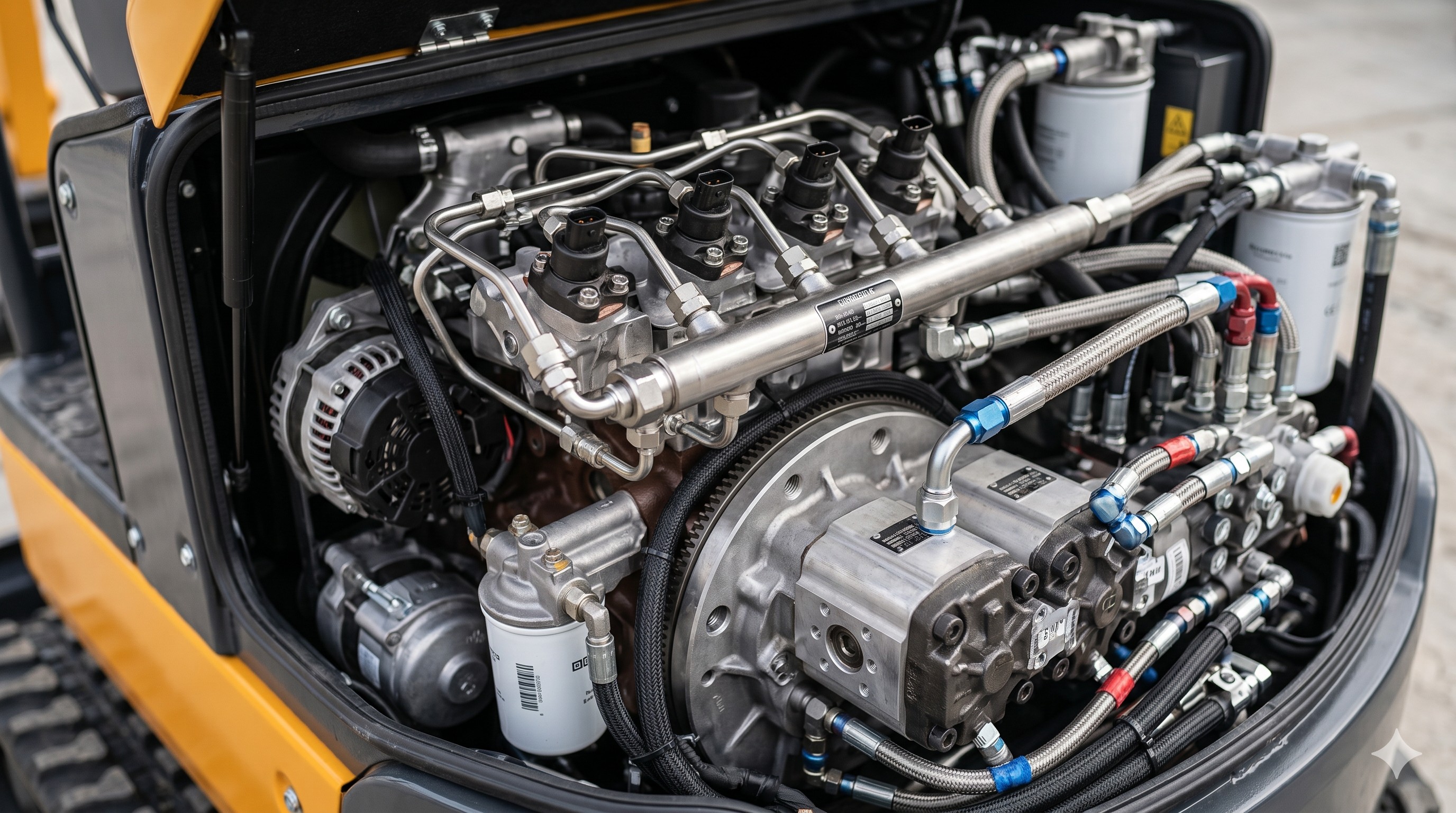
The 0.1m³ excavator class operates at an operating weight between 1,200 kg and 1,600 kg. Achieving durability requires a closed-center hydraulic system with load-sensing pumps. Leading designs (Kubota, Yanmar, Bobcat) use a twin-piston variable displacement pump delivering 18–22 L/min at 180–210 bar hydraulic pressure. This yields a bucket breakout force of 11–14 kN, sufficient for digging compacted clay or asphalt. The undercarriage uses rubber tracks (ISO 8187 compliant) with bolt-on steel links or optional steel tracks for demolition. A critical reliability metric: track pin bushing hardness (52–56 HRC) prevents premature wear when working on rubble. For emission compliance, diesel engines under 19 kW (14–16 hp net power) must meet EPA Tier 4 Final / EU Stage V via DOC (Diesel Oxidation Catalyst) or DPF-less designs using high-pressure common rail injection (2,200 bar).

Technical Specifications: Data-Driven Comparison

All values below represent industry averages for ISO 6165-compliant 0.1m³ excavators (0.09–0.12m³ SAE heaped bucket capacity). Variations occur between swing-type (conventional) and zero-tail-swing (ZTS) configurations.

Key Parameter Technical Specification (ISO 6165 Compliant)
Engine Horsepower (Net) 14.6–16.1 hp (10.9–12.0 kW) @ 2,400 rpm
Operating Weight 1,250–1,550 kg (ZTS models lighter)
Bucket Capacity (SAE Heaped) 0.09–0.12 m³ (standard 0.1m³)
Hydraulic Pressure (Main Relief) 180–210 bar (2,610–3,045 psi)
Hydraulic Flow (Implement) 18–22 L/min (4.8–5.8 gal/min)
Breakout Force (Bucket) 11.2–14.0 kN (2,520–3,150 lbf)
Fuel Consumption (Avg. Load) 1.6–1.9 L/h (0.42–0.50 gal/h)
Emission Standard EPA Tier 4 Final / EU Stage V (DOC or DPF-free)
Ground Pressure (Rubber Tracks) 24–28 kPa (3.5–4.1 psi)
Overall Width 980–1,150 mm (38–45 in)

Comparative Advantage: TCO, Fuel Efficiency & ROI Analysis

Versus a skid steer loader with backhoe attachment, the dedicated 0.1m³ excavator offers 27% lower hourly fuel consumption (1.6–1.9 L/h vs 2.6 L/h) due to optimized hydraulic matching. Initial CAPEX is $28k–$42k USD versus $45k+ for a skid steer plus attachment. In trenching applications (600mm depth, 200mm width), the micro excavator cycles 35% faster (22 linear meters/hour vs 16). For TCO over 5,000 hours: fuel ($10,000 vs $14,500), maintenance (lower track wear, no aux hydraulic cooler failures), and residual value (compact class holds 62% vs 55% for skid steers). ROI breakeven for rental fleets is typically 18 months at $350/day dry hire. Contractors replacing four manual laborers (safety risk, $120/man-day) see payback in under 400 hours.

Heavy-Duty Application Scenarios

Contrary to perception, the 0.1m³ excavator handles severe-duty tasks when correctly specced. Use cases include:

  • Confined demolition: Interior slab removal (with hydraulic hammer attachment, 180-200 bpm).
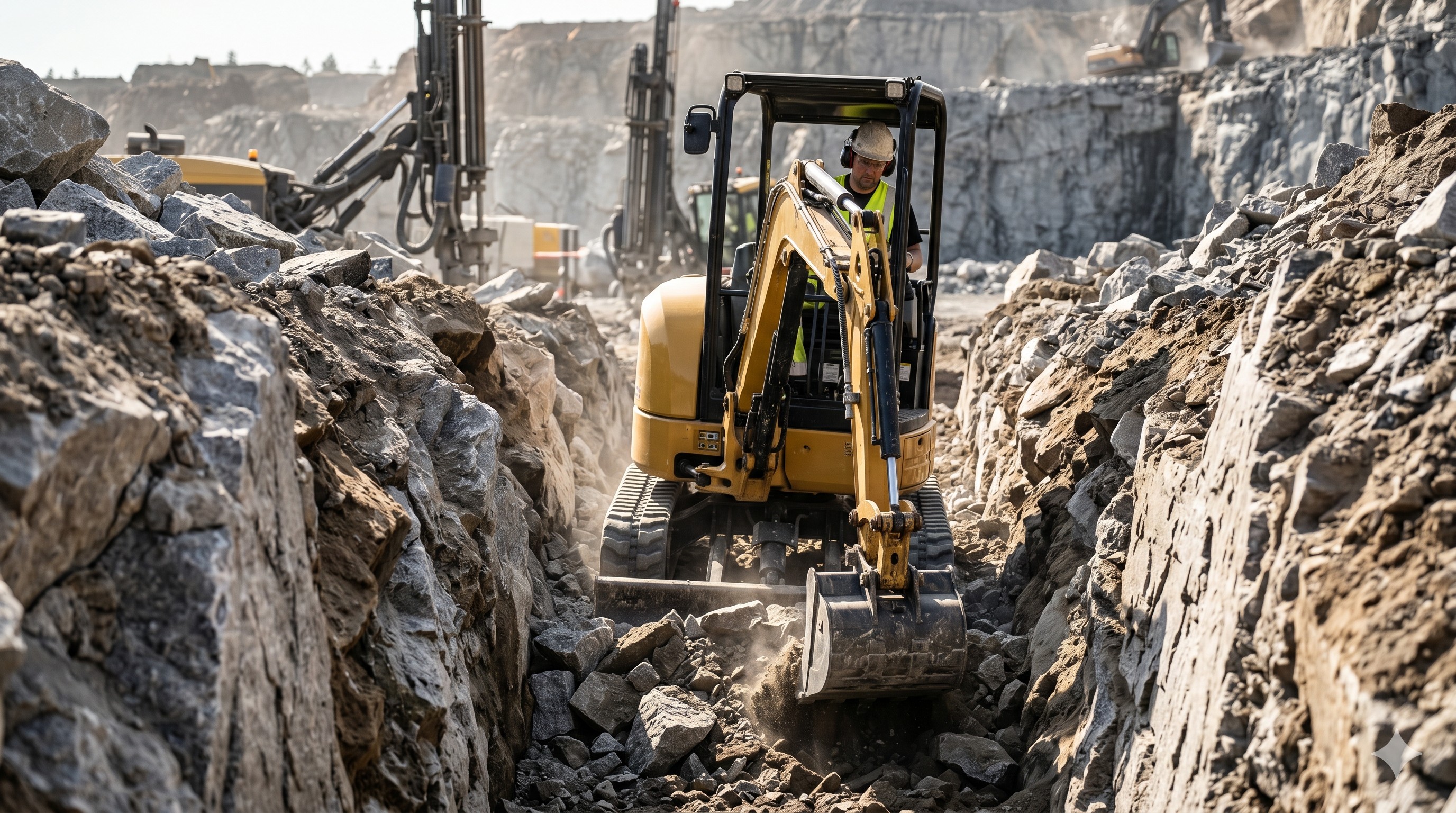
  • Pipeline trenching: Rocky soils with rubber track protection plates.
  • Agricultural earthmoving: Orchard drainage ditches and livestock pen cleaning.
  • Manufacturing: Foundry sand removal in furnace areas (heat-resistant hydraulic fluids).
  • Mining: Grade control in narrow-vein artisanal mining (<1.5m wide drifts).

Critical for mining: optional FOPS Level II canopy and armored hydraulic hoses (ISO 18768).

Conclusion: The Productivity Intersection of Compact Size & Hydraulic Power

The 0.1m³ bucket excavator is not a downsized toy but an optimized production tool. With engine power density exceeding 8.5 kW/ton, hydraulic pressure at 210 bar, and emission compliance for indoor/urban use, it delivers superior ROI per cubic meter moved in restrictive sites. Future trends point to lithium-ion zero-tail-swing models (prototype stage 2024–2025), but current diesel-hydraulic architectures remain the TCO benchmark. For fleet owners evaluating micro-excavators, prioritize variable displacement hydraulics and local dealer support for undercarriage parts. This machine class will capture 14% CAGR in the compact equipment segment through 2030.

RFQ