The goal of mining is simple: get the valuable stuff out, leave the worthless stuff behind. But simple goal, complicated execution. Because the valuable stuff is stuck to the worthless stuff, and the only way to separate them is to grind them apart.
Grind too coarse, and the valuable mineral is still locked inside worthless rock. It won't separate, it won't float, it won't settle. It just goes to tailings with everything else.
Grind too fine, and you've wasted energy, worn out your mill, and created particles so small they don't behave the way they're supposed to. They float when they shouldn't, settle when they shouldn't, and cost you money every step of the way.
Somewhere in between is the sweet spot. Finding it, hitting it, holding it—that's what makes the difference between a profitable mine and a hole in the ground.

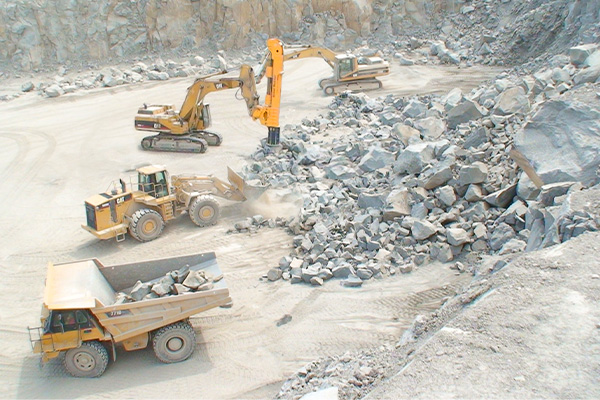
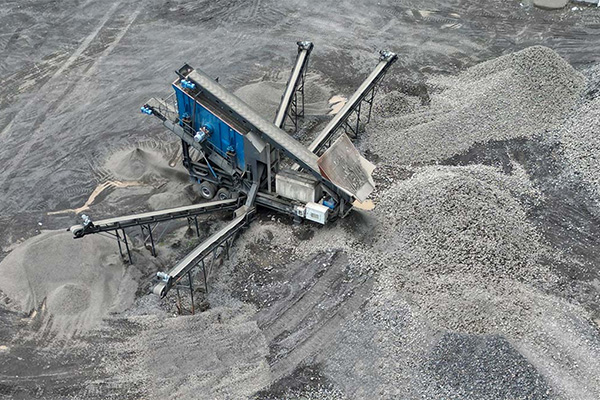
Before you even think about particle size, the rock has to come out of the ground. Blasting breaks it into chunks big enough to haul but small enough to crush . Then crushers take it down to gravel-sized pieces. Then mills grind it down to something that looks like sand or flour.
That last step—comminution, in the fancy terms—is where particle size really matters . The goal is to grind the rock until each particle is mostly one mineral . Not a chunk of copper stuck inside a chunk of quartz. Just copper. Or just quartz. Once they're separate, you can separate them.
Gravity separation is the oldest trick in the book. Heavy minerals sink. Light minerals don't. Jigs, spirals, shaking tables, cyclones—they all work on the same basic principle .
But here's the catch: weight depends on size as well as density. A big light particle can act like a heavy one. A small heavy particle can act like a light one. So if your particle sizes aren't uniform, gravity separation ends up sorting by size, not by mineral .
Jigs use pulses of water to bounce the material. Heavy particles sink faster between pulses . But if sizes are all over the place, big light particles can punch through and contaminate the heavy product. Uniform size means the jig separates by density, not by accident.
Spirals and shaking tables have the same problem. They rely on differences in drag and buoyancy, which are directly tied to particle size . Feed a spiral a mix of fines and coarse, and you'll get separation, but it won't be clean.
Flotation is where surface chemistry takes over. You add chemicals to make the valuable minerals water-repellent. Bubbles pick them up, float them to the top, and you skim them off .
But particle size messes with this too. Too coarse, and the bubble can't lift the weight. The particle sinks, and you lose it .
Too fine, and the particles get caught in the bubble flow regardless of what's on their surface. They float whether they're valuable or not, and your concentrate grade drops .
There's a window—usually between 10 and 150 micrometers—where flotation works best. Outside that window, you're fighting the physics of bubbles and water.
Magnets and electric fields can pull minerals apart based on how they react. But again, size matters .
Small particles have more surface area relative to their mass. That means they pick up more charge, move farther, behave differently . A magnetic separator designed to pull out iron minerals might end up pulling out fines of everything if the size distribution is too wide.
Sometimes you can use this effect to your advantage. Sometimes it just makes a mess. Either way, you need to know what your size distribution looks like before you can trust the separation.
At the end of the day, you're not mining for fun. You're mining to sell. And the customer has specs .
Cement plants want a certain fineness. Glass manufacturers want uniform sand. Smelters want concentrate that's ground just right for their furnaces. If your particle size is off, you're either shipping a product they don't want, or you're discounting it enough that they'll fix it themselves.
In some cases, particle shape matters too. Flaky particles behave differently than round ones. Angular particles pack differently. If the customer cares, you have to care.

What's your goal? Crusher efficiency? Mill performance? Flotation recovery? Final product spec? Different stages need different size ranges, different measurement methods.
Sieves are the old standby. Stack them up, shake them, weigh what's left. Low cost, easy to understand, and you can see the results with your own eyes .
But sieves have limits. They wear out—the mesh stretches, the openings get bigger, and your results drift without you knowing . They're slow. Operator technique matters a lot. And for fine particles, they just don't work.
Laser diffraction is the modern answer. Shoot a laser through a sample, measure how the light scatters, and the computer tells you the size distribution in seconds . No screens to wear out, no operator shaking by hand, and it works for particles way too small for sieves.
The downside? Cost. A laser diffraction system is an investment. But for mines that need consistent, accurate size data every shift, it pays for itself in recovered metal.
Dynamic image analysis is another option. Cameras take pictures of particles as they flow past, and software measures them one by one. Great for shape analysis, good for size, but slower than laser diffraction.
The best analyzer in the world won't help if the sample isn't representative. Grab samples from the wrong spot, or take them at the wrong time, and your data is worse than useless—it's misleading .
Automated samplers that pull material from the process stream are better than grab samples. Continuous measurement is better than batch analysis. The goal isn't to know what size one bucket of rock was at 2 p.m. It's to know what the whole process is doing all day.
Measuring size doesn't help if you don't act on it. If the mill is grinding too coarse, adjust the feed rate or the media charge. If the flotation feed is too fine, maybe the cyclones need tuning.
The mines that make money don't just measure particle size. They use the data to control their process in real time.

Here's the short version for when you're standing next to a mill wondering why recovery dropped:
The mines that get particle size right recover more metal, produce better concentrate, and ship product that customers want. The ones that ignore it? They leave value in the tailings and discounts on the truck.
A: Because separation processes—gravity, flotation, magnetic—all depend on size. Get it wrong and you lose valuable mineral or contaminate your concentrate .
A: Usually between 10 and 150 micrometers. Too coarse and bubbles can't lift it. Too fine and particles get entrained regardless of surface chemistry .
A: Stack of screens with different mesh sizes. Shake it, and particles smaller than the mesh fall through. Weigh what's left on each screen to get the distribution .
A: They wear out. Mesh stretches, openings change, and results drift. Operator technique affects results. And they're slow for fine particles .
A: A laser shines through a sample. Particles scatter the light, and the pattern tells you how big they are. Fast, accurate, works for fine particles .
A: In a production environment, continuously. The process changes hour to hour. Grab samples once a shift might miss problems that cost you money .