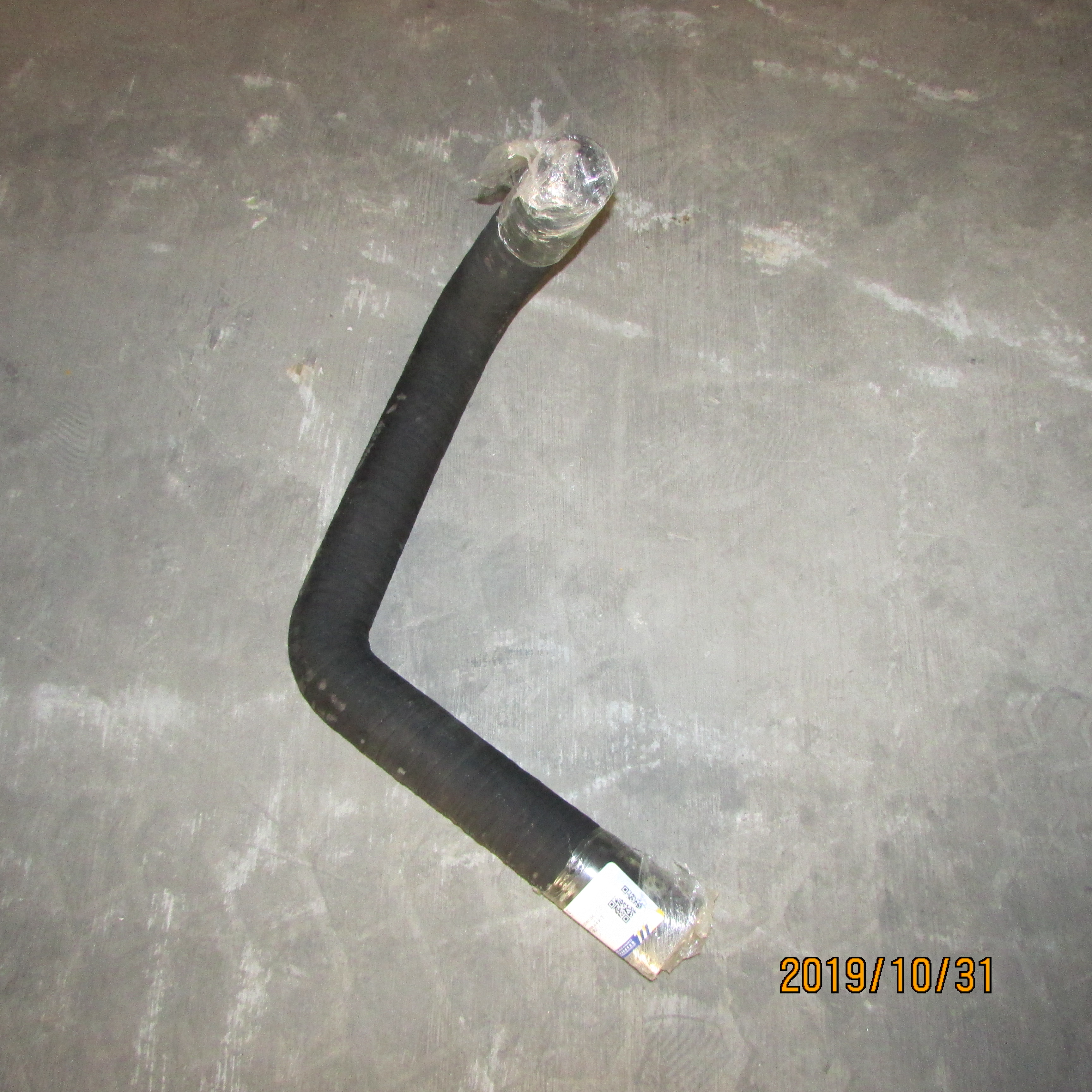
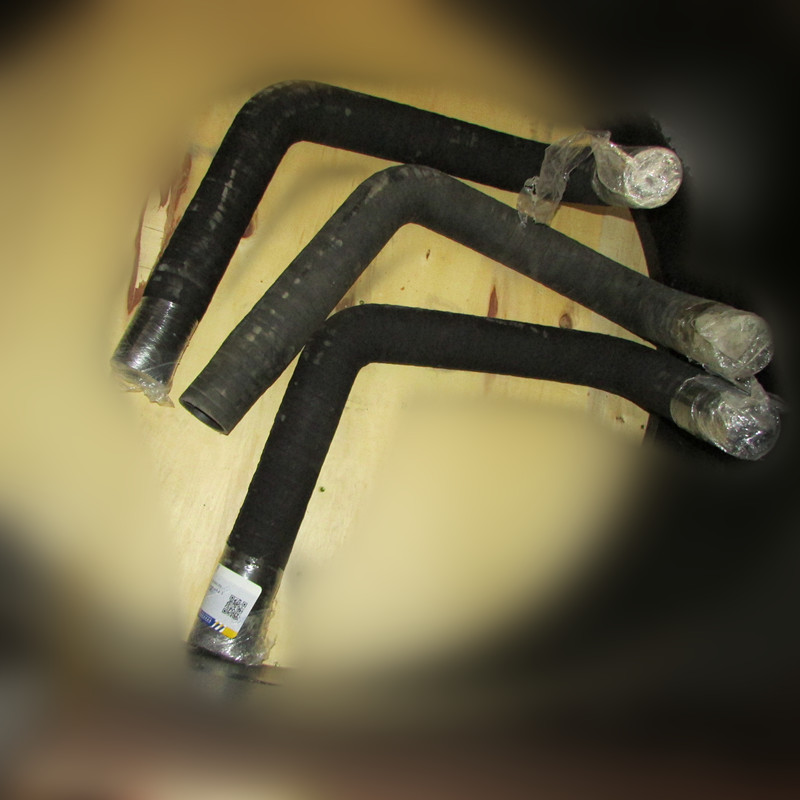
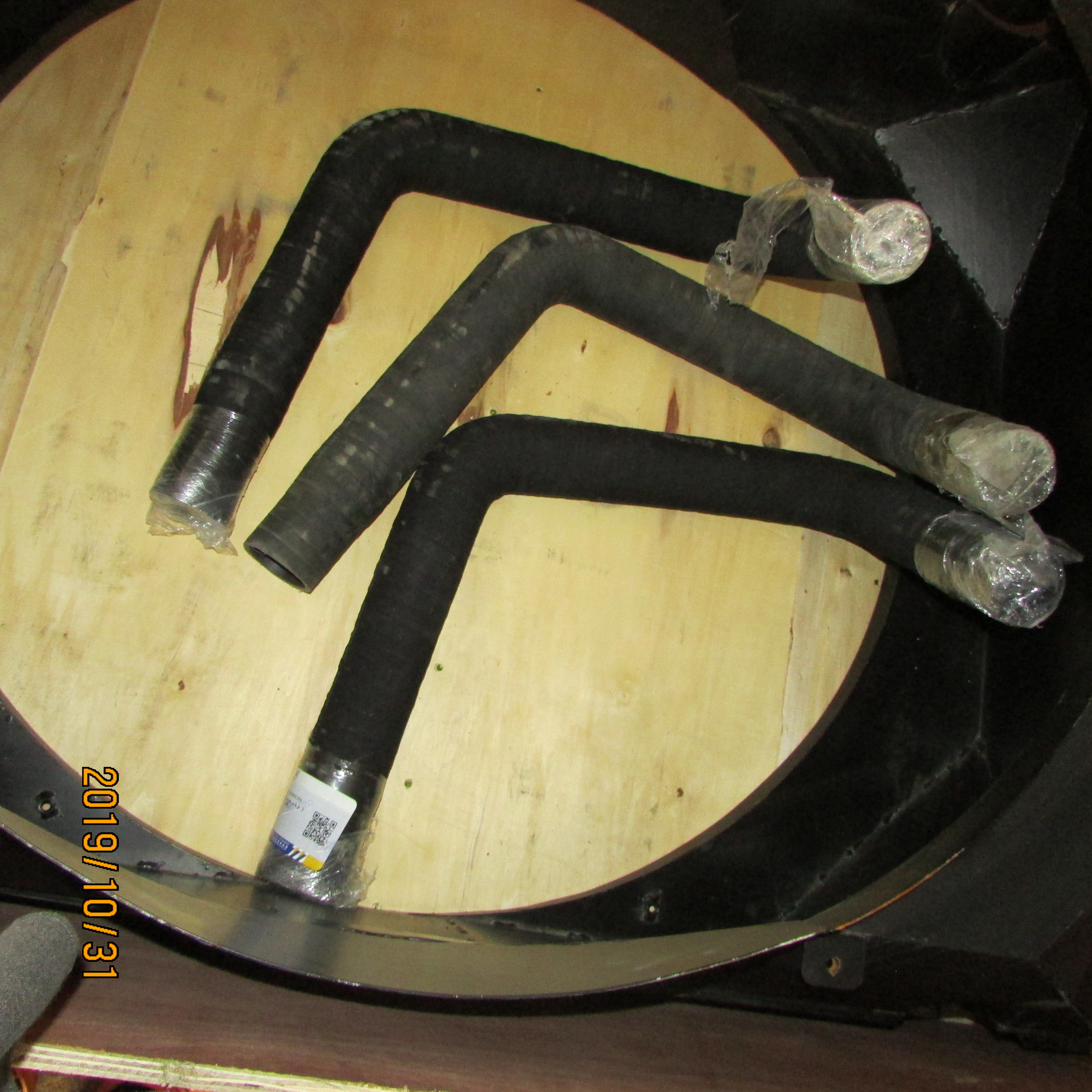
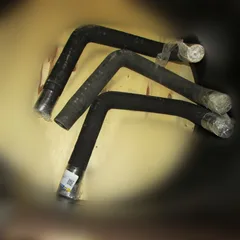
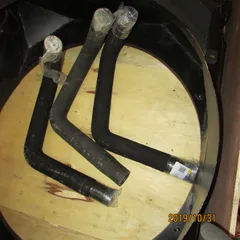
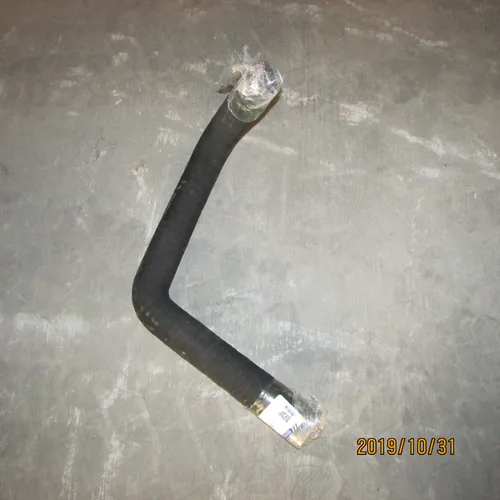
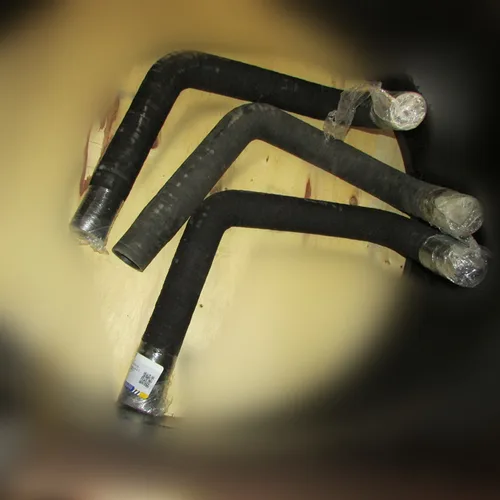
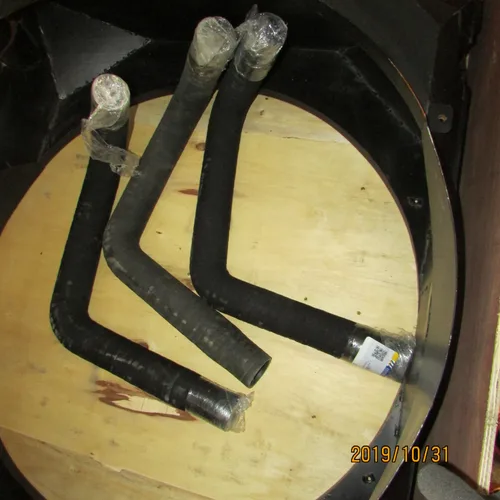
A lower radiator hose is the pipe connecting the bottom outlet of the radiator to the inlet port on the engine block within the engine cooling loop, working together with the upper radiator hose to form a closed coolant circulation path. Driven by the water pump, coolant absorbs heat as it passes through the engine, then returns to the radiator via the hose to dissipate heat, and is pumped back into the engine—completing the heat-exchange cycle. Its sealing integrity and flow smoothness directly affect engine heat dissipation efficiency and operational safety.
Operating in harsh field conditions, the lower radiator hose is exposed long-term to high temperature, vibration, oil contamination, and mud-water washing. Rubber material tends to age and crack, hose clamps may loosen, and the inner wall can delaminate—making it one of the more leak-prone components in the cooling system. When symptoms such as elevated water temperature, seepage at joints, or surface cracking appear, inspection and timely replacement are necessary to avoid engine overheating and cylinder scoring due to coolant loss.
Product background of the LW900KN loader: XCMG's LW900KN is the flagship model of the 9-ton-class K-series wheel loader, with a rated load of 9000 kg, an operating weight of 31000 kg, and a Cummins QSM11-C335 electronically-controlled turbocharged engine (rated power 250 kW / 2100 rpm) . This model adopts an independent single-row radiator system with wide-fin spacing, specifically engineered to solve thermal-balance challenges under diverse harsh environments —meaning its cooling system hoses (including the lower radiator hose) must remain stable under harsh conditions of high temperature, heavy dust, and prolonged continuous operation. The LW900KN series also includes variants such as the LNG gas version (LW900KN-LNG, the world's largest-tonnage liquefied natural gas loader) ; cooling system hoses may differ across powertrain variants.