

• Swaging-Type Constant-Resistance Large-Deformation Anchor Cable / Rock Bolt、Swage-Type Constant-Resistance Yielding Bolt/Cable
  • Swaging-Type Constant-Resistance Large-Deformation Anchor Cable / Rock Bolt、Swage-Type Constant-Resistance Yielding Bolt/Cable
  • Swaging-Type Constant-Resistance Large-Deformation Anchor Cable / Rock Bolt、Swage-Type Constant-Resistance Yielding Bolt/Cable
  • Swaging-Type Constant-Resistance Large-Deformation Anchor Cable / Rock Bolt、Swage-Type Constant-Resistance Yielding Bolt/Cable
  • Swaging-Type Constant-Resistance Large-Deformation Anchor Cable / Rock Bolt、Swage-Type Constant-Resistance Yielding Bolt/Cable
  • Swaging-Type Constant-Resistance Large-Deformation Anchor Cable / Rock Bolt、Swage-Type Constant-Resistance Yielding Bolt/Cable

Swaging-Type Constant-Resistance Large-Deformation Anchor Cable / Rock Bolt、Swage-Type Constant-Resistance Yielding Bolt/Cable

The underlying principle of the swaging‑type constant‑resistance large‑deformation rock bolt is to extrude a thick steel tube into a relatively smaller hole, thereby achieving constant‑resistance large deformation and energy absorption.
$5.00 - 10.00
Shandong Shengyuan Industrial Equipment Co., Ltd.
Shandong Shengyuan Industrial Equipment Co., Ltd.

Main Products: New support products, lithium battery monorail hoist, mining support equipment, hydraulic power machinery and components, alloy castings, valves, hydraulic motor
View Supplier
Year Established Established in 1997
Main Products New support products, lithium battery monorail hoist, mining support equipment, hydraulic power machinery and components, alloy castings, valves, hydraulic motor
Employees 101-500 People
Factory Area > 50,000 m²
Annual Revenue Above US$50 Million
Main Markets Southeast Asia / Middle East & North Africa
Details
Trade Information

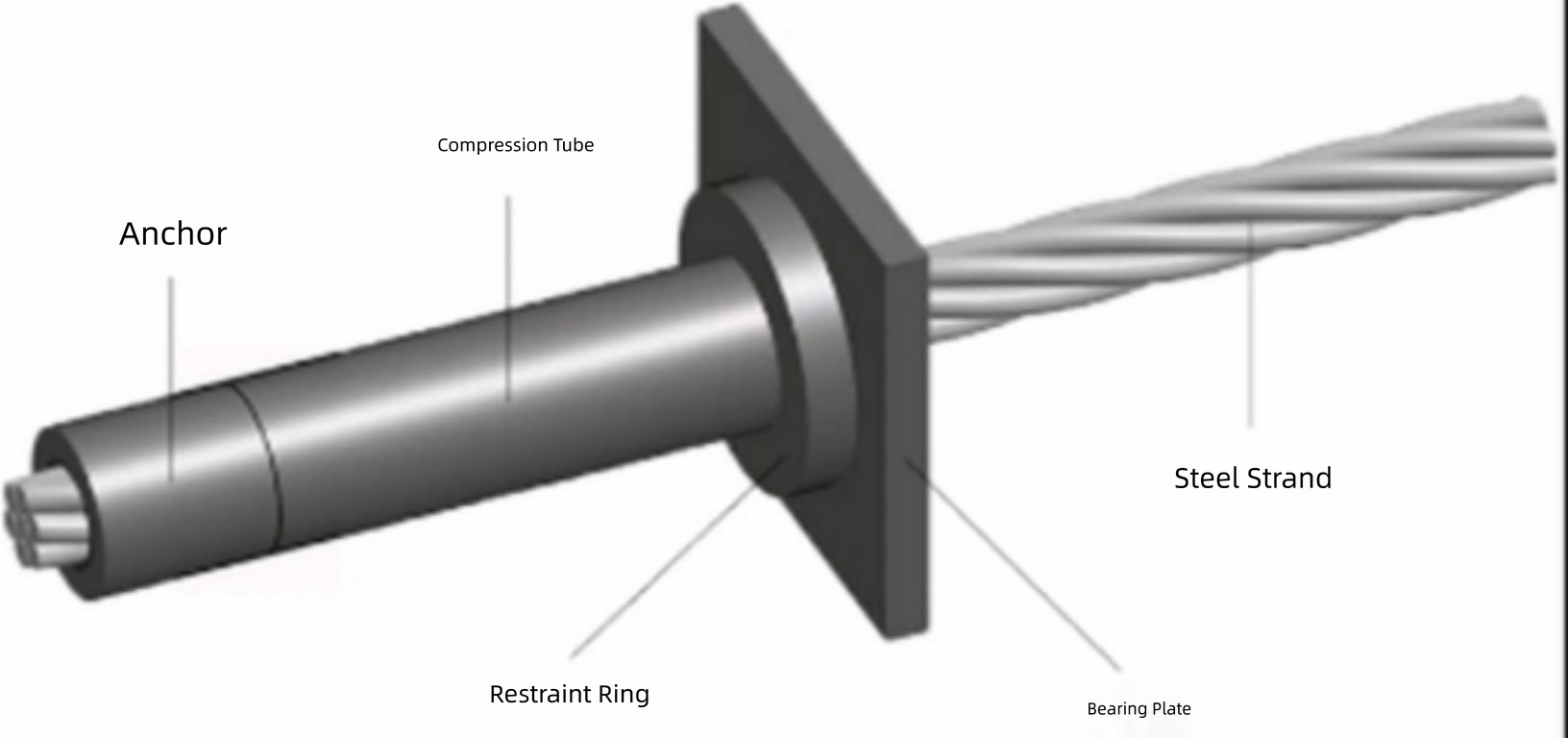
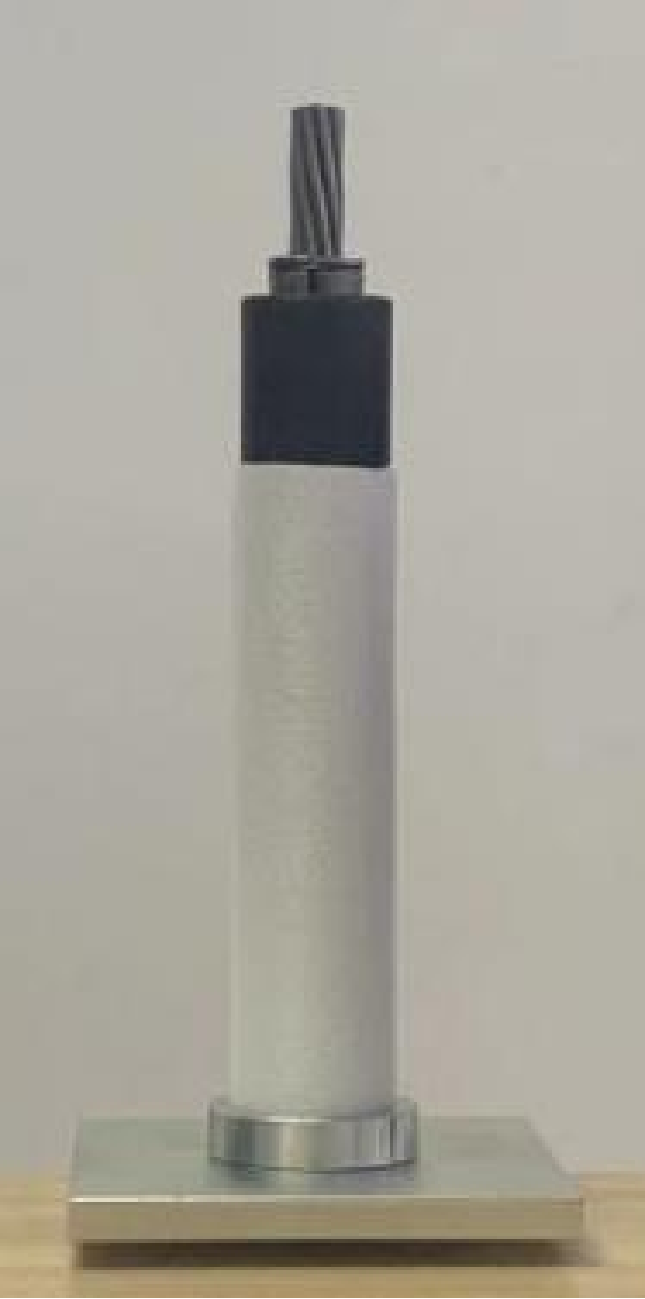
The core constant‑resistance device of the anchor cable/bolt consists of two main parts: a restraining ring and a compression tube. Under the combined action of axial pressure from the anchor and radial pressure from the restraining ring, the compression tube undergoes radial contraction and moves axially into the restraining ring, thereby achieving large‑deformation yielding.

When the surrounding rock deforms, the tensile force in the steel strand (or bar) is transmitted through the anchor to the compression tube, generating a high contact force between the compression tube and the restraining ring. Because the stiffness of the compression tube is lower than that of the restraining ring, the restraining ring remains stable while the compression tube deforms radially inward. Owing to volume constancy in the stress‑concentration zone, the resistance remains stable throughout the deformation process and is always kept below the breaking load of the steel strand (or bar).

The deformation process comprises three stages:

  1. Initial deformation stage – As the surrounding rock begins to deform, the tensile force in the strand is lower than the preset constant resistance. Minor contact deformation occurs at the end of the compression tube, and the anchor force gradually increases.

  2. Structural deformation stage – Once the tensile force reaches the preset constant resistance, the compression tube deforms radially and moves axially into the restraining ring. The resistance remains constant, providing stable support.

  3. Ultimate deformation stage – When the accumulated deformation exceeds the length of the compression tube, the constant‑resistance device locks up. If the surrounding rock continues to deform, the anchor force will increase until fracture occurs (this can be avoided by proper design of the compression tube length).

Key Performance Parameters

Parameter Anchor Cable Anchor Bolt
Constant‑resistance range 162 – 383 kN 150 – 180 kN
Maximum allowable deformation Up to 694 mm
Energy absorption per single impact Up to 103 kJ Up to 53 kJ
Stability of working resistance Constant (measured ~350 kN) Constant
Reduction in compression ratio during impact Only 0.54% – 1.43%
MOQ
10000 Pieces
Lead Time
10 days
Supply Ability
5000 Pieces per Day
Shipping Port
qingdao/Khorgos
Trade Terms
FOB, CIF, EXW, CFR, DDP, DAP
  • Swaging-Type Constant-Resistance Large-Deformation Anchor Cable / Rock Bolt、Swage-Type Constant-Resistance Yielding Bolt/Cable
  • Swaging-Type Constant-Resistance Large-Deformation Anchor Cable / Rock Bolt、Swage-Type Constant-Resistance Yielding Bolt/Cable
  • Swaging-Type Constant-Resistance Large-Deformation Anchor Cable / Rock Bolt、Swage-Type Constant-Resistance Yielding Bolt/Cable

Description

The core constant‑resistance device of the anchor cable/bolt consists of two main parts: a restraining ring and a compression tube. Under the combined action of axial pressure from the anchor and radial pressure from the restraining ring, the compression tube undergoes radial contraction and moves axially into the restraining ring, thereby achieving large‑deformation yielding.

When the surrounding rock deforms, the tensile force in the steel strand (or bar) is transmitted through the anchor to the compression tube, generating a high contact force between the compression tube and the restraining ring. Because the stiffness of the compression tube is lower than that of the restraining ring, the restraining ring remains stable while the compression tube deforms radially inward. Owing to volume constancy in the stress‑concentration zone, the resistance remains stable throughout the deformation process and is always kept below the breaking load of the steel strand (or bar).

The deformation process comprises three stages:

  1. Initial deformation stage – As the surrounding rock begins to deform, the tensile force in the strand is lower than the preset constant resistance. Minor contact deformation occurs at the end of the compression tube, and the anchor force gradually increases.

  2. Structural deformation stage – Once the tensile force reaches the preset constant resistance, the compression tube deforms radially and moves axially into the restraining ring. The resistance remains constant, providing stable support.

  3. Ultimate deformation stage – When the accumulated deformation exceeds the length of the compression tube, the constant‑resistance device locks up. If the surrounding rock continues to deform, the anchor force will increase until fracture occurs (this can be avoided by proper design of the compression tube length).

Key Performance Parameters

Parameter Anchor Cable Anchor Bolt
Constant‑resistance range 162 – 383 kN 150 – 180 kN
Maximum allowable deformation Up to 694 mm
Energy absorption per single impact Up to 103 kJ Up to 53 kJ
Stability of working resistance Constant (measured ~350 kN) Constant
Reduction in compression ratio during impact Only 0.54% – 1.43%
RFQ