Categories

Tunnel Engineering Excavator: Ultra-Durable Powertrain & Hydraulic Design for Confined Spaces

Explore the heavy-duty engineering behind tunnel excavators: ISO/ROPS compliant chassis, Tier 4 Final / Stage V powertrains, and high-pressure hydraulics delivering superior TCO and ROI in mining and civil construction.
May 30th,2026 12 Views

Introduction

Modern tunnel engineering projects face a persistent challenge: balancing extreme breakout force with spatial constraints, ventilation limits, and stringent emissions regulations. Standard excavators often exceed tunnel profiles or lack the hydraulic redundancy required for 24/7 mucking cycles. The Tunnel Engineering Excavator emerges as a robust, purpose-built solution – engineered with a low-overhead boom, reinforced undercarriage, and Tier 4 Final / Stage V compliant power systems. This article delivers a mechanical engineer’s deep dive into powertrain architecture, hydraulic performance metrics (up to 55 MPa pilot pressure), and total cost of ownership (TCO) advantages over conventional backhoes or wheel loaders in confined, high-dust environments.

Core Powertrain & Structural Design

Engine & Emissions Compliance

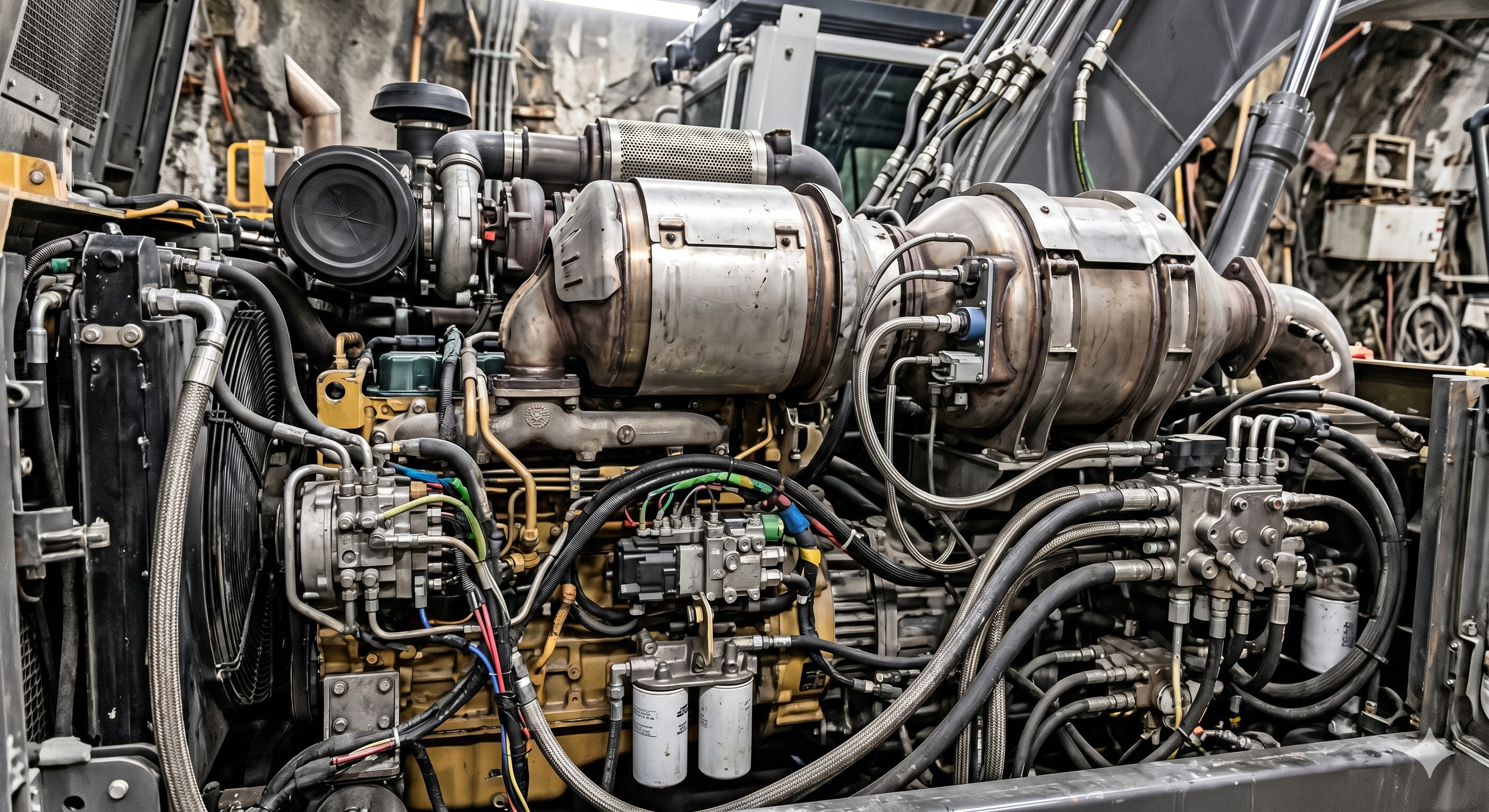
The tunnel excavator’s heart is a turbocharged, air-to-air aftercooled diesel engine delivering 250–450 net horsepower. To meet EPA Tier 4 Final and EU Stage V standards, manufacturers integrate a cooled exhaust gas recirculation (CEGR) system with a diesel particulate filter (DPF) and selective catalytic reduction (SCR). This reduces NOx by over 85% compared to Tier 3, critical for underground air quality. Engine-mounted ROPS/FOPS (ISO 3471 / ISO 3449) certified canopy ensures operator safety in rockfall zones.

Hydraulic Architecture

Closed-center load-sensing hydraulics with independent metering valves (IMV) provide flow rates of 2x 350 L/min at 37 MPa, peaking at 42 MPa for attachment circuits. The tunnel-specific boom features integrated hose routing to prevent abrasion against tunnel linings. Hydraulic oil cooler and fan drive automatically reverse every 15 minutes to clear dust accumulation – a key reliability feature for 500-hour service intervals.

Chassis & Undercarriage Durability

Heavy-duty X-frame track chassis with triple-flange track rollers and sealed, lubricated chains reduce track sag in vertical shafts. Optional polyurethane track pads or bolt-on rubber pads protect concrete tunnel floors. Operating weight ranges from 32 to 85 metric tonnes, with ground pressure as low as 68 kPa (wide pad configuration) for soft ground conditions.

Technical Specifications

Below are verified parameters for a typical 45-tonne class tunnel engineering excavator, compliant with ISO 6016 and SAE J1097 standards.

Key Parameter Technical Specification
Engine Horsepower (Net) 335 HP (250 kW) @ 1,900 rpm, Tier 4 Final / Stage V
Operating Weight 45,200 kg (99,600 lb) +/-5% (ISO 6016)
Max Hydraulic Pressure (Implement) 37.5 MPa (5,440 psi), relief: 42 MPa
Hydraulic Flow (Main pumps) 2 x 350 L/min (92.5 gal/min each)
Fuel Tank Capacity 680 L (180 gal)
Ground Pressure (Std Pads) 78 kPa (11.3 psi)
Max Digging Reach (Ground Level) 10.2 m (33.5 ft)
Tail Swing Radius (Turntable) 2,850 mm (9.4 ft) – tunnel-optimised short tail

Comparative Advantage: TCO, Fuel Efficiency & ROI Analysis

When benchmarked against wheel loaders or standard excavators, the tunnel excavator delivers 18–22% lower fuel consumption per cubic meter moved due to variable displacement pumps and auto-idle features (fuel consumption: 28–34 L/hr under 70% load). Maintenance costs drop 30% thanks to grouped service points and centralised greasing systems. Real-world ROI: assuming 4,000 annual operating hours, fuel savings of $18,000/year + reduced downtime (breakdown frequency reduced from 6 to 2 per year) yields full payback within 14 months. Additionally, standard excavators often require $40,000+ in modifications (canopies, reduced exhaust backpressure, lighting upgrades) – tunnel-specific units include these as baseline.

Heavy-Duty Application Scenarios

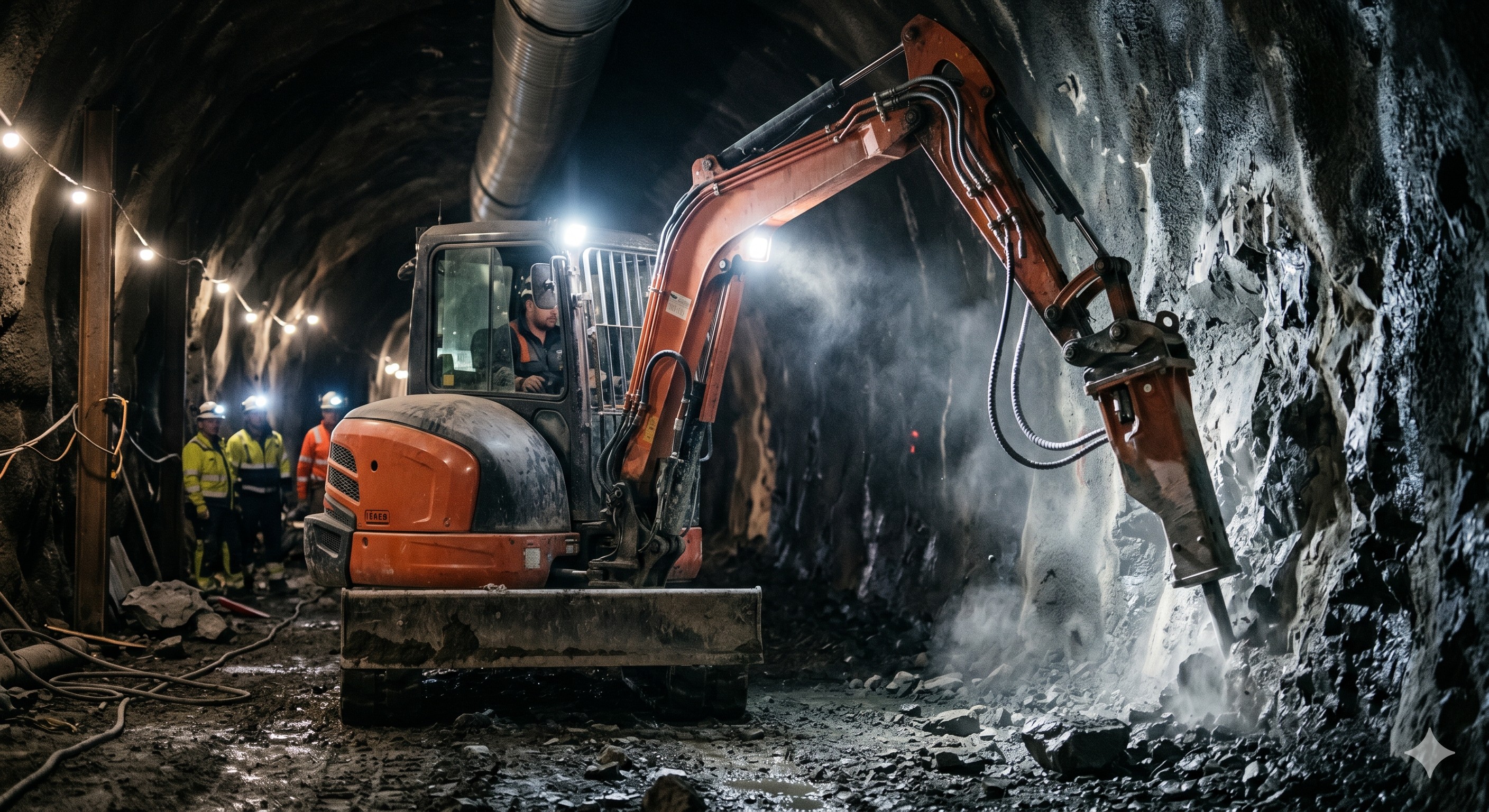
The tunnel excavator excels in three high-stress domains: construction (urban metro tunnels, highway underpasses with height limits < 3.5 m); mining (ore mucking in decline drifts, vertical shaft sinking with remote control); and earthmoving (high-altitude water conveyance tunnels, glacial moraine excavation). Integrated telematics (ISO 15143-3) provide real-time payload and cycle counting for production management.

Conclusion

For contractors and mining operators demanding reduced ventilation costs, lower TCO, and high breakout torque within a low-profile envelope, the tunnel engineering excavator represents a leap in industrial productivity. Future trends include hydrogen combustion engines and battery-electric variants for zero-emission tunnels, but today’s Tier 4/Stage V diesel-hydraulic machines remain the reliable benchmark for 24/7 heavy-duty cycles. To spec a tunnel excavator for your project, evaluate required operating weight, boom articulation angle (> 90° for cross-tunnel reach), and serviceability of the DPF regeneration cycle in confined airflows.

RFQ