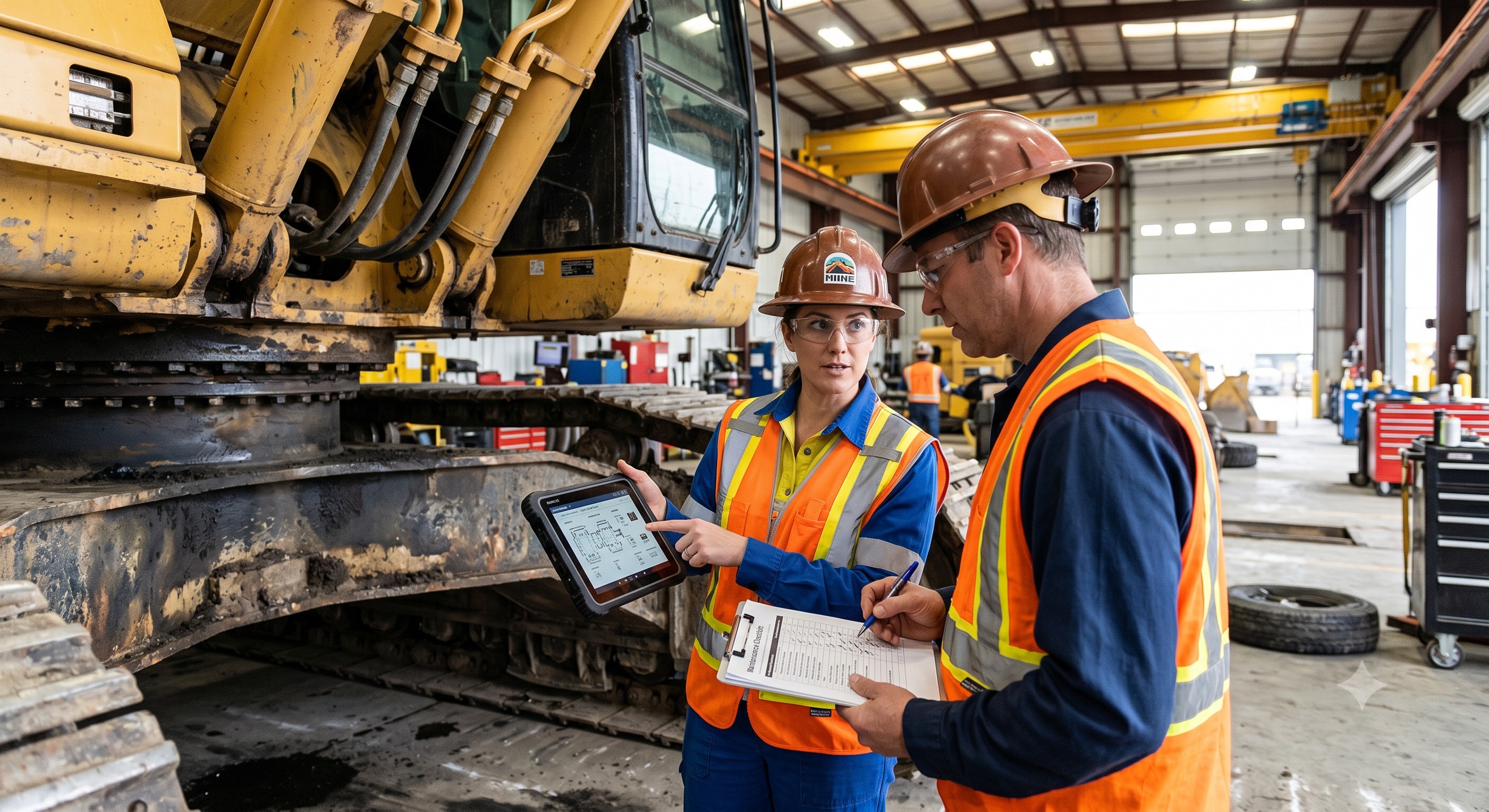
For B2B procurement and fleet managers, optimizing the lifecycle of a mining excavating machine requires precise technical knowledge. This FAQ addresses high-stakes decisions, from pre-sales payload validation and emission compliance to post-sales maintenance scheduling and hydraulic system care. Each answer is engineered to support uptime and reduce total cost of ownership.

The maximum standard payload capacity for a mining excavating machine under 100 metric tons operating weight is between 5.5 and 12.0 metric tons, depending on the bucket size and boom geometry. For example, a 70-ton class excavator typically achieves an 8.5-ton payload with a 4.5 cubic meter rock bucket. Exceeding 105% of rated payload significantly accelerates slew ring and undercarriage wear.
For new mining excavating machines sold in the EU and US, Tier 4 Final (EPA) and Stage V (EU) are mandatory for engines above 560 kW, requiring diesel particulate filters (DPF) and selective catalytic reduction (SCR). In less regulated markets, Tier 3 or equivalent engines remain available but may face resale restrictions. Verify local mine site emission thresholds before procurement.
Confirm attachment compatibility by checking three parameters: auxiliary hydraulic flow (L/min), operating pressure (bar), and the machine’s attachment management system (AMS) software version. The excavator’s main control valve must match the attachment’s required flow rate within ±10%, and the quick coupler must be ISO 13031 compliant. Always request an OEM pin-out diagram for electronic attachments.
In hard rock mining conditions, the hydraulic oil replacement interval is 2,000 operating hours or 12 months, whichever comes first. Severe dust or extreme temperatures (above 40°C) reduce this to 1,500 hours. Use oil analysis at 500-hour intervals to monitor ISO cleanliness code (target 16/14/11) and water content below 200 ppm.
The undercarriage requires track tension inspection every 250 hours, with pin and bushing rotation every 2,000 hours. The slew ring must be re-lubricated every 100 operating hours using extreme pressure (EP) lithium grease, and its mounting bolts need torque checking every 1,000 hours. Replace track pads when grouser height wears below 70% of original.
Certified spare parts for discontinued mining excavating machine models are available through OEM aftermarket programs (e.g., Caterpillar Classic Parts, Komatsu ReMAN), certified remanufacturers (Liebherr, Hitachi), and ISO 9001:2015 independent suppliers like ITR or H-E Parts. Always demand a Certificate of Conformance for metallurgy and heat treatment data, especially for final drive planetary gears and main pump rotating groups.
For ambient temperatures above 35°C (95°F), use heavy-duty extended-life coolant (OAT type) with a 60/40 water-to-glycol ratio and hydraulic fluid with viscosity grade ISO VG 68. For freezing conditions below -20°C (-4°F), switch to ISO VG 32 hydraulic fluid with a synthetic blend and engine coolant at 50/50 ratio. Failure to adjust grade by season halves hydraulic pump life.
During standard load-and-haul cycles (90% load factor, 40-second cycle time), a 70-ton mining excavating machine consumes between 22 and 28 liters of diesel per hour (approximately 5.8 to 7.4 gallons per hour). Factors increasing consumption by up to 35% include poor operator technique, worn hydraulic pumps, and excavating material density above 1.8 tonnes per cubic meter.