Categories

Mini Excavator Source Supplier Price and Specification: A Complete Technical Guide

This comprehensive technical guide analyzes mini excavator source supplier price and specification, delivering critical data on powertrain design, hydraulic performance, and cost-saving strategies for procurement professionals.
Jul 24th,2026 116 Views

Introduction: Engineering Precision in a Compact Package

For the discerning contractor, navigating the landscape of compact equipment requires more than a simple price comparison. Today's demanding job sites—from urban infrastructure to rugged mining operations—call for machinery that delivers maximum productivity without sacrificing reliability or Total Cost of Ownership (TCO). The modern mini excavator stands as a testament to engineering evolution, but understanding the nuanced mini excavator source supplier price and specification matrix is the key to a profitable investment. This analysis delves into the core engineering, performance metrics, and market dynamics to equip procurement specialists and fleet managers with the technical insight they need.

Core Powertrain & Structural Design: A Mechanical Engineering Perspective

At the heart of any premium mini excavator lies a symbiotic relationship between the power plant and the hydraulic system. This synergy dictates not only performance but also long-term durability and serviceability.

Propulsion and Engine Compliance

The engine is the cornerstone of the machine's capability. In today's regulatory environment, adherence to emission standards is non-negotiable. Industry leaders typically power their machines with diesel engines meeting U.S. EPA Tier 4 Final or EU Stage V standards, often utilizing engines from reputable manufacturers like Kubota and Cat . For instance, the Cat C3.3B or C2.4 engines provide a robust blend of net power (up to 69.5 hp) and torque, ensuring compliance while delivering the necessary grunt for demanding applications . This focus on compliant, high-grade engines indicates a commitment to quality and sustainability.

Hydraulic Architecture and Efficiency

The hydraulic system is what transforms raw engine power into precise, usable work. Modern mini excavators utilize load-sensing hydraulic systems with variable displacement piston pumps, optimizing flow (e.g., 39.6 to 62 gpm) and pressure (up to 4134 psi) based on demand . This technology ensures that power is allocated efficiently to the boom, arm, bucket, and travel functions without fuel-wasting bypass. Key suppliers like Parker are often sourced for these critical hydraulic components, ensuring reliability . Furthermore, strict adherence to safety standards such as ROPS (ISO 12117-2) and FOPS (ISO 10262) underscores the engineering focus on operator safety .

Technical Specifications: The Blueprint for Performance

Understanding the technical data sheet is crucial. Below is a comparative table illustrating the variation in mini excavator source supplier price and specification across different weight classes and manufacturers. This data allows for a direct, objective comparison of key performance indicators.

Key Parameter Unit Model A (1.8-2.0T) Model B (3.2T) Model C (5.0-5.7T)
Engine Model / Power hp Kubota D902 / 19.5 Kubota / 24.4 Cat C3.3B / 69.5
Operating Weight lbs ~4,000 ~7,055 ~23,000
Max Digging Depth in 81 61 205
Bucket Breakout Force lbs 4,144 N/A 17,459
Hydraulic Pressure psi N/A N/A 4,134
Reference Price $ USD $14,900 $22,000 - $28,000 $100,000+

Comparative Advantage: Total Cost of Ownership (TCO) and ROI

In the heavy equipment sector, the initial purchase price is just the beginning. A holistic TCO analysis reveals the true value of an investment. Newer models engineered for fuel efficiency, like the Cat 310, boast up to 10% lower total ownership costs . This is achieved through improved fuel consumption, extended service intervals, and reduced downtime.

Disruptive suppliers are challenging traditional pricing models by offering direct-to-consumer sales. Brands like Bull Equipment and Rippa are entering the U.S. market with prices reported to be 30% to 40% lower than established alternatives, with flagship models like the R32 Pro priced between $22,000 and $28,000 . These machines often feature globally recognized components, such as Kubota engines, ensuring that lower upfront costs don't necessarily sacrifice powertrain reliability. However, procurement professionals must weigh these savings against factors like resale value, parts availability, and the robustness of the dealer network.

Heavy-Duty Application Scenarios

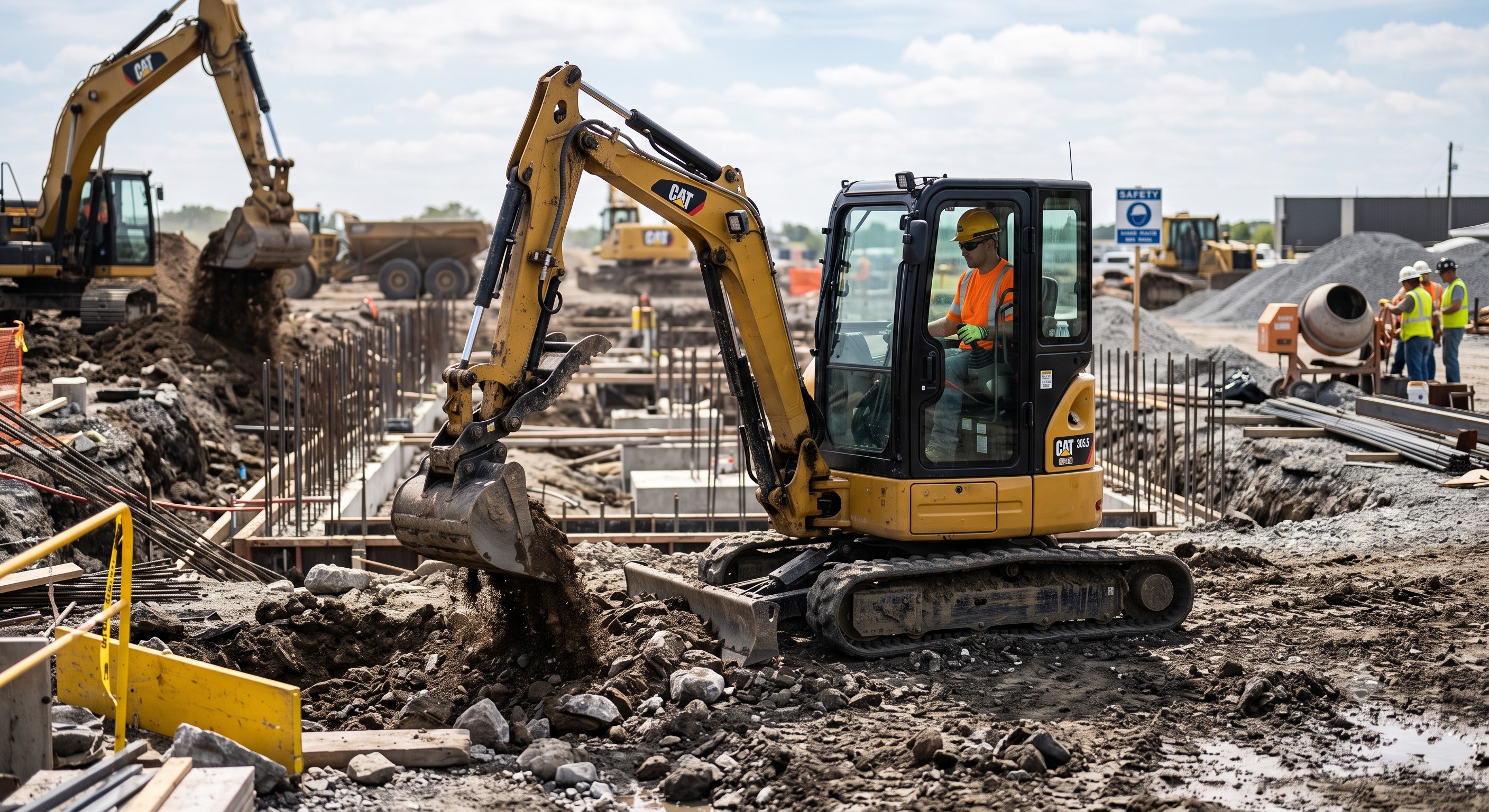
Mini excavators are no longer confined to landscaping. Their application has expanded significantly in heavy industry. Whether it's a 1.6-ton unit for confined utility work or a 5-ton machine for more substantial earthmoving, these machines are versatile tools . In demolition, models like the JCB 45C can be paired with powerful breakers like the HM018T to deliver safe and efficient building demolition . Their compact footprint, combined with high bucket tear-out forces (up to 32.4 kN) and advanced two-speed travel (up to 4.8 km/h), makes them ideal for applications ranging from mining to heavy-duty excavation .

[CONTENT_IMAGE_2]

Conclusion: The Future of Industrial Productivity

The evolution of the mini excavator market presents a dual opportunity and challenge for industry professionals. The influx of cost-effective alternatives is driving competition, while legacy manufacturers continue to push the envelope in efficiency and performance. For the engineering and procurement leader, success lies in a detailed evaluation of the mini excavator source supplier price and specification data. By prioritizing a balance of initial capital expenditure, TCO, and job-site performance, businesses can harness the full potential of these engineering marvels to drive unparalleled industrial productivity.

RFQ