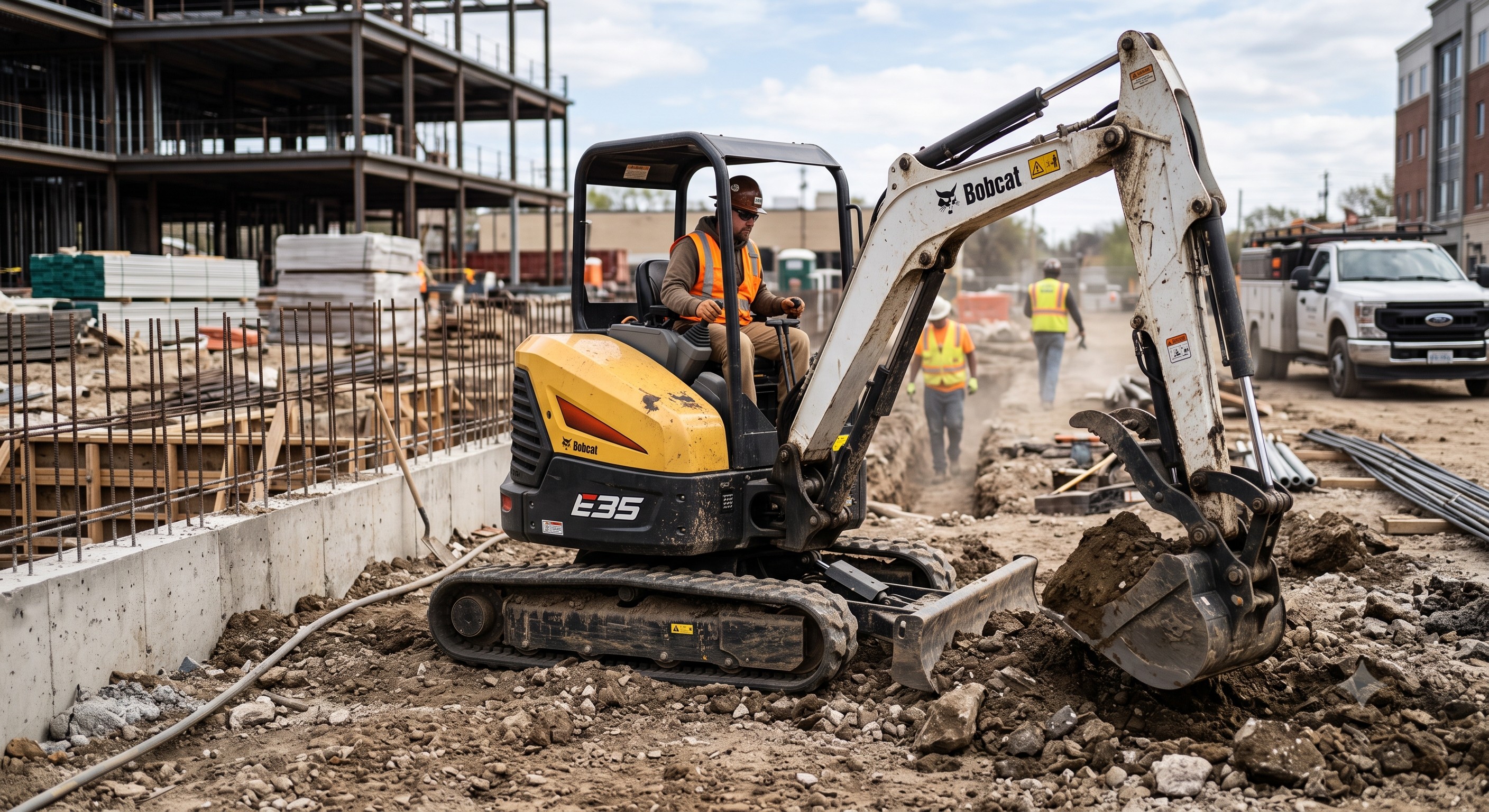
A comprehensive, authoritative guide for vetting and inspecting mini excavator suppliers, ensuring structural integrity, powertrain reliability, and full regulatory compliance for global construction, mining, and agricultural operations.
EXECUTIVE SUMMARY This document serves as the definitive technical standard for the procurement and inspection of mini excavators from global sources. Designed for fleet managers, procurement specialists, and heavy equipment operators in the Construction, Mining, and Agriculture sectors, this checklist ensures that every machine meets the rigorous demands of modern job sites. Our methodology mitigates up to 80% of purchasing risk by focusing on structural integrity, powertrain performance, and hydraulic efficiency, guaranteeing that your investment delivers maximum uptime and return on investment. This comprehensive guide is structured to provide a step-by-step evaluation protocol, from the initial visual inspection and cold start tests to advanced hydraulic system validation and certification verification. By adhering to these standards, you ensure that the equipment not only meets OEM benchmarks for durability and safety but also complies with international regulations such as CE, EPA Tier 4 Final, and ISO standards. This document empowers you to make data-driven decisions, ensuring that every machine procured is a reliable asset that enhances operational productivity and longevity.

STRUCTURAL INTEGRITY & POWERTRAIN The foundation of our inspection protocol lies in the uncompromising assessment of structural integrity and powertrain components. The chassis must be constructed from high-grade, wear-resistant steel with flawless welding quality; seams on the boom, arm, and frame joints must be even, consistent, and free from bubbles or cracks, as poor welding increases failure rates by 3 to 5 times after 1,000 working hours . The undercarriage, including track alignment and roller grease seals, is scrutinized to prevent premature wear and ensure stability under heavy loads. Powertrain evaluation focuses on engine and hydraulic system performance. We recommend engines from trusted brands like Cummins, Isuzu, or Cat, verified through cold start tests; a healthy engine must start within 2-3 seconds with minimal exhaust smoke . The hydraulic system, representing 50% of the machine's value, is tested for simultaneous operation capabilities, cylinder leakage, and swing motor stability. A well-tuned load-sensing hydraulic system ensures smooth, coordinated movements and optimal power distribution under load, confirming the manufacturer's engineering discipline . KEY FEATURES & OPERATOR COMFORT - Load-Sensing Hydraulics: Advanced variable displacement piston pumps that adjust flow and pressure based on demand, ensuring precise control, improved fuel efficiency, and up to 20% more performance in multifunction operations . - ROPS/FOPS Certified Cab: Operator protection structures certified to ISO 12117-2 and ISO 10262, providing a safe, durable environment with reduced sound pressure levels (as low as 72 dB(A)) to minimize operator fatigue . - Smart Control Panels: Intuitive interfaces featuring programmable settings for auxiliary flow, attachment management, and performance modes, allowing operators to customize machine behavior for specific tasks . - Vertical Integration & Parts Readiness: Access to a comprehensive spare parts catalog and documented warranty workflows, ensuring rapid service turnaround and minimal downtime. Suppliers with 13+ subsidiaries for components ensure strict quality control over critical parts like oil pipes and wiring harnesses . - Enhanced Durability Features: Automated welding processes (e.g., Kawasaki robots) and powder coating lines that ensure consistent build quality and superior corrosion resistance, protecting the machine in harsh environments . COMPLIANCE & SAFETY STANDARDS Our checklist mandates strict verification of all regulatory compliance documentation. Suppliers must provide CE declarations, EPA engine emission certificates (Tier 4 Final/EU Stage V), and ISO 9001 quality management system certifications. The inspection process requires matching serial numbers and model plates to documentation to prevent counterfeit or unverified units . All machines must adhere to global safety protocols, including ROPS/TOPS certifications, fire extinguisher mounts, and backup alarms. The checklist also verifies that factory guards are in place, operator protective glazing is intact, and critical welds have passed non-destructive testing (NDT). We recommend pre-shipment inspections (FAT) and support third-party audits (BV, SGS) to ensure the machine meets CE, EPA, and ISO standards before shipment . TECHNICAL SPECIFICATIONS The following specifications outline the critical performance and dimensional parameters for the mini excavator, benchmarked against industry-leading models. These ensure that the machine meets the operational demands of your specific application.
| Parameter |
Specification Benchmark |
| Engine Model (Typical) |
Cummins / Isuzu / Cat C-Series Tier 4 Final |
| Net Power Range |
23 - 70 hp (17 - 52 kW) |
| Operating Weight Range |
6,700 - 23,000 lb (3,000 - 10,400 kg) |
| Hydraulic System Type |
Load-Sensing, Variable Displacement Piston Pump |
| Max Dig Depth |
> 117 in (> 2,980 mm) |
| Compliance Standards |
CE, EPA Tier 4 Final, EU Stage V, ISO 9001, ROPS, TOPS |
| Weld Quality Criteria |
Even, consistent, no cracks/bubbles (Failure rate 3-5x higher on poor welds) |