In the B2B landscaping sector, the micro excavator has become an indispensable asset for fleet managers and procurement officers. Weighing around one tonne, these compact machines are engineered for precision digging in spaces where larger equipment simply cannot operate, such as narrow pathways, residential backyards, and even interior spaces through standard doorways . For procurement professionals and fleet managers, understanding the specific capabilities, maintenance schedules, and attachment compatibility of these machines is critical for maximizing ROI and ensuring operational efficiency. This FAQ addresses the most high-intent questions regarding the best uses, specifications, and upkeep of micro excavators in landscaping.

The primary landscaping applications for a micro excavator are precision trenching, utility work, and material handling in confined spaces. These machines are ideal for digging trenches for irrigation or drainage systems, installing fence posts, and planting trees . They are also highly effective for site preparation, backfilling, and grading surfaces using the dozer blade, significantly reducing the need for manual labor . Their compact size allows them to work in residential yards, urban environments, and tight alleyways with minimal ground disturbance .
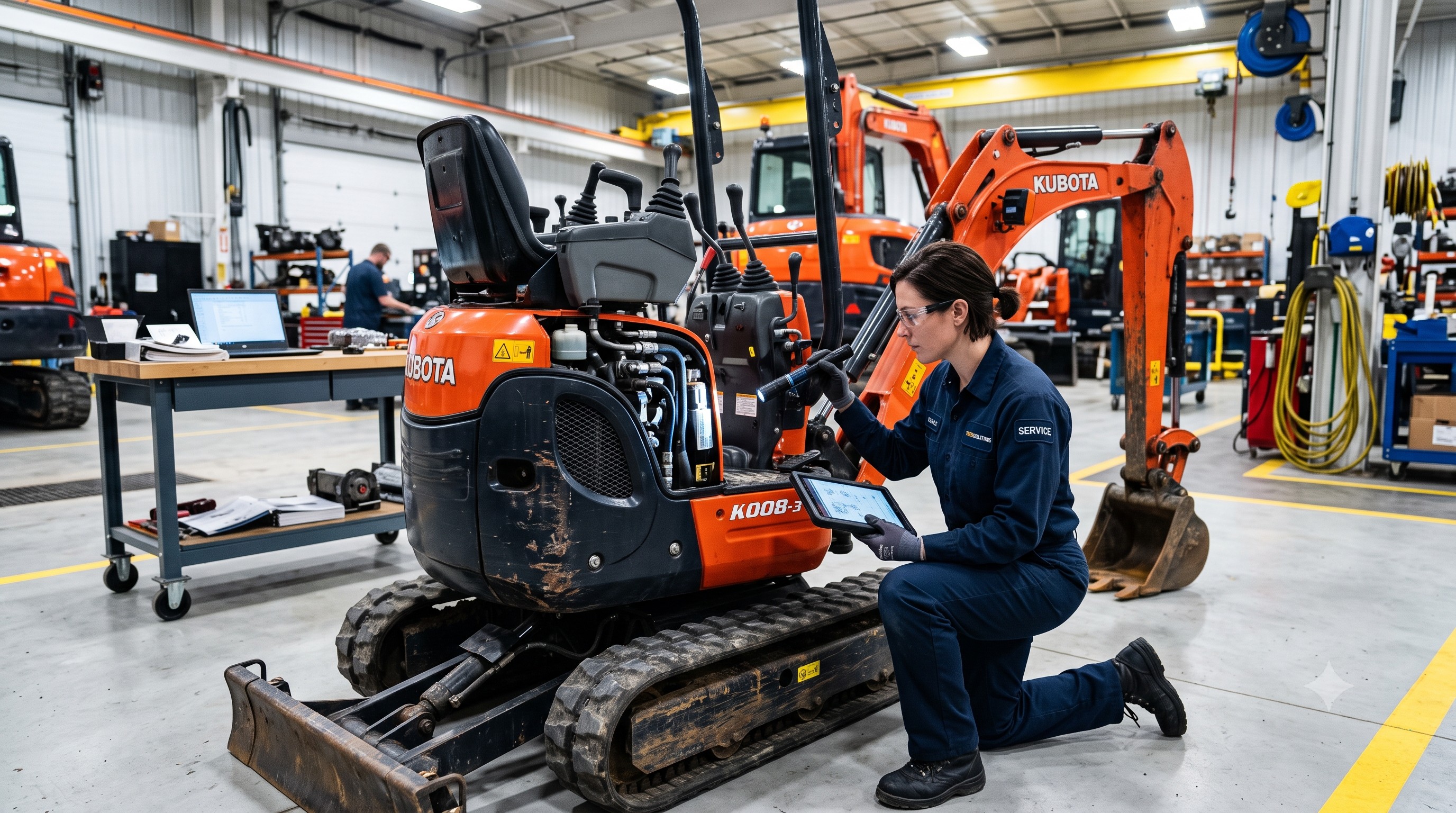
The standard maintenance interval for a micro excavator follows a structured schedule based on operating hours, with key services at 50, 250, 500, and 1,000 hours. Crucially, after the first 50 hours, the engine oil, filter, and hydraulic filter must be replaced . Daily checks are essential and include visual inspections for leaks, track tension, and fluid levels . A monthly (250-hour) service involves replacing the engine oil and filter, while a quarterly (500-hour) service requires changing the hydraulic and fuel filters . A major overhaul, including replacing hydraulic fluid, is typically performed every 1,000 hours .
Hydraulic fluid in a micro excavator typically needs to be replaced every 1,000 to 2,000 operating hours, depending on the manufacturer's specifications. For example, some manufacturers recommend draining and refilling the hydraulic tank oil at 2,000 hours . This service interval is often paired with a complete hydraulic system inspection . Always consult the specific machine's owner's manual for the recommended hydraulic oil type, such as ISO 46 anti-wear oil or a specialized brand like Bobcat's all-season fluid, to ensure optimal performance and warranty compliance .
The typical operating capacity and payload for a micro excavator vary by model, but machines in this class generally have a lift capacity of around 100 kg and a bucket capacity of 0.022 to 0.02 cubic meters. For instance, a 1.4-ton micro excavator might have a lift capacity of 100 kg . Another model, the DELEKS M100SE with an operating weight of 1,050 kg, has a bucket capacity of 20 liters . It's important to note that the machine's stability and lifting performance can be enhanced by features like an extendable undercarriage .
Micro excavators are compatible with a wide range of attachments, including digging buckets, grapples, hydraulic breakers, and dozer blades, making them incredibly versatile. To ensure compatibility, attachments are typically manufactured to suit major brand two-pin manual and hydraulic coupler models, fitting machines from a vast array of manufacturers such as Bobcat, Caterpillar, JCB, Kubota, Takeuchi, and Yanmar . For landscaping, a bucket with a thumb attachment is excellent for grabbing and lifting objects, while a hydraulic quick coupler allows for fast, cab-less attachment changes to increase job-site efficiency .
For fleet managers facing strict emissions regulations, electric micro excavator models offer zero emissions and significantly reduced noise levels, being up to 9 dB quieter than their diesel equivalents . These electric models are ideal for interior work, residential areas, and environmentally sensitive job sites. The compact size and engine technology of diesel models also help minimize ground disturbance, reducing the risk of damage to existing landscapes .
A micro excavator is specifically designed for landscaping projects where access is severely limited, weighing under one tonne, whereas a mini excavator offers more power for larger domestic building projects . Micro excavators can fit through standard doorways (as narrow as 700mm) and are perfect for tricky back gardens and indoor work . Mini excavators, while still versatile, are larger and are generally used for tasks like laying driveways and larger-scale drainage work where a micro's capacity would be insufficient.
Ensuring spare parts availability involves sourcing from manufacturers who provide broad compatibility and selecting attachments that fit all major brand coupler models. Many component manufacturers design their attachments to be compatible with a comprehensive list of excavator brands, including Airman, Bell, Case, Develon, Hitachi, Hyundai, Kobelco, Komatsu, and Volvo, among others . For critical parts, it is advisable to establish a relationship with an authorized dealer who can guarantee genuine parts to avoid downtime, as using off-brand parts can sometimes degrade performance .