Categories

Low Emission Digger: The Definitive Guide to Tier 4 Final & Stage V Hydraulic Excavators

This technical analysis explores how modern low emission diggers meet EPA Tier 4 and EU Stage V standards without sacrificing hydraulic power, fuel efficiency, or durability. Includes data on TCO, ROI, and real-world heavy-duty applications.
Jun 2nd,2026 8 Views

Introduction: The Emission Mandate Reshaping Earthmoving

Construction and mining operators face a dual pressure: tightening emissions regulations (EPA Tier 4 Final, EU Stage V) and rising fuel costs. Traditional diesel diggers contribute up to 25% of job site NOx and particulate matter. The low emission digger has emerged not as a compromise, but as a robust engineering solution—integrating selective catalytic reduction (SCR), diesel oxidation catalysts (DOC), and high-pressure common rail (HPCR) fuel systems. Unlike early EGR-only designs, modern low emission excavators maintain full-rated horsepower while cutting CO2 by up to 15% and eliminating visible smoke. This guide dissects the powertrain, structural integrity, and lifecycle economics of today's most advanced low emission diggers.

Core Powertrain & Structural Design

An authentic low emission digger is not a derated machine. Its architecture balances thermal efficiency, hydraulic responsiveness, and component durability under extreme loads.

Engine Platform: Ultra-Low NOx & PM Calibration

Current generation engines (6.7L to 15L displacement) operate with fuel injection pressures exceeding 2,000 bar. The combination of cooled EGR (10-15% rate), a DOC, a DPF, and SCR with AdBlue injection achieves NOx below 0.4 g/kWh and PM below 0.01 g/kWh, compliant with EPA Tier 4 Final and EU Stage V. Contrary to myths, active regeneration occurs during normal operation (exhaust temp 550°C+), requiring zero downtime in properly sized machines.

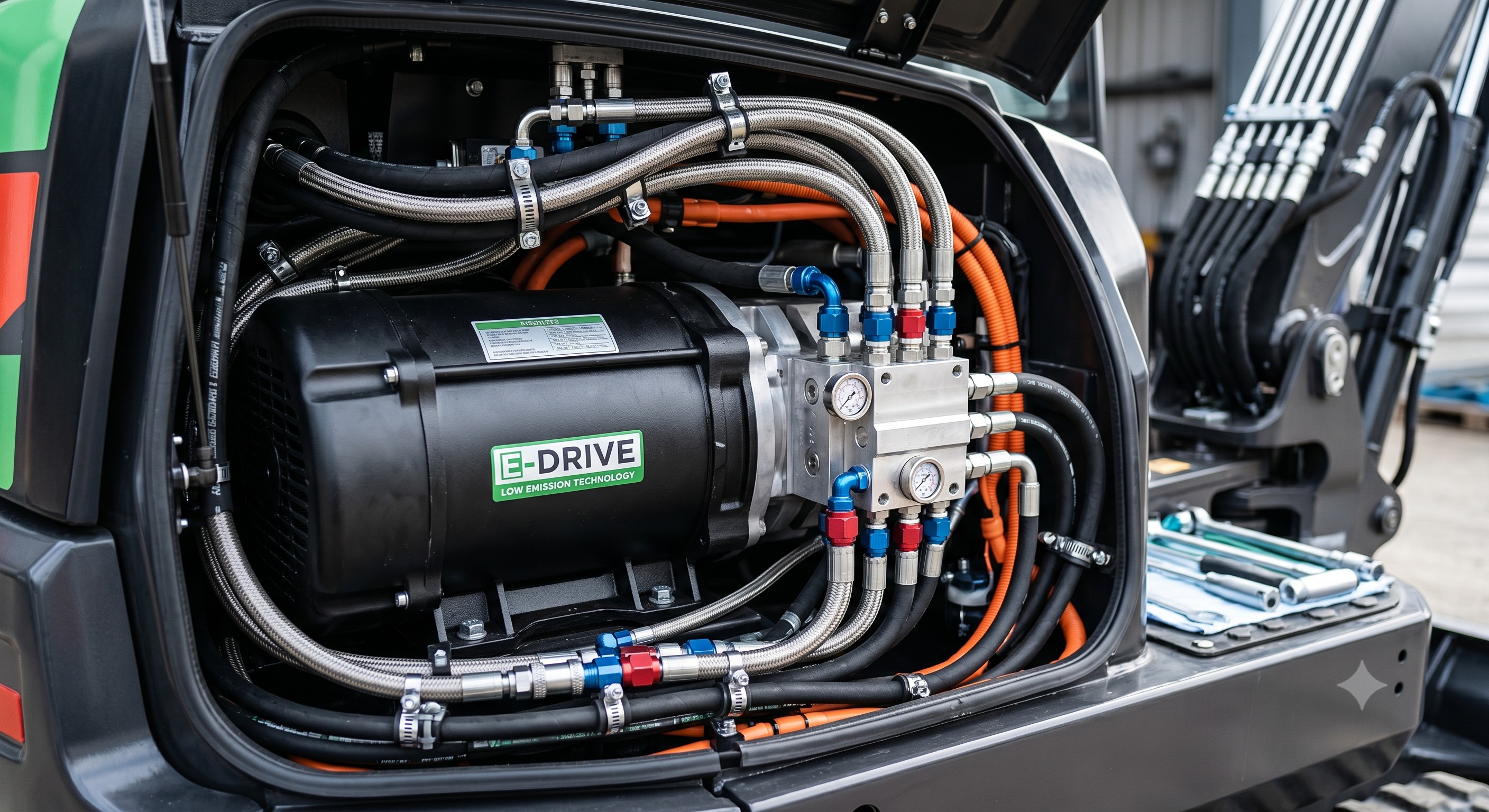
Hydraulic System: Load-Sensing with Electric Control

Closed-center, load-sensing hydraulics with variable displacement axial piston pumps deliver 350-380 bar (5,076-5,511 psi) operating pressure. An electronic positive control (EPC) system links the engine ECU and hydraulic controller, reducing parasitic losses by 8-12%. This setup enables simultaneous boom, arm, and swing operations without flow starvation—critical for heavy excavation cycles.

Structural Durability: ROPS/FOPS & Wear Components

The chassis uses high-tensile steel (yield strength ≥ 550 MPa) with reinforced boom and arm mounting brackets. ISO 12117-2 ROPS/FOPS certified cab protects against rollovers and falling objects. Undercarriage features sealed and lubricated track chains (service life: 6,000-8,000 hours) and full-length track guides to prevent derailment in mud or rock conditions.

Technical Specifications

Below are benchmark parameters for a typical 20-22 metric ton low emission digger used in general construction and site development.

Key Parameter Technical Specification
Engine Horsepower (Net) 168 hp (125 kW) @ 1,900 rpm
Operating Weight (Standard Boom & Arm) 21,500 kg (47,400 lbs)
Bucket Digging Force (ISO) 152 kN
Arm Digging Force (ISO) 108 kN
Max Hydraulic Pressure (Implement) 350 bar (5,076 psi)
Hydraulic Flow (Main Pumps) 2 x 135 L/min (270 L/min total)
Swing Speed 11.2 rpm
Fuel Tank Capacity 310 L
AdBlue Tank Capacity 25 L
Emission Standard EPA Tier 4 Final / EU Stage V

Comparative Advantage: TCO and ROI Analysis

Switching from a Stage IIIB / Tier 4 Interim machine to a low emission digger yields measurable financial returns over 10,000 operating hours.

  • Fuel efficiency: Low emission engines operate at peak torque (1,300-1,600 rpm) with 5-8% lower specific fuel consumption (195-210 g/kWh vs 215-225 g/kWh). At $1.20/L diesel, annual savings of $3,500-$4,800.
  • AdBlue consumption: 3-5% of fuel volume. Adds $0.10-$0.15 per operating hour—negligible compared to fuel savings.
  • Regeneration downtime: Modern passive/active regeneration systems add <1% downtime. No parked regen required in correctly specified machines.
  • Resale value: Tier 4 Final / Stage V machines retain 12-18% higher residual value in regulated markets (EU, North America, Japan).
  • Job site access: Low emission diggers qualify for low-emission zones (LEZ) and green construction incentives (e.g., California’s CARB flexible rules).

Over 5 years, the total cost of ownership (TCO) for a low emission digger is approximately 6-9% lower than an uncertified or interim-tier machine when factoring fuel, maintenance, and resale.

Heavy-Duty Application Scenarios

The low emission digger excels across demanding environments where power density and emission compliance intersect.

  • Urban Construction & Infrastructure: Noise-sensitive sites (below 71 dBA) and LEZ-compliant work. Example: trenching for utilities alongside occupied buildings, with automatic idle reduction and eco-mode.
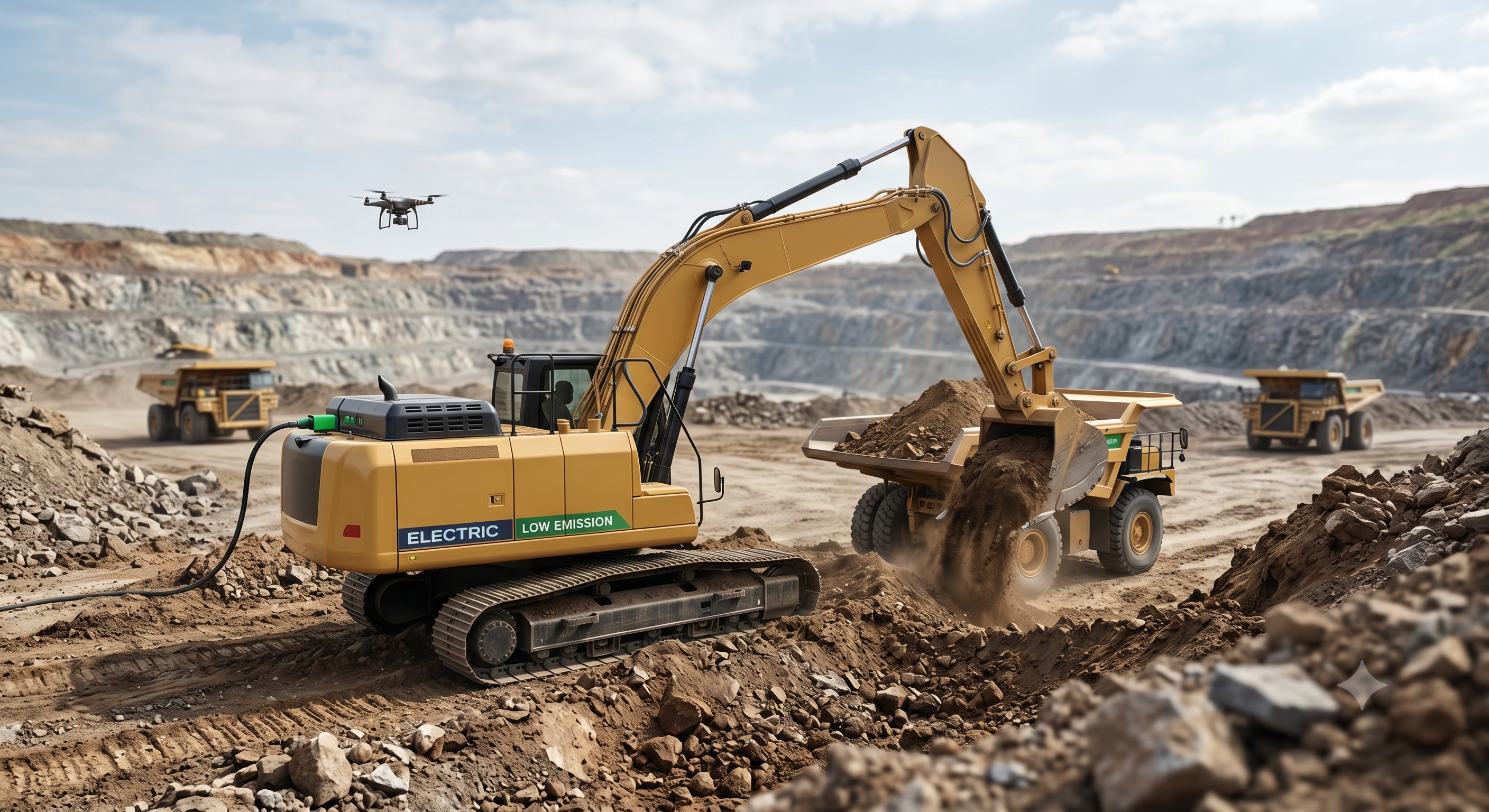
  • Quarry & Aggregate Handling: Short loading cycles (5-8 seconds) require high swing torque. Low emission diggers maintain 140-160 kN bucket digging force without smoking under high load factors.
  • Site Preparation & Earthmoving: Mass excavation with 0.8-1.2 m³ buckets. Consistent hydraulic flow (240 L/min) for heavy clay or compacted gravel.
  • Forestry & Log Loading: Optional bio-oil compatible systems and heated cabs, while still meeting EU Stage V particulate limits in remote ecosystems.
  • Recycling & Demolition: High-reach booms and rotation-resistant circuits with DPF protection against excessive dust (pre-cleaners mandatory).

Conclusion: Productivity Without Compromise

The low emission digger has matured into a high-performance asset, not a regulatory burden. With proven uptime, lower fuel bills, and access to restricted job sites, these machines deliver superior ROI while aligning with global net-zero roadmaps. For contractors evaluating fleet upgrades, focus on verified emissions data (NTE cycle compliance), dealer support for DPF/SCR maintenance, and real-world fuel tests. The question is no longer "why switch?" but "how quickly can you realize the savings?"

RFQ