Categories

High Performance Excavator: Engineering Metrics, Hydraulic Efficiency & TCO ROI

A data-driven technical analysis of high performance excavators covering powertrain engineering, hydraulic optimization, fuel efficiency benchmarks, and total cost of ownership (TCO) for heavy-duty construction and mining applications.
May 27th,2026 8 Views

Introduction

Modern construction and mining operations face a persistent challenge: balancing productivity with fuel efficiency and machine uptime. Conventional excavators often compromise hydraulic response or structural durability to meet emission standards. The high performance excavator segment has emerged as the engineering answer—delivering ISO 6016 compliant operating weights, EPA Tier 4 Final or EU Stage V aftertreatment integration, and ROPS/FOPS certified cabins without sacrificing breakout force or cycle times. This technical analysis dissects powertrain architecture, hydraulic intelligence, and lifecycle cost metrics that define true heavy-lifting productivity.

Core Powertrain & Structural Design

Engine & Aftertreatment Integration

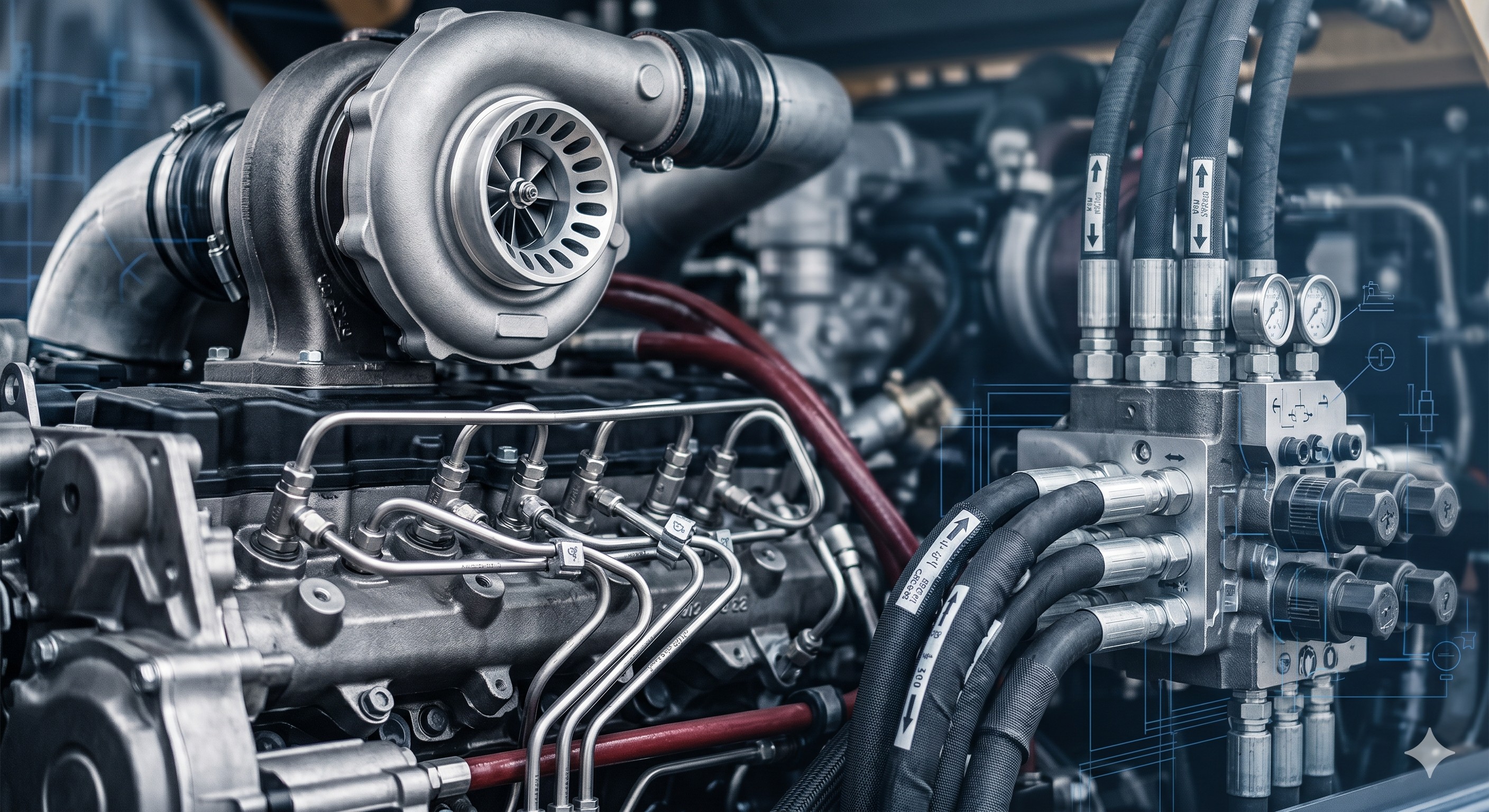
A high performance excavator leverages electronically controlled common-rail diesel engines with variable geometry turbochargers (VGT) and cooled exhaust gas recirculation (EGR). For example, a 30-ton class unit typically produces 200-250 kW (268-335 hp) at 1,800-2,000 rpm. The diesel particulate filter (DPF) and selective catalytic reduction (SCR) system—compliant with EPA Tier 4 / EU Stage V—adds 3-5% to upfront cost but reduces NOx emissions by over 90% compared to Tier 3. Effective thermal management is critical: the cooling package must dissipate 30-40% of fuel energy as heat, with fan power consumption reaching 15-20 kW under high load.

Hydraulic System Architecture

High performance excavators employ load-sensing or negative flow control (NFC) hydraulic systems with main relief pressures ranging 32-38 MPa (4,640-5,510 psi). Piston pumps—typically two variable displacement axial piston units—deliver combined flow of 400-700 L/min at rated engine speed. Key differentiators include electronic pump displacement control (response time < 80 ms) and regeneration circuits for boom and arm, which can reduce energy loss during lowering by 20-25%. Hydraulic oil temperature stabilization (target 50-70°C) via thermostatically controlled oil cooler ensures consistent viscosity and component life.

Chassis & Undercarriage Durability

Structural integrity is validated through finite element analysis (FEA) and strain gauge testing per ISO 7135 standards. Heavy-duty excavators use high-tensile steel (yield strength ≥ 500 MPa) for track frames and carbodies. Track shoe widths (typically 600-900 mm for 30-50 ton class) and ground pressure (55-85 kPa) are optimized for soft terrain or rock applications. Sealed and lubricated track (SLT) chains extend undercarriage life to 8,000-12,000 hours in abrasive conditions, compared to 3,000-5,000 hours for dry pins.

Technical Specifications

The following parameters represent a benchmark 35-metric-ton high performance excavator (typical for heavy construction and quarry work). Actual values vary by OEM model.

Key Parameter Technical Specification (35-ton Class Example)
Engine Horsepower (Net) 210 kW (282 hp) @ 1,900 rpm
Operating Weight (with ROPS/FOPS cab) 34,500 kg (76,060 lb)
Bucket Capacity (SAE heaped) 1.8 - 2.2 m³ (2.35 - 2.88 yd³)
Hydraulic Main Relief Pressure 34.3 MPa (4,975 psi)
Hydraulic Flow (max total) 2 x 280 L/min = 560 L/min
Breakout Force (arm cylinder) 185 kN (41,600 lbf)
Swing Torque 125 kNm (92,200 lbf·ft)
Ground Pressure (standard track) 68 kPa (9.9 psi)
Fuel Tank Capacity 620 L (164 gal)
Emission Compliance EPA Tier 4 Final / EU Stage V

Comparative Advantage: TCO, Fuel Efficiency & ROI

Fuel Consumption Benchmarks

Under moderate digging cycles (50% load factor), a modern high performance excavator consumes 14-20 L/h for the 30-35 ton class. Eco-mode algorithms that match engine speed to hydraulic demand can lower consumption by 10-15% compared to conventional power modes. Over a 10,000-hour ownership period, fuel represents 40-50% of total operating cost. A reduction of 2 L/h translates to approximately $15,000-20,000 in fuel savings (at $1.2/L).

Total Cost of Ownership (TCO) Modeling

TCO components for a high performance excavator over 5 years / 10,000 hours:

  • Acquisition cost: $250,000 – $400,000 (35 ton class, Tier 4 / Stage V)
  • Fuel cost: $168,000 – $240,000 (16-20 L/h average, $1.05-1.20/L)
  • Maintenance & wear parts: $45,000 – $70,000 (filters, hydraulic oil, undercarriage, teeth)
  • Major overhaul (engine/hydraulics): $30,000 – $50,000 (if required after 8,000-10,000 h)
  • Residual value (well-maintained): $80,000 – $120,000
  • Net TCO per hour: $45 – $65/h (excluding operator & transport)

Compared to standard performance (non-optimized) models, a true high performance excavator offers 8-12% higher productivity per liter of fuel, yielding ROI payback in 1,500-2,500 operating hours if premium is under 15%.

Uptime & Reliability

Mean time between failures (MTBF) for major components should exceed 3,000 hours under design load. Key enablers: automatic lubrication systems (reduce pin/bushing wear by 50%), telematics for predictive alerts, and ISO 14686 certified hydraulic filtration (≤10 μm absolute).

Heavy-Duty Application Scenarios

Mining & Quarry Overburden Removal

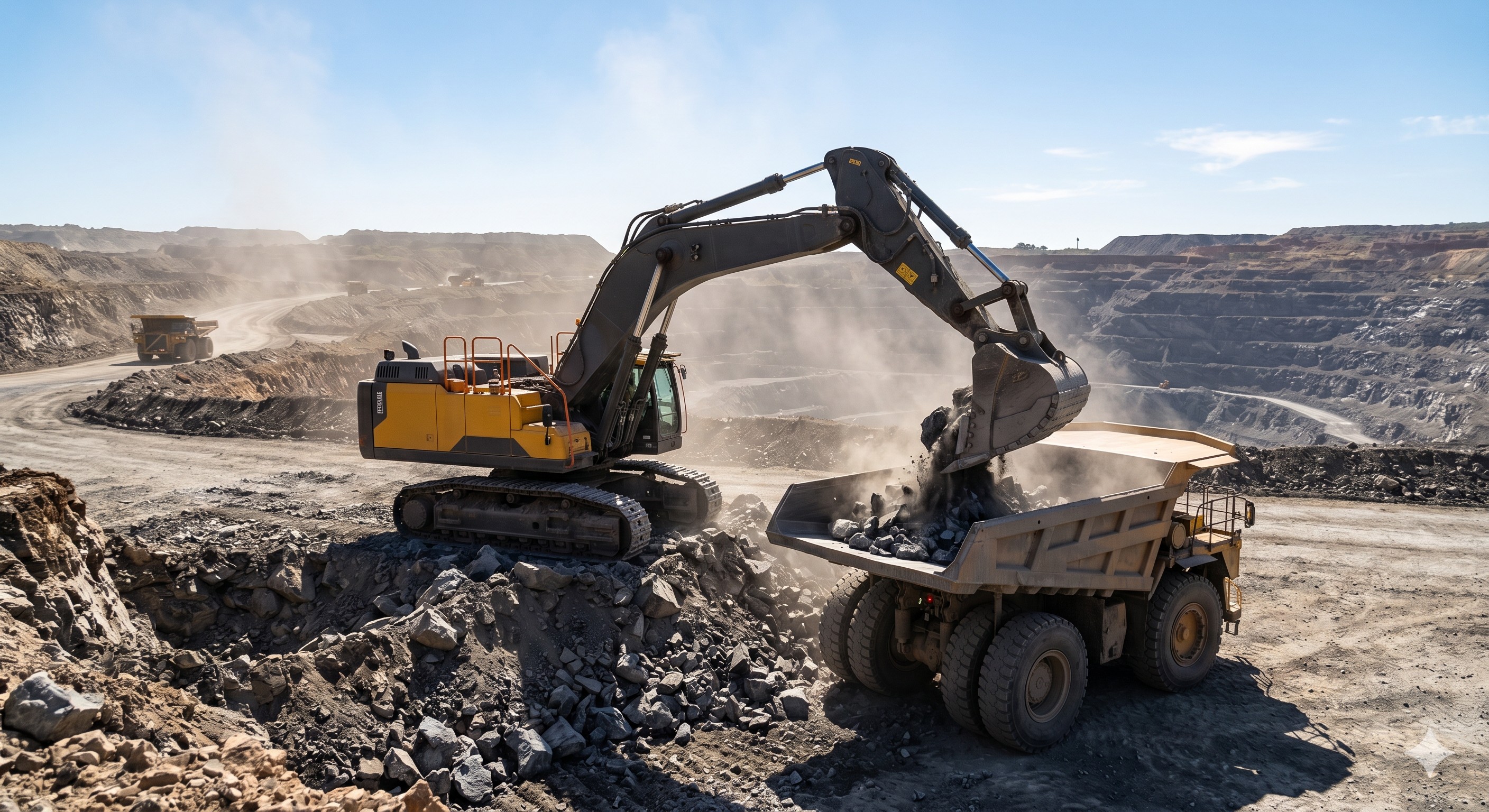
In surface mining, high performance excavators (50-100+ ton class) pair with rigid frame dump trucks (40-60 t capacity). High breakout force (>300 kN) and fast swing torque (>150 kNm) reduce cycle times below 25 seconds for loading. Ground engaging tools (GET) with HB400 or HB500 wear-resistant steel extend tooth life from 200 to 600 hours in abrasive iron ore or copper overburden.

Large-Scale Earthmoving & Infrastructure

For dam construction or highway grading, a high performance excavator with GPS grade control (2D/3D) achieves slope accuracy within ±2 cm. Heavy-lift mode with hydraulic priority to the boom allows handling concrete pipes or steel beams up to 90% of rated operating capacity without tipping—critical for ISO 10567 lift stability. ROPS/FOPS certified cab with 5% tempered glass protects operators in falling object zones.

Demolition & Scrap Metal Handling

With high-reach boom (up to 25 m) and multiprocessor attachment, high performance excavators deliver 360° hydraulic rotation and 600 bar (8,700 psi) auxiliary circuit pressure. Cab shielding (per EN 13510) and full undercarriage guarding prevent debris damage. Cycle times for breaking reinforced concrete are reduced by 30% compared to standard excavators.

Conclusion

The evolution of the high performance excavator is defined by integrated powertrain-hydraulic control, stringent emission compliance without productivity loss, and data-validated TCO transparency. For fleet owners and project managers, selecting based purely on peak power or bucket size is insufficient. Instead, evaluate specific fuel consumption (SFC) maps, hydraulic response time, and undercarriage life in your material conditions. Future trends include electric-hybrid swing drives (reducing fuel burn by another 10-15%) and autonomous digging cycles. Investing in verified high performance engineering directly increases tons moved per dollar—the ultimate metric of heavy machinery productivity.

RFQ