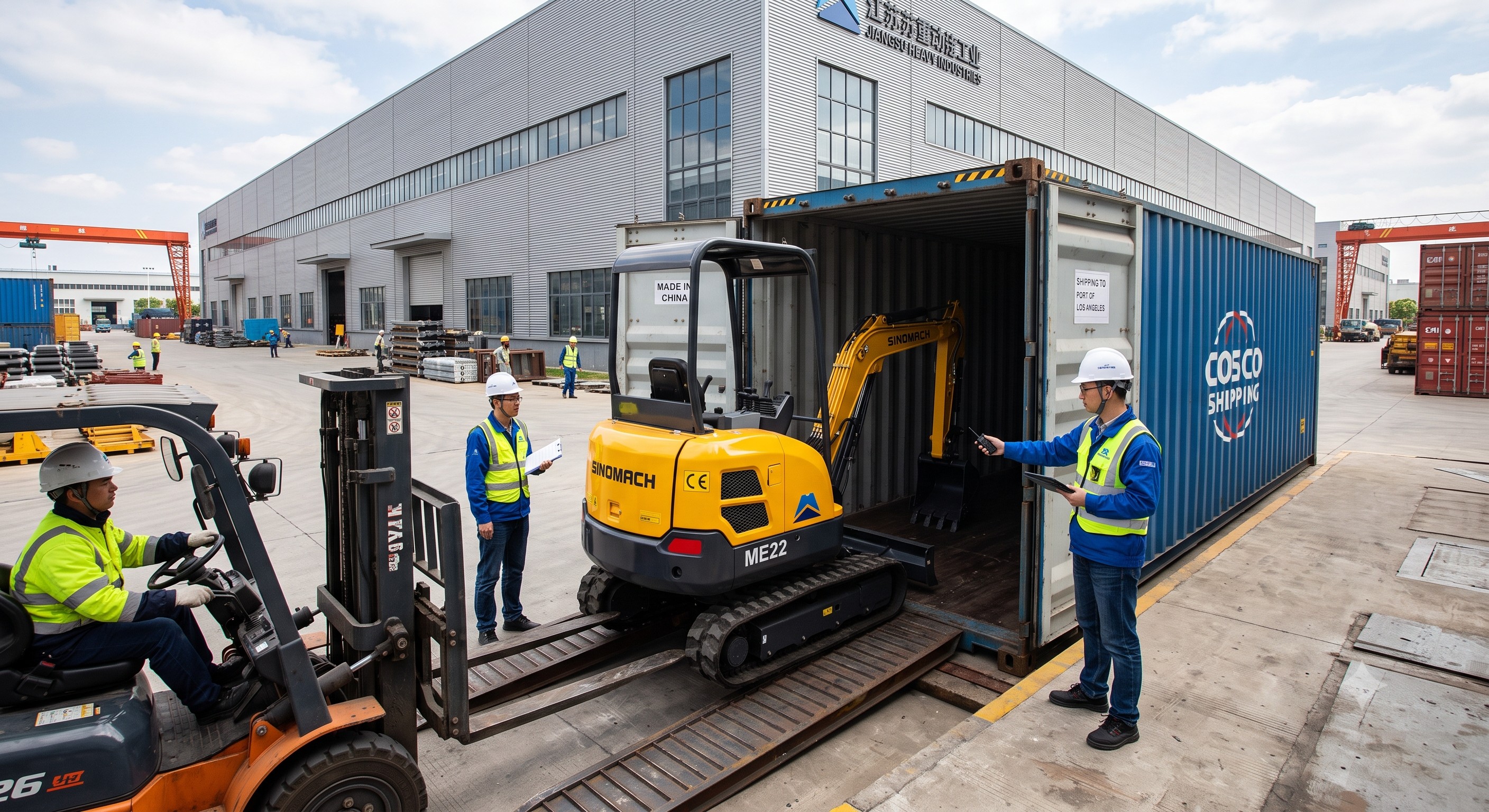
For B2B procurement and fleet managers, sourcing a mini excavator directly from the factory can yield significant cost savings and customization benefits. This strategy, which involves bypassing traditional dealership networks, requires careful evaluation of suppliers, specifications, and after-sales support to ensure a successful investment. This FAQ provides expert guidance on the best practices for factory-direct sourcing.

The best way is to conduct a multi-layered verification process including a review of certifications, factory audits, and performance metrics. First, verify they hold key certifications like ISO 9001 and necessary export compliance (e.g., EPA, CE) . Second, request a live video walkthrough of the factory and specific unit(s) to inspect production lines and quality control (QC) processes . Finally, evaluate their performance data, such as response time (ideally under 2 hours), on-time delivery rate (targeting 98% or higher), and reorder rate to gauge customer satisfaction and reliability .
Purchasing direct from the factory can typically save you 15% to 30% by eliminating dealer and distributor markups. This cost advantage is a primary driver for the shift toward direct purchasing models . For example, some direct-to-consumer brands offer pricing up to 40% lower than big-brand alternatives, with models like a 1.8-ton mini excavator starting around $14,900 . However, while base prices can be as low as $1,500 to $2,000 for basic configurations, it is crucial to get itemized quotes to account for essential components and features .
Common specifications vary by model, including operating weight (from 0.8 to 8 tons), breakout force, digging depth, and engine power. For instance, a 1.8-ton model may offer a breakout force over 4,000 lbs and a digging depth of over 81 inches . Available customizations are extensive and can include cabin design (open or enclosed), track system (rubber or steel), and a wide array of hydraulic attachments like augers, rippers, and grading buckets . Advanced suppliers offer over 50 customizable parameters, from joystick layout to engine type (e.g., Kubota, EPA-certified diesels) .
The standard maintenance interval is typically every 100 to 250 operating hours, but always refer to the specific manufacturer's manual for your model. This routine service generally includes changing the engine oil and filter, replacing the hydraulic fluid and filter, and greasing all pivot points on the boom and bucket linkage . Procuring spare parts is a key post-sales concern, so prioritize suppliers that have overseas spare parts centers or offer quick shipping for essential components to minimize downtime .
Yes, many factory-direct suppliers offer mini excavators with EPA-compliant engines, which is non-negotiable for legal operation in North America. It is critical to explicitly request this feature, as it often comes as an upgrade over standard models . Top-tier suppliers typically list EPA-certified models and can provide the necessary documentation to support customs clearance and regulatory compliance . Ensure this is clearly specified in your contract to avoid issues with import and operation.
Many suppliers now offer a minimum order quantity (MOQ) of just one unit, making direct factory sourcing accessible even for smaller buyers and pilot programs. For standard models, an MOQ of 1-3 units is common . However, for heavily customized configurations requiring specialized tooling or engineering changes, the MOQ may be higher, often 5-10 units . Always confirm the MOQ at the start of negotiations to align with your procurement strategy.
For a standard model that is in stock, delivery can be as quick as 15-30 days after order confirmation, with shipping typically taking 1-2 business days from the supplier's warehouse . For custom orders, you should expect a longer lead time, generally 30-45 days, to account for production and setup . Factor in sea freight times, which can add 18-45 days depending on the destination port .
Reputable suppliers should provide a warranty (typically 1-2 years on core components) and offer technical support via video calls, user manuals, and instructional videos. Key after-sales services include video technical support, the provision of a user manual, and a supply of spare parts, which can be sent by air express for urgent repairs . When evaluating a supplier, their responsiveness to technical queries is a strong indicator of the quality of future after-sales support.