Here's the thing about shipping: once a container leaves the dock, it disappears into a black box for days or weeks. You know where it started. You know where it's supposed to end up. Everything in between is an estimate based on speed, route, and a whole lot of assumptions.
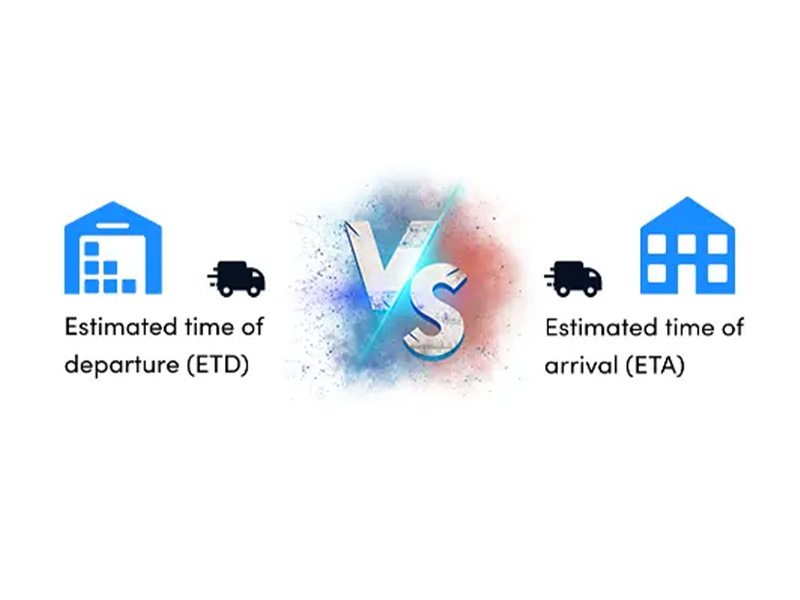
The industry runs on ETD and ETA—Estimated Time of Departure and Estimated Time of Arrival. Carriers calculate these based on vessel speed, planned routes, and sailing schedules . But anyone who's been in the game knows those estimates are written in pencil, not pen. Weather happens. Ports get congested. Political situations flare up. A ship that was supposed to sail Tuesday might still be at the dock Friday.
For shippers, the gap between estimated and actual is where problems live. Missed connections mean containers sit. Trucks booked for Thursday show up Monday to find the freight still on the water. Warehouse labor gets scheduled and then cancelled. It's not just inconvenient—it's expensive.

ETD is the ship's scheduled departure time from the port of loading. It is the point in time when the vessel is supposed to depart from the dock and set off towards the destination. But here's the confusing part: ETD can sometimes refer to the cargo itself, when it departs from the shipper's warehouse or inland point of origin.
In reality, people use ETD for different purposes. When your freight forwarder uses "ETD Shanghai March 15," you have to understand if they mean the sailing date or the day your goods leave the factory. It could be a difference of weeks.
ETA is the expected arrival time at the destination port . This is the number everyone watches because it drives everything else—customs bookings, truck scheduling, warehouse labor, delivery appointments with the end customer.
But ETA isn't static. It moves. A vessel that loses time crossing the Pacific might push arrival back by days. A port that's backed up might mean the ship arrives on schedule but waits offshore for a berth. The cargo is there. It's just not available.
Carriers calculate ETD and ETA using a few basic inputs: vessel speed, planned route, and the published sailing schedule . But real-world shipping doesn't follow straight lines. A storm in the North Atlantic adds days. A labor dispute in a European port creates backlogs that ripple across schedules. A canal gets congested—looking at you, Panama—and suddenly every estimate needs a rewrite.
Lines update these estimates continuously. That's why a ship that was "on time" yesterday might be "delayed" today. It's not incompetence. It's reality.

For shippers, inaccurate ETAs create a cascade of problems. A container that arrives three days late misses the truck you booked. Now you're paying for the truck anyway—or scrambling to find another at the last minute. The container goes to storage. The warehouse crew you scheduled sits idle or gets sent home. The customer who needed that material starts asking questions.
Multiply that by dozens of containers and the costs add up fast.
Accuracy isn't just nice to have—it's how the industry separates good operators from bad ones . Freight forwarders and shipping lines get evaluated on how well their estimates match reality. Consistent misses mean they're either bad at planning or bad at communicating. Neither is a good look.
That's why serious operators invest in tracking systems and update customers when things change. A good forwarder doesn't just give you an ETA at the start and disappear. They tell you when the ship loads, when it sails, when it passes the Panama Canal, when it's approaching port.
You can't control the weather. You can't solve the port congestion problem. But you can ask better questions.
When a forwarder provides you with an ETD, ask what it means: vessel departure or cargo departure? When they provide you with an ETA, ask how often they track it. Do they have systems in place to alert them to changes, or are they waiting for the carrier to let them know something is amiss?
Review their past performance. A forwarder that misses ETAs by a week is not unlucky, they're unreliable. Find another forwarder.
Tracking used to mean phone calls and emails. Today, it means software systems that draw information from carriers, ports, and satellites to provide real-time visibility. The best systems not only show you where your ship is but also where it will be, using algorithms that learn from the past and the present.
If your forwarder can't provide you with visibility into your shipments, you need to ask why. The tools are available. There is no excuse for flying blind.
Here's a hard truth: even the best estimates are wrong sometimes. Smart shippers build buffers. They don't schedule trucks for the exact day a ship is supposed to arrive. They leave a window. They don't promise customers delivery on the ETA—they promise a range.
It's not pessimism. It's realism. And it saves headaches.

ETD and ETA are more than just acronyms on a spreadsheet. They are the pulse of ocean freight. Trucks, warehouses, customs, and customer satisfaction all depend on the departure and arrival times of ships.
The way the industry operates is based on estimates because that is all anyone can provide. However, the difference between good estimates and bad estimates is the difference between a smooth-running operation and a never-ending fire drill. Shippers who understand what these terms mean, how they are arrived at, and where they go wrong are the ones who sleep well at night.
The next time someone gives you an ETD or ETA, don't just nod. Ask what's behind it. How was it calculated? How often will it update? And what happens when it changes?
Because it will change. The question is whether you find out before it costs you money.
A: ETD is Estimated Time of Departure—when the vessel leaves the loading port or cargo leaves the origin. ETA is Estimated Time of Arrival—when the vessel reaches the destination port or cargo arrives at its final point .
A: Weather, sea conditions, port congestion, political events, and mechanical issues all affect vessel schedules. Carriers update estimates continuously based on real-time conditions .
A: Shipping lines calculate them based on vessel speed, planned routes, and published sailing schedules . These are theoretical estimates that get adjusted as conditions change.
A: Carriers provide updates to freight forwarders, who should then communicate changes to shippers. A good forwarder tracks shipments actively and alerts customers when estimates shift.
A: Delayed arrivals can miss booked truck appointments, incur storage fees, disrupt warehouse schedules, and push back delivery dates. Shippers should build buffers into their planning to absorb these delays.
A: Work with forwarders who use modern tracking platforms with real-time visibility. Ask how often they update estimates and whether they proactively communicate changes.
A: The terms are used across transportation modes, but they're most critical in ocean freight where transit times are longer and schedules are more variable.
A: Treat them as estimates, not guarantees. Ask how they were calculated and what systems are in place to track changes. A forwarder's historical accuracy is a good indicator of future performance.