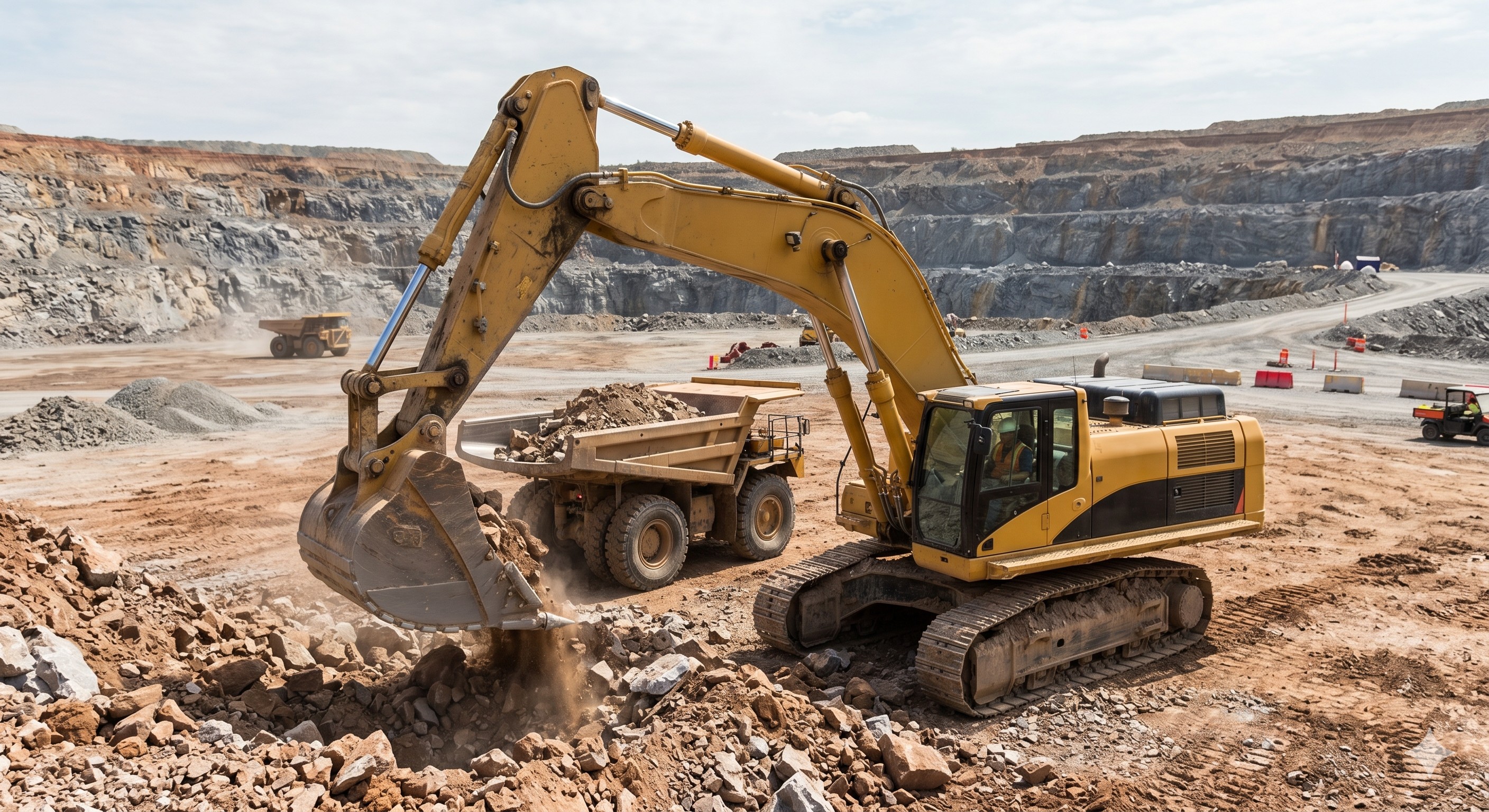
Across large-scale infrastructure, quarry, and mining operations, project delays often stem from undersized excavation equipment struggling with high-density materials. The 80 ton excavator class (typically operating weight 75–85 metric tonnes) bridges the gap between standard 50-ton units and ultra-class 120-ton+ machines. Designed for sustained hydraulic horsepower and structural rigidity, these excavators reduce cycle times by 30–40% compared to 50t class in hard digging, while maintaining compliance with EPA Tier 4 Final / EU Stage V emission regulations. This technical analysis evaluates powertrain architecture, hydraulic flow rates, undercarriage durability, and TCO (Total Cost of Ownership) to guide fleet optimization.

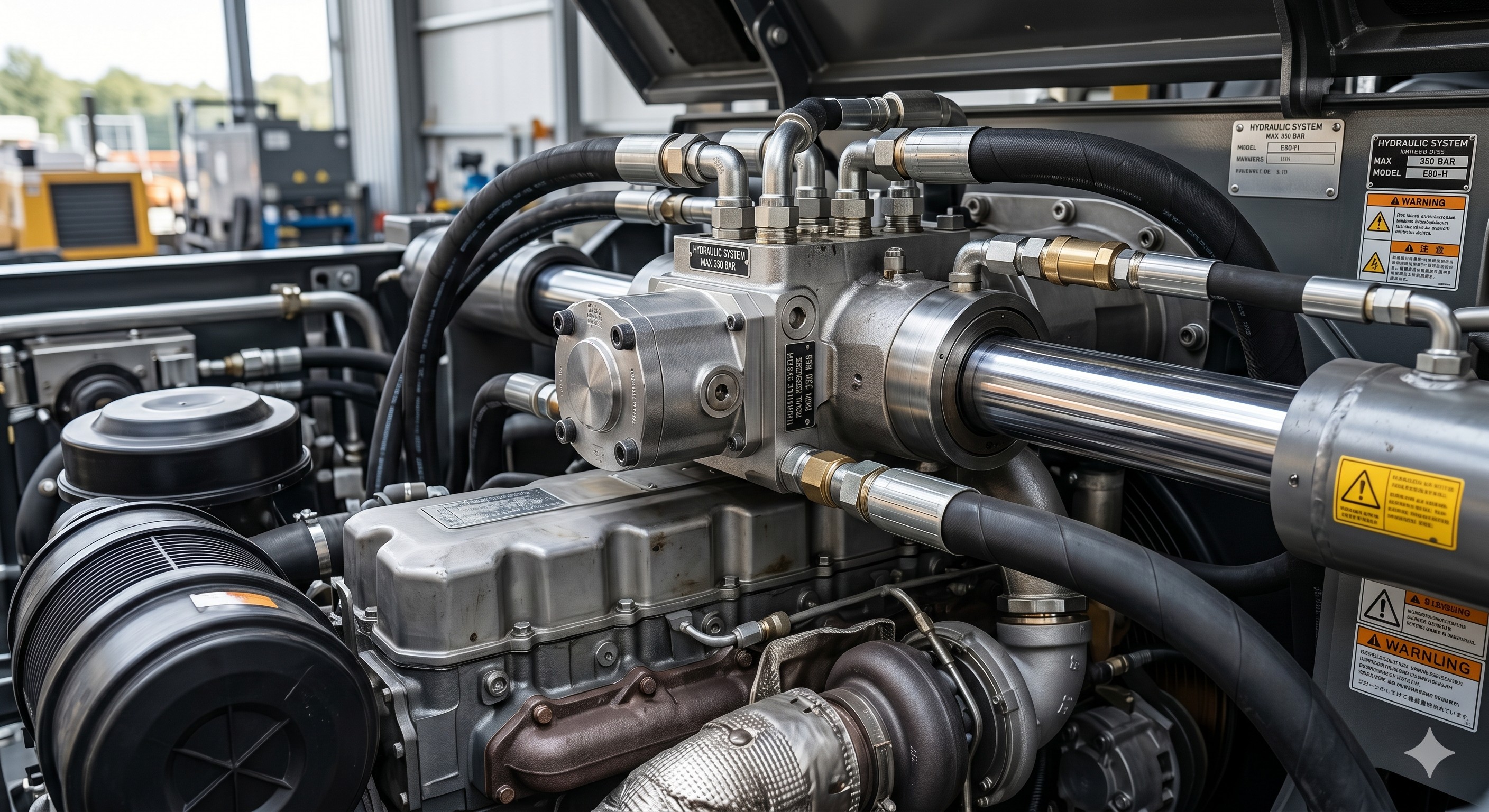
The 80 ton excavator platform typically integrates a 15–19 liter turbocharged diesel engine delivering 532–630 net horsepower (397–470 kW). Manufacturers achieve low-end torque >2100 Nm at 1400 RPM for breakout force. To meet EPA Tier 4 Final / EU Stage V, aftertreatment systems combine cooled EGR, DOC, DPF, and SCR with DEF injection. Fuel consumption averages 32–38 L/hour under moderate load, with auto-idle and economy mode reducing consumption by 12–18% during swing/idle phases.
Closed-center, load-sensing hydraulic systems with variable displacement axial piston pumps produce total flow of 850–1050 L/min at 32–35 MPa (4640–5075 psi) main relief pressure. Boom and arm regeneration circuits lower energy loss during descent. Typical specifications include: Bucket break-out force 450–520 kN, arm crowd force 390–460 kN. ISO 10767-1 efficiency tests show total hydraulic efficiency >88% at rated working pressure.
The X-frame undercarriage uses high-tensile steel (yield strength >500 MPa) with triple-flange track rollers and sealed/lubricated tracks (track shoe width 600–750 mm). Ground pressure ranges 85–110 kPa, suitable for soft terrain with optional 800mm mud pads. Cabin meets ISO 3449 Level II FOPS and ISO 3471 ROPS, with negative pressure cab filtration (HEPA efficiency >99.9% for PM2.5). Swing torque exceeds 280 kN·m, with swing speed 5.5–6.5 rpm.
Below are representative parameters for a modern 80 ton excavator (base configuration, heavy-duty rock bucket). Actual values vary by brand and attachment options. Always reference OEM datasheets for compliance with ISO 9249 (net power) and SAE J1176 (tip-over protection).
| Key Parameter | Technical Specification (80t Class) |
|---|---|
| Engine Horsepower (net) | 532–630 hp (397–470 kW) @ 1800 rpm |
| Operating Weight (±5%) | 75,000 – 85,000 kg (165,000 – 187,000 lb) |
| Standard Bucket Capacity | 4.5 – 6.5 m³ (heaped, rock profile) |
| Max Hydraulic Flow | 850 – 1050 L/min @ 32–35 MPa |
| Max Breakout Force (bucket) | 450 – 520 kN (101,000 – 117,000 lbf) |
| Fuel Tank Capacity | 950 – 1100 L |
| Tail Swing Radius | 3900 – 4300 mm |
| Ground Pressure | 85 – 110 kPa (standard shoes) |
| Emission Standard | EPA Tier 4 Final / EU Stage V |
When evaluating a 80 ton excavator against multiple 50-ton units or a single 120-ton machine, consider:
Productivity gain: In hard limestone or granite (unconfined compressive strength 50–80 MPa), the 80t class cycles 25% faster than 50t units, requiring 1.8x fewer passes per haul truck (40–60 ton payload trucks).
Fuel efficiency per bank cubic meter: 0.22–0.28 L/bcm vs 0.32–0.38 L/bcm for 50t class due to lower parasitic losses.
Maintenance intervals: Engine oil change 500 hours, hydraulic filter 1000 hours, swing bearing grease 250 hours. Lower part count vs dual-machine setup reduces annual repair cost by ~18–22%.
Resale value: High-spec 80t excavators retain 55–65% residual after 8000 hours (certified by Rouse Analytics), outperforming smaller classes by 8–10%.
The 80 ton excavator excels in:
Hard rock quarry & open-pit mining: Bench loading with 8–10 m³ coal bucket or 5–6 m³ rock bucket (density 2.6–2.8 t/m³). Paired with 70–90 ton rigid dump trucks.
Large infrastructure earthmoving: Cutting deep excavation for dam foundations, highway cuts, and tunnel portals. Optional GNSS grade control for precision to ±5 cm.
Oil sands / overburden removal: Reinforced undercarriage and high-ambient cooling (-40°C to 50°C) available.
Demolition & recycling: Multi-processor or shears attachment (max tool weight 5–6 tonnes) via XPS high-flow auxiliary circuit (400 L/min at 35 MPa).

The 80 ton excavator represents a balanced optimization between transportability (disassembly under 45 tonnes for lowboy trailers) and heavy-duty capacity. Modern telematics (J1939 CAN bus, remote fleet management) and predictive maintenance algorithms further lower downtime risk. For operations moving 1.5–3 million bank cubic meters annually, this class delivers superior ROI compared to scaling up to 120t+ or down to 50t units. When selecting, prioritize ISO 6016 operating weight verification, hydraulic cooling capacity at ambient 40°C, and dealer support for EU Stage V / Tier 4 Final aftertreatment diagnostics.