Categories

15 Ton Digger | Uncompromised Power for Heavy Earthmoving & Mining | Elite Performance

This technical analysis dissects the 15 ton digger class, providing data-driven insights into its powertrain, hydraulic architecture, and total cost of ownership (TCO) for demanding construction and mining applications.
Jun 9th,2026 19 Views

Introduction: Bridging the Productivity Gap in Mid-Range Earthmoving

Fleet managers and project engineers often face the capacity dilemma: compact excavators lack breakout force for heavy rock or deep trenching, while 20-22 ton machines increase mobilization costs and site congestion. The 15 ton digger class (typically 14,800 kg - 16,500 kg operating weight) has emerged as the optimal solution for road construction, urban utility projects, and small-to-mid scale mining. Delivering 105-130 net horsepower and hydraulic pressures exceeding 34 MPa, this segment balances transportability with brute force. Modern units comply with EPA Tier 4 Final / EU Stage V emissions without sacrificing fuel economy—achieving 12-15 L/h under moderate load cycles. This blog provides an engineering-led evaluation of structural integrity, system efficiency, and real-world ROI.

Core Powertrain & Structural Design

Engine & Emissions Compliance

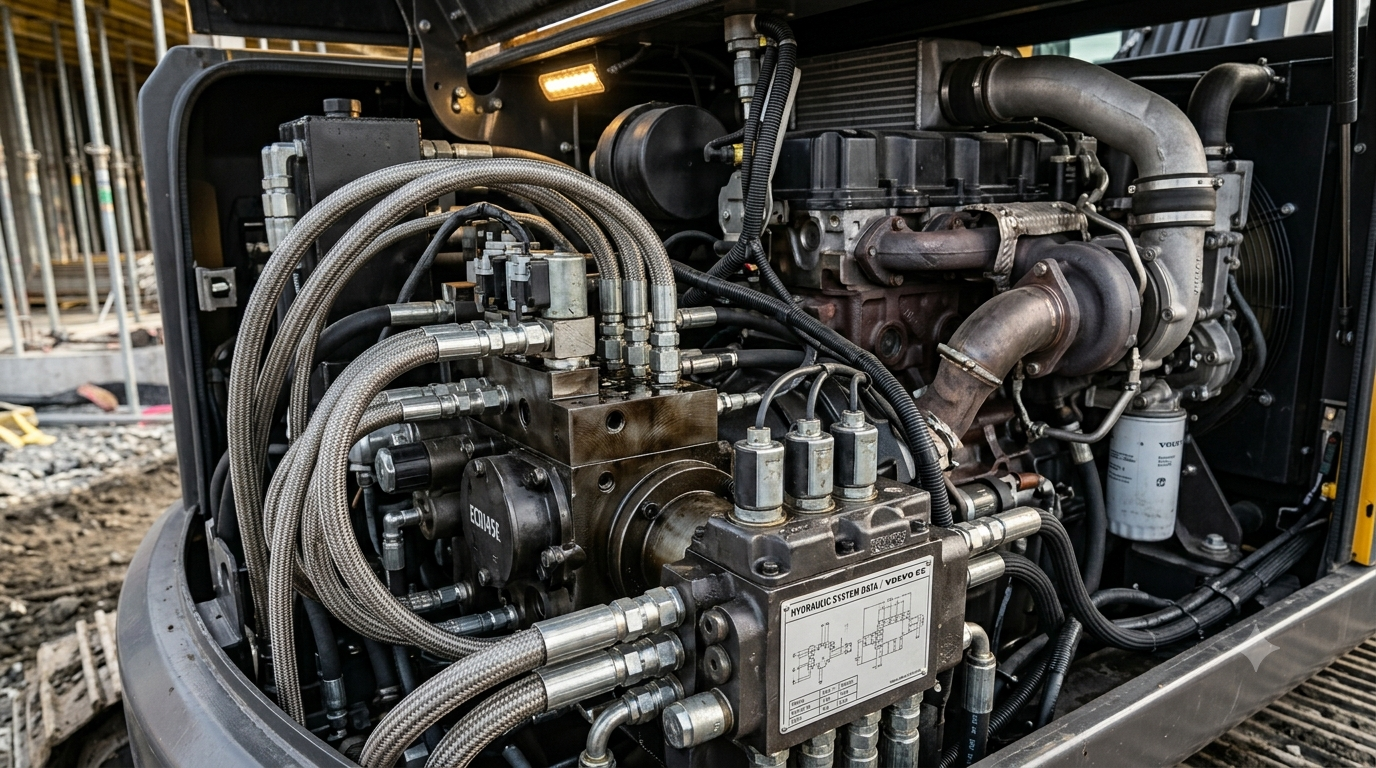
The heart of a premium 15 ton digger is a turbocharged diesel engine with direct common-rail injection. Leading models (e.g., Caterpillar 305E2, Komatsu PC138US-11, Hitachi ZX135US-6) produce 108-125 hp (80-93 kW) at 2,000-2,200 rpm. Emissions reduction relies on cooled Exhaust Gas Recirculation (EGR) + Diesel Oxidation Catalyst (DOC) + Diesel Particulate Filter (DPF) or selective catalytic reduction (SCR) for Stage V. Fuel consumption typically ranges from 11.8 L/h (light digging) to 16.2 L/h (heavy rock excavation). Thermal management includes variable-speed hydraulic cooling fans that reduce parasitic load by up to 8% compared to fixed-speed designs.

Hydraulic System Architecture

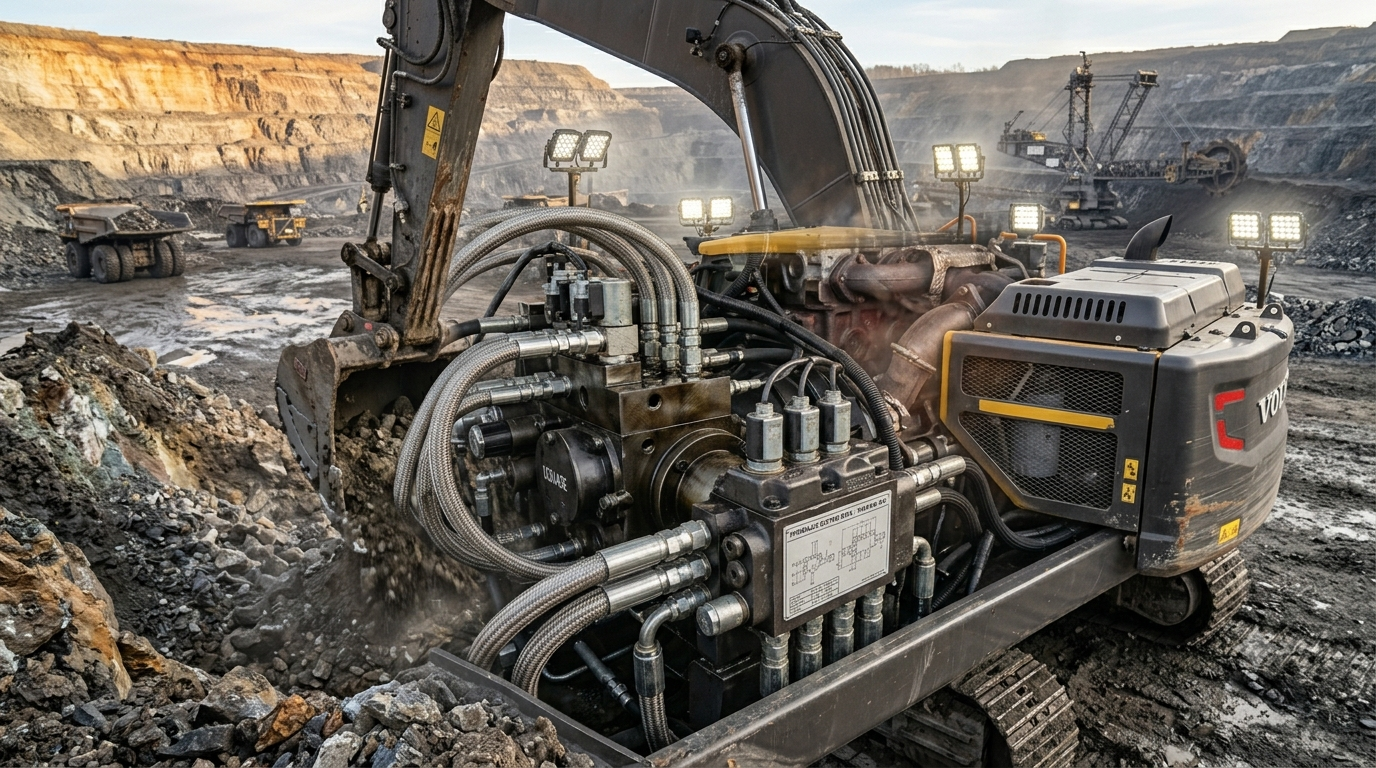
Closed-center, load-sensing hydraulic systems with variable-displacement axial piston pumps dominate this weight class. Pump flow ratings fall between 2x 110 L/min and 2x 140 L/min at rated engine speed. Main relief valve pressure is factory-set to 34.3-36.5 MPa (350-372 kgf/cm²) for implements, with travel circuits slightly lower at 32.4-34.3 MPa. Advanced models feature independent metering valves or electro-hydraulic proportional control, enabling fine-grade assist and reduced flow loss. Combined cycle time (boom up + arm in + bucket dump) should be under 5.8 seconds for a 15 ton digger to be considered competitive.

Chassis & Undercarriage Durability

Heavy-duty X-frame chassis fabricated from high-tensile strength steel (yield ≥ 345 MPa) is mandatory. Track shoe width ranges 450-600 mm, with optional 700 mm for swampy conditions. Track roller frames incorporate sealed and lubricated track chains (ISO 10265) and progressive bolt-on sprockets. Ground clearance of 420-460 mm prevents belly pan damage on uneven terrain. ROPS/FOPS certified cab (ISO 12117-2) includes integrated falling-object protection for forestry or demolition variants.

Technical Specifications: 15 Ton Digger Benchmark

The following table represents aggregated data from three leading OEMs (2023-2025 model years) for standard configuration. Actual values vary by boom/arm length and track type.

Parameter Typical 15 Ton Digger Value
Operating Weight (standard boom + arm) 15,200 - 16,400 kg
Engine Net Power (SAE J1349) 108 - 125 hp (80.5 - 93.2 kW) @ 2,000 rpm
Bucket Capacity (SAE heaped) 0.55 - 0.75 m³ (0.72 - 0.98 cu yd)
Max Digging Reach (ground level) 8.30 - 8.90 m
Max Digging Depth 5.45 - 6.00 m
Arm Digging Force (ISO 6015) 62 - 72 kN
Bucket Digging Force 92 - 106 kN
Swing Speed 10.5 - 11.8 rpm
Travel Speed (high / low) 4.5 - 5.2 km/h / 2.5 - 3.1 km/h
Hydraulic Main Relief Pressure 34.3 - 36.5 MPa (4970 - 5290 psi)
Fuel Tank Capacity 240 - 280 L
Emissions Standard EPA Tier 4 Final / EU Stage V

Comparative Advantage: TCO and ROI Analysis

Versus an 8-10 ton compact machine, the 15 ton digger delivers 185-210% higher bucket capacity (0.55-0.75 m³ vs 0.28-0.40 m³) while consuming only 60-70% more fuel. This translates to a cost per material moved reduction of 22-28% in heavy clay or shot rock. Compared to a 20-22 ton machine, the 15 ton class offers 17-23% lower daily transport costs (single-axle lowboy vs tri-axle) and 12-15% lower hourly operating cost (including filters, ground engaging tools, and track wear). ROI break-even for rental fleets typically occurs at 1,800-2,200 operating hours, assuming a daily rate of $420-550 and direct operating cost of $42-58/hour excluding operator.

Heavy-Duty Application Scenarios

  • Urban Infrastructure & Utility Trenching: Reduced tail swing (≤ 110 mm radius over tracks) allows work within 3.5 m clearance. Hydraulic thumb + tilt bucket for pipe laying.
  • Quarry & Shot Rock Loading: High-boom lift capacity (4.5 ton at 5.0 m reach) plus reinforced track guards prevent debris jamming. Optional heavy-duty bottom guards and hammer circuit pre-plumbing.
  • Forestry & Land Clearing: 15 ton diggers with brush rakes and hydraulic grapples offer 6.8 m dump height. FOPS certified cab and full-length track shields are essential.
  • Demolition in Confined Sites: High-flow auxiliary (≥ 160 L/min) powers 1,500-2,000 kg hydraulic breakers. 360° rotating shears and dust suppression spray bars increase safety.

Conclusion: The New Productivity Standard for 15-18 Ton Operations

The 15 ton digger is not merely a scaled-down heavy excavator—it is an engineered response to real-world constraints of mobility, emissions compliance, and cost efficiency. With modern telematics (OEM-linked or third-party like Trimble) providing real-time fuel consumption, idle time, and maintenance alerts, fleet operators can achieve total cost of ownership below $38/hour over 5,000 hours. For contractors balancing performance against site access and regulatory demands, the 15 ton class represents the highest material moved per dollar of capital investment. Evaluate units based on specific breakout force-to-weight ratio (target ≥ 0.20 kN/kg) and hydraulic flow per kW of engine power (>2.0 L/min/kW) to separate premium designs from rebranded baseline models.

RFQ