WELCOME TO OUR BLOG

We're sharing knowledge in the areas which fascinate us the most
click

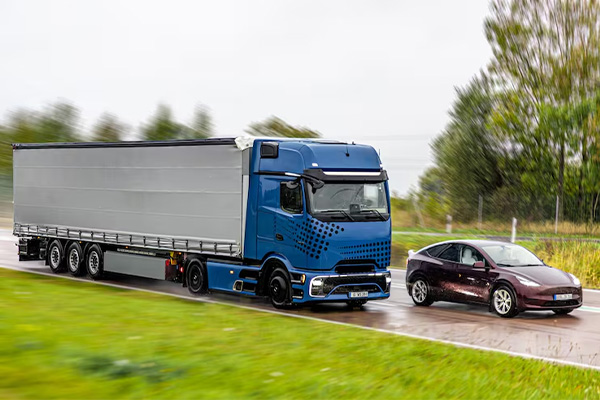
Semi-Truck Anatomy: What's Under the Hood and Why It Matters

By globalmachex April 11th, 2026 4 views

Quick Intro—Why You Should Care What's Under the Sheet Metal


Let's be honest. Most drivers get in, turn the key, and go. They know the basics—fuel, oil, air pressure. But when something goes wrong, the ones who understand the truck have a better chance of figuring it out before it leaves them on the shoulder.

Fleet managers? They care because downtime costs money. Every hour a truck sits waiting for a repair is an hour it's not earning.

And if you're new to the industry, the learning curve is steep. There's a lot to take in. But it's not rocket science. It's just a bunch of systems working together. Learn what they are and what they do, and you're ahead of most people.

Answering the Main Question


The Front End—Where the Driver Lives

Cab and Sleeper

This is the driver's home on wheels. Steering wheel, pedals, gauges, HVAC, and if it's a long-haul truck, a sleeper berth with a mattress, maybe a fridge, microwave, TV mount .

Modern cabs are nothing like the old days. Digital displays, air-ride seats, tons of storage. Some sleepers have 8 feet of headroom and enough space to stand up and walk around .

All that stuff runs on battery power. So battery maintenance matters. So does using auxiliary power units or parking coolers so you don't have to idle the main engine all night .

Cab Designs

Two main styles:

  • Cab-over-engine (COE): Driver sits over the front axle. Shorter truck, turns tighter. Common in Europe .
  • Conventional: Driver sits behind the engine. Long nose or aerodynamic slope. Standard in the US .

Under the Hood—Where the Power Comes From

Diesel Engine

The heart of the truck. Block, pistons, crank, fuel injection. Turns diesel into torque. Lots of torque .

Keep oil full, coolant full, filters clean. Skip that and you're buying a new engine.

Fuel System

Tanks, pump, lines, injectors, filters. Pump moves fuel, injectors spray it, filters catch crap. Change filters on time or injectors wear out and fuel economy goes in the toilet .

Cooling System

Engines make heat. Lots of it. Coolant (water and antifreeze mix) carries heat to the radiator. Modern coolants come in different chemistries—IAT, OAT, NOAT, hybrids. Use the right one. Keep the mix right. Change it when you're supposed to .

Turbochargers and Intercoolers

Turbo forces more air in, makes more power. Intercooler cools that air so it's denser for better combustion. Check for oil leaks. Keep air paths clean .

Hood and Grille

Hood covers the engine, gives you access. Grille lets air in to cool the radiator. New trucks use bonded windshields that are part of the structure and improve aerodynamics .

The Middle—Where the Truck Carries the Weight

Frame and Chassis

Frame is the backbone. Everything bolts to it. Check for cracks, rust, corrosion. Fix it before it fails .

Chassis is frame plus running gear—suspension, axles, driveshafts. Fuel tanks mount here. Dual tanks for long range .

Axles, Wheels, Suspension

Front axle steers. Rear axles drive or tag. Lubricate bearings, inspect regularly .

Suspension soaks up bumps. Steel springs or air bags. Air suspensions let you adjust ride height. Check for leaks, worn bushings, alignment .

Wheels and tires—obvious but critical. Keep tires inflated, check tread, rotate, look for damage. A blowout at highway speed is not fun .

Mud flaps keep road spray off everyone behind you. Replace damaged ones .

Fuel and Exhaust

Fuel tanks hold diesel. Some trucks carry 200-300 gallons. Check for leaks, corrosion, loose straps .

Exhaust moves gases out. Includes turbo, manifold, DPF, SCR, muffler. Modern emissions stuff needs maintenance. DPF needs regeneration. DEF needs to be clean. Ignore it and the truck goes into limp mode .

Transmission and Driveline

Manual or automatic? Manual gives control, costs less to maintain, but wears out drivers. Auto simplifies life, shifts for fuel economy, but costs more to fix .

Automated manuals (AMTs) are taking over. They shift themselves but use manual guts. Predictive cruise reads the road ahead and shifts to save fuel .

Driveshaft sends power to the axles. Differentials let wheels turn at different speeds in corners. Keep them greased, check for vibration or leaks .

Steering and Brakes

Steering—wheel, column, gearbox, tie rods, power pump. Check fluid, lube joints, keep alignment .

Brakes—air systems. Pads, rotors, calipers, air actuators. Air leaks kill stopping power. Check pads, check for leaks, check parking brakes .

The Back—Where the Trailer Hooks On

Fifth Wheel

The round plate where the trailer connects. Grease it. Check for cracks. Make sure the locking jaws work .

Landing Gear

When the trailer's not on the truck, these legs hold it up. Crank works? Pads not damaged? Check it .

Trailer Stuff

Axles, suspension, brakes, lights. Trailer brakes are air-actuated, same as truck. Lights and reflectors are required by law. Check wiring, replace burned-out bulbs .

New Stuff You'll See on 2026 Trucks

Safety Tech

  • Electronic stability control—mandatory. Prevents rollovers .
  • Automatic emergency braking—coming soon to all new trucks .
  • Adaptive cruise control—keeps distance automatically .
  • Lane departure warning and keeping—cameras watch the lines .
  • Blind spot detection—radar warns if someone's next to you .
  • Mirror replacement cameras—better view, less drag, better fuel economy .
  • Pedestrian detection—trucks are starting to watch for people too .

Connectivity

  • Telematics—Detroit Connect, Volvo Connect. Real-time diagnostics, remote unlock, over-the-air updates
  • Fleet managers can see what's happening with the truck without leaving the office .

Powertrain Trends

  • Natural gas trucks—cleaner, cheaper fuel .
  • Electric and hydrogen—coming. New Volvo VNL is built to handle battery-electric and fuel-cell powertrains .
  • 24-volt electrical systems—more power for all the new tech .
  • Idle reduction—battery-powered parking coolers so you don't have to idle .

How to Actually Keep a Truck Running


Step One: Pre-Trip Inspection

Walk around. Every time. Check fluids, tires, lights, brakes, leaks. Use a checklist. Digital tools make it easy to record .

Step Two: Follow Service Intervals

Oil changes, filter changes, coolant changes—they're in the manual for a reason. Don't stretch them. Use the right stuff .

Step Three: Pay Attention to Alerts

That warning light isn't a suggestion. It's telling you something. If you don't know what it means, find out.

Step Four: Use Telematics

If your truck has it, use it. Real-time data can catch problems before they leave you stranded .

Step Five: Stay Current on Regulations

Rules change. AEB is coming. Emissions rules keep tightening. Know what applies to your truck .

Summary


Here's the short version for when you're standing next to a truck wondering what to check:

  • Cab is home. Keep it clean, check the amenities, watch battery draw.
  • Engine is heart. Oil, coolant, filters, belts—keep them right.
  • Frame is backbone. Check for cracks and rust.
  • Suspension and tires keep you on the road. Inflate, inspect, align.
  • Brakes and steering keep you safe. Air leaks kill.
  • Fifth wheel connects trailer. Grease it, check it.
  • New tech helps—cameras, radar, telematics. Learn to use it.
  • Pre-trip every time. Follow service intervals. Don't ignore warnings.

Trucks are complicated, but they're not magic. Learn the parts, watch the details, and they'll keep rolling.

Frequently Asked Questions

Q: What's the most important thing to check on a pre-trip?

A: Tires, brakes, lights, fluids, and air system leaks. If any of those are wrong, don't move .

Q: How often should I change oil in a semi?

A: Depends on the engine and usage, but typically 15,000 to 30,000 miles. Check the manual .

Q: What's the difference between a DPF and SCR?

A: DPF traps soot. SCR uses DEF to break down NOx. Both are part of modern emissions systems .

Q: Do I really need to grease the fifth wheel?

A: Yes. Dry fifth wheels wear fast and can fail. Grease it regularly .

Q: What's automatic emergency braking?

A: System that detects an imminent collision and applies brakes if the driver doesn't. Soon to be mandatory on new trucks .

Q: Are electric semis coming?

A: Yes. Several manufacturers have electric models in production or testing. Range and charging are still challenges, but they're coming .

Dry Van Trucking: What It Is, How It Works, and What You Need to Know
Previous
Dry Van Trucking: What It Is, How It Works, and What You Need to Know
Read More
Sewage Trucks: The Trucks Nobody Thinks About Until Something Goes Wrong
Next
Sewage Trucks: The Trucks Nobody Thinks About Until Something Goes Wrong
Read More