WELCOME TO OUR BLOG

We're sharing knowledge in the areas which fascinate us the most
click

Precision Planting: What All That Fancy Tech Actually Does and Whether You Need It

By globalmachex March 10th, 2026 35 views

Quick Intro—Why Planting Tech Isn't Just Hype


Let's be honest. Farming is expensive. Seed costs keep climbing. Inputs aren't getting cheaper. And nobody's giving away land. Every pass across the field has to count.

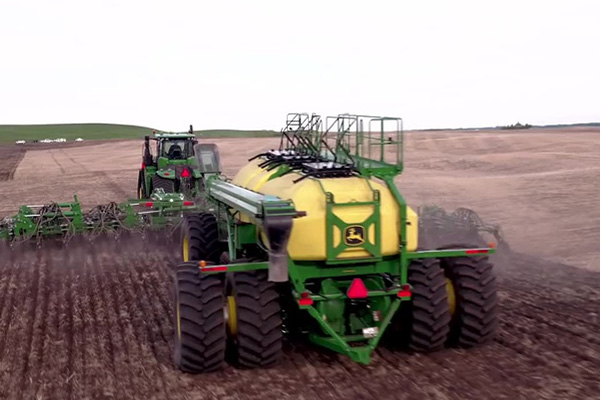
That's where precision planting technology comes in. At its core, it's about one thing: putting the right seed in the right spot at the right depth with the right spacing. That's it. Everything else—the screens, the sensors, the automatic this-and-that—is just a way to get there more consistently than a human can.

The guys who make money farming aren't necessarily the ones with the biggest planters. They're the ones who don't waste seed, don't double-plant headlands, and don't guess about soil moisture. They use technology to take the guesswork out.

But you don't need every bell and whistle. You need the stuff that solves your specific problems.

Answering the Main Question


The Foundation—Boundary Mapping

Before you do anything else, you need to know where your fields are. Not "over there by the fence." I mean exactly where they are, down to the inch.

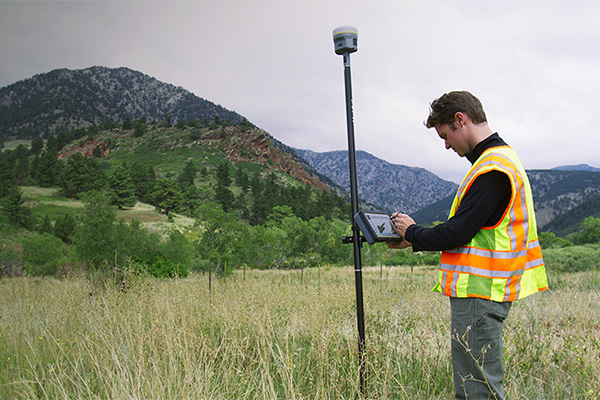
Boundary mapping is exactly what it sounds like: creating a digital map of your field edges . You can do it by driving the perimeter with a GPS-enabled tractor, or by drawing on a satellite image in your software. Driving it is more accurate, and accuracy matters.

Why bother? Because everything else depends on it. With accurate boundaries, you can:

  • Set up autosteer to follow field contours
  • Program row shutoffs to turn off over waterways or near edges
  • Calculate accurate field sizes for inputs
  • Avoid obstacles you've mapped in

Here's a trick the data guys use: look at your perimeter-to-area ratio after mapping. Fields with lots of edge relative to their size—odd shapes, point rows, irregular boundaries—get a bigger return from automatic shutoffs . Why? Because more edge means more overlap and more waste. A big square 80-acre field doesn't benefit as much as a weird 40 with trees and ditches.

Row Shutoffs—The First Place to Spend Money

If you only buy one precision ag technology, this should probably be it. Row shutoffs pay for themselves faster than almost anything else .

What do they do? They turn off individual rows or sections of the planter when they enter areas that have already been planted—like headlands, point rows, or waterways .

Without shutoffs, you double-plant those areas. That means twice the seed in the ground where you only want once. And double-planting does two bad things: it wastes expensive seed, and it creates overcrowded plant populations that yield less . Research shows corn yield losses of around 17 percent in double-planted areas from a combination of reduced yield per plant and harvest inefficiency .

Different planters use different shutoff systems:

  • Pneumatic or electric clutches that engage/disengage rows
  • Hydraulic drives that turn sections on and off
  • Electric drives on individual rows—common on new planters and the most precise

Soybeans are more forgiving of overplanting, so the economic hit isn't as bad. But corn? You're leaving money on the ground.

Variable Rate Seeding—Putting the Right Population in the Right Spot

Not all parts of a field are the same. You know that. The low spots stay wet. The knolls dry out. Some areas have better soil, some have worse. So why would you plant the same population everywhere?

Variable rate seeding lets you change seeding rates on the go based on a prescription map . Areas that can support higher populations get more seed. Areas that can't get less.

This isn't guesswork. It's based on:

  • Historical yield maps
  • Soil type and fertility
  • Topography—hills, drainage, slope
  • Pest pressure—like white mold in beans, where lower populations reduce risk

The idea is simple: put more seed where it'll pay off, less where it won't. That means either higher yield, lower seed cost, or both .

The hard part? Creating the zones and prescriptions takes work. You need data, software, and someone who knows what they're doing. But once it's set up, the planter does the rest.

Automatic Planting Depth—Adjusting on the Fly

You know how frustrating it is to stop, climb down, and manually adjust depth every time the soil type changes? And then realize you should've done it a hundred feet back?

Automatic planting depth adjustment fixes that . The system changes depth on the go based on a prescription map or a seed trench moisture sensor.

Why does depth matter? Because seed needs consistent moisture to germinate evenly. If part of the field dries out faster, you need to plant deeper there to reach moisture. If you don't, you get spotty emergence .

The latest systems use sensors that actually measure moisture in the seed trench. When the soil gets too dry, the planter automatically drops the gauge wheels and goes deeper until it finds moisture . No guessing. No stopping.

Variable Downforce—Keeping the Row Unit Honest

Downforce is how much weight is pushing the row unit into the ground. Too little, and the unit rides up—you lose depth control. Too much, and you compact sidewalls, which roots hate .

Variable downforce systems adjust this on the go using hydraulics . In heavy residue or compacted areas, they add weight to keep the unit in the ground. In soft spots, they lighten up to prevent smearing sidewalls.

This matters because consistent depth = consistent emergence = consistent yield. Late-emerging plants are weeds that cost you money. They take water and nutrients but never catch up.

Row Cleaners—Moving Trash So Seed Can Breathe

If you're in no-till or reduced tillage, you know the problem: residue in the row keeps disc openers from working right. Seed ends up too shallow or in trash instead of soil.

Row cleaners sweep that residue aside so the openers can do their job . They're not new, but newer designs mount directly to the planter frame instead of hanging on the row unit . That means they don't mess with downforce as much.

The latest ones even let you adjust pressure and tine depth from the cab . So if you hit a patch of heavy residue, you can clean more aggressively without stopping.

Closing Wheels—Finishing the Job

After seed drops, something has to close the trench. Stock closing wheels work fine in clean soil, but in no-till or tough conditions, aftermarket options can make a big difference .

The problem they solve is sidewall compaction—those smeared trench walls that roots can't penetrate . Aftermarket wheels with spikes, fingers, or angled designs break up that compaction and improve emergence.

Studies show aftermarket closing wheels improve emergence in no-till compared to standard rubber wheels . Which one works best depends on your soil—moisture, texture, and conditions matter. But if you're fighting uneven emergence in no-till, closing wheels are worth a look.

Some two-stage systems even let you apply fertilizer behind the closing discs . More complexity, but more options.

How to Actually Decide What to Buy


Step One: Look at Your Fields

Walk them. Drive them. Know them. Are they square and regular? Or odd-shaped with lots of edges? Square fields don't need as much shutoff technology. Odd-shaped ones do.

Is your ground variable? Different soil types, slopes, drainage? If it's all pretty uniform, variable rate seeding might not pay. If it changes every hundred feet, it probably will.

Are you in no-till or heavy residue? Row cleaners and closing wheels matter more to you than to someone who plows everything.

Step Two: Run the Numbers

Figure your perimeter-to-area ratio for fields where you're considering shutoffs. More edge = faster payback.

Estimate your seed cost. Corn seed at $300 a bag adds up fast. If you're double-planting 5% of your corn acres, that's real money.

Look at your yield maps. Where are the low spots? The high spots? Could different populations help?

Step Three: Talk to People Who Actually Use It

Not sales guys. Farmers. Neighbors. The old guy down the road who's been running precision ag for ten years and will tell you what's worth it and what's a headache.

Ask them what breaks. What's hard to learn. What they'd buy again.

Step Four: Start Small

You don't have to buy everything at once. Start with row shutoffs—they pay back fast. Add variable rate seeding next year if the data supports it. Try aftermarket closing wheels on one planter before you convert the whole fleet.

Technology changes fast. What's expensive today might be standard tomorrow. There's no prize for buying it all first.

Step Five: Learn the Software

The hardware is useless if you can't make the maps. Prescriptions, boundaries, data logging—someone in your operation needs to understand the software. If nobody does, you're buying expensive paperweights.

Summary


Here's the short version:

  • Boundary mapping is the foundation. Know where your fields are, exactly.
  • Row shutoffs pay for themselves fast, especially in odd-shaped fields and corn.
  • Variable rate seeding matches population to potential. More seed where it pays, less where it doesn't.
  • Automatic depth adjustment keeps seed in moisture. No more stopping to change settings.
  • Variable downforce prevents sidewall compaction and keeps depth consistent.
  • Row cleaners move residue so openers work right. Newer designs adjust from the cab.
  • Closing wheels help in no-till. They break up sidewall compaction and improve emergence.
  • Start with what pays. Add stuff as you prove it works.

Precision planting technology isn't magic. It's just tools to do a better job of an old task: putting seed in the ground where it'll grow best. Some of those tools are worth every penny. Some are nice to have. And some are just another thing to fix.

Know your fields. Know your numbers. Know what problem you're trying to solve. Then buy the tool that solves it.

Frequently Asked Questions

Q: Will row shutoffs pay for themselves on square fields?

A: Less than on odd-shaped fields, but still possibly yes. Headlands still get overlap, even on squares. Run the numbers on your seed cost and acres .

Q: How do I know if variable rate seeding will work on my farm?

A: Look at yield maps and soil maps. If your field varies consistently—different soil types, slopes, organic matter—it's a candidate. If it's flat and uniform, maybe not .

Q: Can I add precision technology to an older planter?

A: Often yes. Aftermarket kits for row shutoffs, drives, and monitors are available for many older planters. Cost may be higher than buying new, but cheaper than a whole new planter .

Q: What's the biggest mistake people make with precision planting?

A: Buying it without learning the software. The hardware is useless if you can't make the maps and manage the data .

Q: Do I need a moisture sensor for automatic depth control?

A: Not necessarily. Prescription maps based on soil type can work. But sensors give real-time feedback and adjust to conditions you can't predict .

Q: Are aftermarket closing wheels worth it?

A: In no-till, yes. Studies show improved emergence. In clean-tilled ground, maybe not. Depends on your conditions .

The 10 Mistakes That'll Get You Hurt
Previous
The 10 Mistakes That'll Get You Hurt
Read More
What Is the Purpose of Engine Valves? A Complete Guide for Mechanics
Next
What Is the Purpose of Engine Valves? A Complete Guide for Mechanics
Read More