WELCOME TO OUR BLOG

We're sharing knowledge in the areas which fascinate us the most
click

Ball Mill Maintenance: Keeping Your Grinding Circuit Alive When Things Go South

By globalmachex March 9th, 2026 34 views

Quick Intro—Why Waiting for Something to Break Is Expensive


Let's be honest. Maintenance is easy to put off. The mill's running. Production's good. Why stop to check things that seem fine?

Because they're not fine. They're wearing. Every hour that mill runs, liners get thinner, bearings get hotter, oil gets dirtier. And none of that fixes itself.

The plants that do maintenance right don't wait for failures. They catch them early. A loose bolt gets tightened before it shears. A hot bearing gets greased before it seizes. A worn liner gets replaced before it cracks the shell.

And here's the number that matters: every dollar you spend on preventive maintenance saves you five to ten dollars in emergency repairs and lost production . I've seen that play out more times than I can count. The mills that get checked daily run for years without major issues. The ones that get ignored? They're the reason suppliers stock expensive parts.

Answering the Main Question


What Actually Happens When You Don't Maintain a Ball Mill

Ball mills look simple from the outside. Big drum, lots of steel balls, rock going in one end, powder coming out the other. But inside, it's chaos. Liners taking impacts. Bearings carrying hundreds of tons. Gears transferring enough power to light a small town.

When maintenance slips, things start to go wrong in predictable ways:

Liners wear unevenly. Instead of protecting the shell, they start letting impact energy transfer where it shouldn't. Cracks form. Eventually, the shell cracks too—and that's a multi-hundred-thousand-dollar repair .

Bearings overheat. Too little oil, wrong oil, or contaminated oil kills bearings. And when a trunnion bearing fails, the mill stops. Not slows down—stops. Until you've got cranes and welders and replacement parts on site .

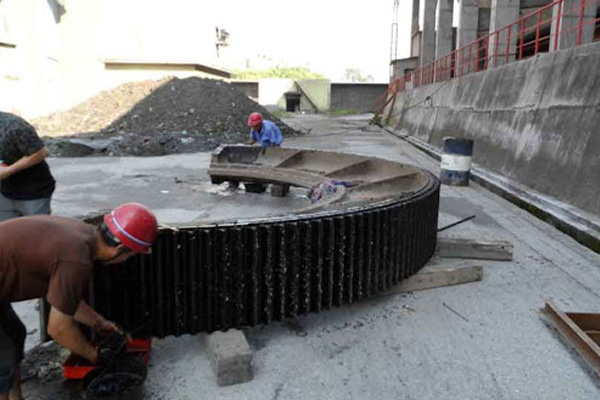
Gear trains get sloppy. Misalignment, backlash issues, worn teeth—they all lead to vibration, noise, and eventually, catastrophic failure. Replacing a girth gear isn't a weekend job .

Grinding efficiency drops. Worn liners and bad media distribution mean the mill works harder to crush the same rock. More power, less throughput. Your particle size drifts, and downstream processes suffer .

The pattern is always the same: small problem ignored becomes big problem that shuts everything down.

How to Actually Keep Your Mill Running


The Daily Stuff That Matters Most

Before You Start

Walk around the mill. Not a glance—a real walk. Look at liner bolts. Are any loose? Missing? If they're loose now, they'll be gone tomorrow .

Check oil levels. Not "looks about right"—at the sight glass, halfway, clean oil . If it's milky, you've got water. If it's black, change it. If it's low, find out why.

Clear the area. Tools, trash, spilled material—get it away from the mill. When things go wrong, you want escape routes clear, not blocked by yesterday's mess .

Give it a bump. Inch the mill or rotate it by hand if you can. Feel for resistance. Listen for weird noises. If it doesn't want to move, something's wrong .

While It's Running

Listen. Every shift, same spot, same time. Learn what normal sounds like. When normal changes, you've got a problem .

Watch the vibration. A little is normal. A lot is not. If it's shaking more than usual, something's out of balance—liners, charge, maybe a bearing .

Check temperatures. Bearings should be under 70°C. Motors and gearboxes have ranges. Know them. If numbers climb, don't wait .

Look at the motor current. Stable means happy mill. Jumpy or high means trouble—too much feed, wrong media, something binding .

Watch what comes out. Discharge size, throughput, consistency. If it changes, adjust feed or media before it gets worse .

When You Shut Down

Log everything. Numbers, observations, weird noises, unusual smells. If you don't write it down, it didn't happen .

Report problems. Not "it sounded funny" but "bearing number three was ten degrees hotter than yesterday and making a grinding noise." Be specific .

The Weekly Stuff That Keeps Things Honest

Once a week, during a planned stop, do the deeper checks:

  • Clean magnetic filters on the lube system. They catch stuff you don't want circulating .
  • Look at the media. Is it distributed right? Too many small balls? Big ones missing? Add what you need, but in small batches—dumping a ton at once messes up the balance .
  • Retighten critical bolts. Liners, couplings, foundation. Vibration loosens things .
  • Clear accumulations. Feed chutes, discharge areas, anything that's built up .
  • Take a sample. Send it to the lab for particle size. Know what your mill is actually producing .

The Monthly Stuff That Saves Your Ass

Once a month, when you've got a real maintenance window:

  • Pull oil samples. Send them out for analysis. Water, metals, viscosity—the lab tells you what's happening inside before it breaks .
  • Change oil if it's bad. Don't stretch it. Cheap insurance .
  • Inspect liners. Look at wear patterns. Start planning replacements before they're paper-thin .
  • Check bearing clearances. If they're opening up, you'll know .
  • Look at girth gear and pinion. Wear patterns, alignment, backlash. Catch problems while they're small .
  • Clean the oil tank. Before refilling, get the sludge out .

The Safety Stuff That Keeps You Alive

Lockout/Tagout

Before any maintenance, isolate power. Lock it. Tag it. Test it. Confirm zero energy. Then start work . The one time you skip this is the one time someone gets hurt.

Personal Protective Equipment

Hard hat, steel toes, gloves—every time. Goggles and mask when conditions require. No exceptions .

Inside the Mill

Verify isolation with the control room. One person stays outside as watch. Use low-voltage lights only—36 volts max . Never work alone inside.

Lifting

Inspect slings and chains before each use. Nobody stands under suspended loads. One person runs the lift—everyone else stays clear .

What You Never Do

  • No maintenance on running equipment. Ever.
  • No entry without permit and authorization.
  • No unauthorized people in work areas.
 

Summary


Here's the short version for when you're standing next to your mill wondering what to check:

  • Walk around before start-up. Look at bolts, oil, debris.
  • Listen and watch during operation. Know what normal sounds and feels like.
  • Log everything. Numbers don't lie.
  • Report problems specifically and immediately.
  • Do weekly deep checks—filters, bolts, media, samples.
  • Do monthly inspections—oil analysis, liners, bearings, alignment.
  • Follow safety rules every time. No shortcuts.

Ball mills are simple in concept but complex in practice. They take abuse every day and keep working. But they need attention. Regular, systematic, boring attention. The mills that get it run for decades. The ones that don't? They're the reason some plants have spare shells in the yard.

You decide which kind you want to run.

Frequently Asked Questions

Q: How often should I check oil levels?

A: Every shift. Before start-up and during operation. Low oil kills bearings fast .

Q: What's the most common cause of ball mill failure?

A: Probably lubrication issues. Wrong oil, low oil, dirty oil—they all lead to bearing failures and gear damage .

Q: How do I know when liners need replacing?

A: Measure wear patterns monthly. When they're thin, plan replacement. Don't wait for cracks or holes—that's too late .

Q: Can I run a mill with a hot bearing?

A: No. Stop and find out why. Hot bearings fail. It's not "if," it's "when." 70°C is a typical limit. Know yours .

Q: What should I do if I hear a knocking sound?

A: Stop. Investigate. Knocking means something loose or broken—liner, bolt, maybe the shell itself. Don't run until you know .

Q: How much does unplanned downtime cost?

A: Depends on your plant, but figure six figures per day easily. That's why preventive maintenance pays for itself .

How to Use a Power Tiller: A No-Stress Guide for Beginners
Previous
How to Use a Power Tiller: A No-Stress Guide for Beginners
Read More
The 10 Mistakes That'll Get You Hurt
Next
The 10 Mistakes That'll Get You Hurt
Read More