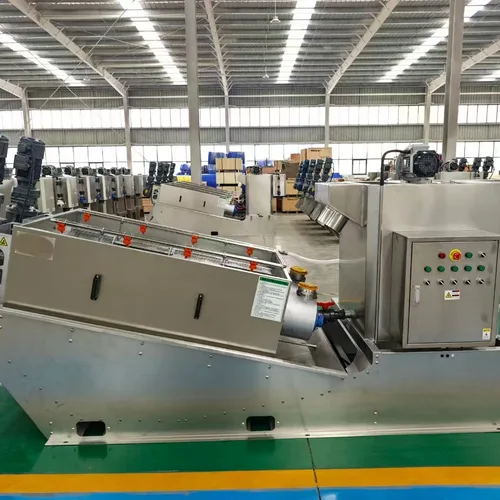
The application of the spiral sludge dewatering machine is becoming increasingly widespread. Many industries are dealing with wastewater and sludge. Under normal circumstances, the spiral sludge dewatering machine operates smoothly and does not require regular replacement of parts. It can complete the daily sludge dewatering tasks for ten years. However, due to various quality issues of manufacturers and the actual handling by the owners, failures are inevitable. Here is an analysis of the causes of the failures of the spiral sludge dewatering machine.
The main faults of the spiral sludge dewatering machine include two types: thin slurry and well blockage. The main cause of shaft blockage is the composition of the sludge. The piled-up spiral dewatering machine has a good effect on sludge and may encounter well blockage when dealing with inorganic sludge. Inorganic sludge is easy to be dewatered, and when it is too dry and processed in the equipment's pipe chamber, it will stick to the screw. As the amount of sludge increases, the sludge on the well will accumulate and cannot be removed from the well. The front sludge discharge port is discharged and squeezed out between the ring pieces, causing shaft blockage and sludge leakage faults. Therefore, when choosing the equipment, users should understand the nature of the sludge and do not choose the piled-up spiral dewatering machine for inorganic sludge.
The dilute sludge produced by the spiral sludge dewatering machine is mainly caused by flocculation. The flocculation of the sludge largely determines the moisture content of the dewatered sludge. If the flocculation is poor, the water content of the released sludge is high. Additionally, there is another important reason, that is, the gap between the rings of the equipment is too large. Some manufacturers process the rings to reduce costs without generating burrs and stress release. The flatness of the rings is insufficient. The moving ring and the static ring are in operation. To avoid wear, some manufacturers increase the thickness of the gasket to make the gap between the rings larger, so that the rings are not worn, but the dewatering rate of the equipment also decreases. The moisture content of the dewatered sludge is very high. Very high, it does not meet the processing requirements.
It can be seen that the main reason for the malfunction of the spiral sludge dewatering machine is the characteristics of the sludge, flocculation and the gap. These are all issues that users need to consider when choosing the equipment.
The main faults of the spiral sludge dewatering machine include two types: thin slurry and well blockage. The main cause of shaft blockage is the composition of the sludge. The piled-up spiral dewatering machine has a good effect on sludge and may encounter well blockage when dealing with inorganic sludge. Inorganic sludge is easy to be dewatered, and when it is too dry and processed in the equipment's pipe chamber, it will stick to the screw. As the amount of sludge increases, the sludge on the well will accumulate and cannot be removed from the well. The front sludge discharge port is discharged and squeezed out between the ring pieces, causing shaft blockage and sludge leakage faults. Therefore, when choosing the equipment, users should understand the nature of the sludge and do not choose the piled-up spiral dewatering machine for inorganic sludge.
The dilute sludge produced by the spiral sludge dewatering machine is mainly caused by flocculation. The flocculation of the sludge largely determines the moisture content of the dewatered sludge. If the flocculation is poor, the water content of the released sludge is high. Additionally, there is another important reason, that is, the gap between the rings of the equipment is too large. Some manufacturers process the rings to reduce costs without generating burrs and stress release. The flatness of the rings is insufficient. The moving ring and the static ring are in operation. To avoid wear, some manufacturers increase the thickness of the gasket to make the gap between the rings larger, so that the rings are not worn, but the dewatering rate of the equipment also decreases. The moisture content of the dewatered sludge is very high. Very high, it does not meet the processing requirements.
It can be seen that the main reason for the malfunction of the spiral sludge dewatering machine is the characteristics of the sludge, flocculation and the gap. These are all issues that users need to consider when choosing the equipment.